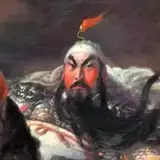
1. Inspiration of Tie Ren (鐵人)
『吊各提督統領班回思明,選練征勦。迨至,集諸將議曰:『先年護國嶺殺敗阿格商所拾衣甲,全身披掛是鐵;所以敢下馬打死仗者,恃有此耳。其如我兵精勇何?今我亦用此披掛,勦殺醜虜,諸將以為何如?』 政王秀奇進曰:『披掛全身穿帶,不下三十觔,虜有馬駝,載穿帶尤易,若至下馬打死仗,戰勝不能追趕,戰敗則難收é...
2025-03-23 13:28:51 +0000 UTC
View Post
This list is meant to be a companion reading for my Classical oared warships of pre-modern Chinese navies article for my supporter-tier patrons, with the hope that notable ancient Chinese naval battles can shed some lights on why Chinese warships developed the way they did and differently from warships elsewhere.
The list will be continuously updated as...
2024-12-31 08:48:28 +0000 UTC
View Post
Lian Zhu Pao (連珠砲, lit. 'Rapid bead cannon') and Yu Gu Pao (漁皷砲, lit. 'Fisherman's drum cannon') were two types of lightweight cannons commonly used by Ming garrison army of the strategically important San Bian (三邊, lit. 'Three borders') of Shaanxi Province, namely Gansu Garrison, Yansui Garrison, Ningxia Garrison, as well a...
2024-12-02 16:00:17 +0000 UTC
View Post
Hui Ping (灰瓶, lit. 'Ash bottle') and Yan Guan (煙罐, lit. 'Smoke jar') were two oft-overlooked Ming less-lethal weapons commonly used in siege defence and naval warfare. As their namesakes suggest, Hui Ping was a ceramic bottle filled with quicklime powder, meant to be thrown at enemy soldiers to blind and suffocate them, whereas Yan Guan was a black powder-based ceramic smoke bomb used to either create smoke screen, generate choking smoke, or...
2024-11-16 16:00:06 +0000 UTC
View Post
Hu Wei Chong (虎尾銃, lit. 'Tiger tail gun'), also known as Hu Wei Pao (虎尾砲, lit. 'Tiger tail cannon'), was a common but very obscure Ming cannon first introduced around 1560s. So named after the long wooden handle attached to its breech, Hu Wei Chong was a lightweight iron cannon designed to be mounted on a wooden swiveling stand that allowed a very wide arc of movement (note that the wooden stand pictured above, which could mount two cann...
2024-11-12 16:00:08 +0000 UTC
View Post
When I was writing about infantry formations of the Imjin War, I got curious: did these two military formations ever meet in Korea? This leads me down to a rabbit hole to seek out notable Zhejiang troops' exploits during Imjin War. As it turns out, yes, Zhejiang troops did come head to head with the Japanese a few times, and below is a non exhaustive list of notable Zhe...
2024-10-30 16:00:14 +0000 UTC
View Post
For the most part, the appearance and designs of Chinese oared warships is still a matter of debate and conjecture, as to date no Chinese oared warship of any kind had been found. Information about Chinese oared warships had to be gleaned from studying written records, crude woodblock prints of military treatises, as well as shipwrecks of civilian vessels and ocean-going junks. Still, there is still much unknown about Chinese oared warships, hopefully future archaeological finds can shed...
2024-09-30 04:00:07 +0000 UTC
View Post
When people think of pre-modern naval warfare in China and to a lesser extend East Asia, most think of imposing tower ships raining arrows and stones against the opposing fleet, or masses of fire ships turning the sea into a raging inferno à la Battle of Red Cliff.
But there were more to Chinese naval warfare than just missiles and fire. Though often overlooked and understudied, naval battle at c...
2024-09-18 01:00:04 +0000 UTC
View Post
Introduction of brigandine to China
It is generally accepted that the Chinese adopted brigandine armour due to Mongol influence, although curiously this seems to have only happened after the fall of Mongol-ruled Yuan Dynasty. To elaborate, there are scant few records that suggest Yuan army made use of brigandine armour at all, and most "evidences" seem to come from Qing and Joseon brigandines in Japan's Mongolian Invasion Historical Museum being erroneously
2024-07-30 16:00:03 +0000 UTC
View Post
Pai Gan (拍竿, lit. 'Swatting pole') was an ancient Chinese weapon fitted to various warships to pulverise enemy ship at close range. Said to be able to outright sink a ship in one tremendous downward smash, it was in many ways an omni-directional alternative to naval ram.
Pai Gan was first recorded in use during an uprising against Western Jin Dynasty led by 2024-07-29 02:17:06 +0000 UTC
View Post
Note: This short article is taken from a deleted portion of my blog post about Xuan Feng Pao (旋風砲) as I find it too speculative and possibly erroneous for my liking. It is only kept here for archival purpose.
Although not explicitly specified, some editions of Wu Jing Zong Yao (《武經總要》) contain illustrations that de...
2024-07-26 08:37:04 +0000 UTC
View Post
Since my movie review for Noryang: Deadly Sea is public, whereas my additional commentary and trivia article is an early access for my tipper-tier patrons, I've prepared this article is for my supporter-tier patrons, and it will remain permanently patron-exclusive.
2024-07-17 16:00:13 +0000 UTC
View Post
I am not done yet!
There are simply too many inaccuracies in the film for me to point them out one by one, so I will only point out some of the more glaring ones, and in a "what actually happened" format. As before, they will be presented in numbered points.
Also, do note that this is an article for my Tipper-tier Patrons, so it will eventually be made p...
2024-06-28 05:00:04 +0000 UTC
View Post
About time eh?
Since the Blu-ray only just came out recently and I'd like to strike while the iron is still hot and put the review out as fast as possible, this article will follow the format of my Battle of Jiksan article, that is, an update-as-I-write approach to this article, which will go live in my blog as soon as it is completed. I will still write additional contents that will remain exclusive for my Patrons in other posts.
The sequel to
2024-05-30 16:00:13 +0000 UTC
View Post
In the previous months I've covered some Jia Jing Da Wo Kou (嘉靖大倭寇) topics, namely Zhang Lian (張璉), who was a mountain bandit being mistaken as Wokou, as well as Twenty-four Gen...
2024-05-22 05:35:51 +0000 UTC
View Post
As promised, this post contains additional contents, contexts, and trivias for my Battle of Jiksan article that are either too lengthy/jumbled to be included in the main article, or something that may be interesting to know about, presented in numbered point format and best read as a companion article to my previous one. Unlike the main article, this post will remain exclusive to my supporters indefinitely.
1. The defeat of Battle of Chilcheollyang is often blamed on the incompet...
2024-05-06 08:44:16 +0000 UTC
View Post
Note to supporters: I wrote this article with the primary aim to provide a more comprehensive recounting of Battle of Jiksan than what is currently available on the English-speaking internet (and presumably to debunk some myths). Thus unlike my other Patreon supporter contents this will be made public in my blog on a later date. That being said, I will take an update-as-I-write approach to this Patreon article, and will only post the article to my blog upon completion. I...
2024-03-29 02:58:05 +0000 UTC
View Post
Note: This is an outdated version of my article about rocket carts of the Ming Dynasty, kept here for archival purpose. The up-to-date version of the article can be found in my blog.
Ever since the founding of Ming Dynasty, the Chinese had been an avid user of rocket weapon. Early Ming Dynasty rocket cart could have an upward of six hundred rockets, but subsequent redesigns reduced the number of rockets to make the cart more mobile.
...
2024-03-13 16:00:21 +0000 UTC
View Post
Fei Long Hua Dao (飛龍化刀, lit. 'Flying dragon turning into knives') is a highly unusual and viciously designed—if not terribly effective—rocket. Recorded in famous Ming military treatise Huo Long Jing (火龍經), this is a one zhang five fen long spear-sized rocket with a two chi long bamboo rocket motor as well as two 2024-03-11 08:00:07 +0000 UTC
View Post
Qian Dan Yi Wo Feng (鉛彈一窩蜂, lit. 'Lead bullet nest of bees')

Qian Dan Yi Wo Feng is a portable anti-personnel cannon that entered Ming arsenal in the early to mid-sixteenth century. Forged with the same method as a matchlock gun barrel, Qian Dan Yi Wo Feng has a short but wide body that can be loaded with up to 100 lead bullets, yet is light enough to be carried by a single person. ...
2024-01-31 16:00:02 +0000 UTC
View Post
Tian Bing Jian (天兵箭, lit. 'Heavenly soldier arrow') is perhaps one of the most ingenious weapons ever devised before the modern era. It is essentially a huge war kite, seven to eight chi long and three to four chi wide and made of straw mat nailed to a wooden frame, which carries a rocket pod containing one ...
2024-01-02 04:36:35 +0000 UTC
View Post
Qiang Chong (鎗銃, lit. 'Gun spear') is, as its name suggests, a combination of a spear and a gun. It consists of a two chi long gun barrel mounted on a five chi long spear shaft, with two five cun long spearheads (or possibly one spearhead forged in two halves) mounted near the muzzle, as well as a two cun long butt spike mounted on the rear end of the spear shaft. The gun part of Qiang Chong has a three fen calibre, and is typi...
2023-12-29 16:29:29 +0000 UTC
View Post
Du Huo Fei Pao (毒火飛砲, lit. 'Poisonous fire flying cannon') is a bombard-launched explosive shell that is launched from Wan Kou Pao (碗口砲, lit. 'Bowl-muzzle cannon'), an ordinary stone-throwing bronze bombard already in widespread use since the founding of Ming Dynasty.
First appeared in late 15th/early 16th century and entered mass production by 1544 at the latest, Du Huo Fei Pao is a spherical cast iron shell filled with black powder and up to five
2023-12-29 01:59:32 +0000 UTC
View Post
Note: This is an outdated version of my article about Ming period archery equipment, kept here for archival purpose. Current version of the same article can be read here.
Basic equipment

 2023-12-12 03:25:24 +0000 UTC
View Post
2023-12-12 03:25:24 +0000 UTC
View Post
Note: This is an outdated version of my article about Di Yong Qiang, kept here for archival purpose. Current version of the same article can be read here.
Di Yong Qiang (地湧鎗, lit. 'Ground surge spear'), also known as Di Yong Shen Qiang (地湧神鎗, lit. 'Ground surge divine spear') is a simple yet deadly spiked trap. The trap is tri...
2023-11-16 05:27:54 +0000 UTC
View Post
Preface
The reluctance of various garrisons in North China to adopt matchlock gun on a large scale, criticism by general Qi Ji Guang (戚繼光) regarding Ming northern troops' impatience and indiscipline, and the bad impression northern troops left on the Koreans during Imjin War, sometimes give an impression that northern troops were somehow uns...
2023-11-15 00:00:03 +0000 UTC
View Post
Note: This is an outdated version of my article about Wei Yuan Pao, kept here for archival purpose. Current version of the same article can be read here.
Although locally deveopled Chinese cannons were largely being supplanted by the more advanced European design by sixteenth century, the Chinese did not stop improving their own cannons ju...
2023-11-10 02:23:52 +0000 UTC
View Post
Di Lei Lian Pao (地雷連砲, lit. 'Ground thunder rapid cannon')

Di Lei Lian Pao is a small volley gun that consists of ten small cannons brazed to a solid iron stock in a fan shape. Originated from Shaanxi (陝西) region of Northwest China, Di Lei Lian Pao is a very lightweight weapon weighing only twenty catties (11.8 kg or 26 lbs) which allows the weapon to be easily de...
2023-11-08 10:00:05 +0000 UTC
View Post
Note: This is an outdated version of my article about Huo Qiang, kept here for archival purpose. Current version of the same article can be read here.
The weapon known as Huo Qiang (火鎗, fire lance) is actually not a fire "lance", as it is the combination of a 2023-11-08 09:49:35 +0000 UTC
View Post
Several months ago I explored the story of Zhang Lian (張璉), self-appointed Flying Dragon Emperor, which provides us a rare and interesting case study of a Chinese-led rebellion during Jia Jing Da Wo Kou (嘉靖大倭寇), and how different it was compared to J...
2023-10-14 16:00:05 +0000 UTC
View Post