I recently did a fairly long e-mail interview for a video project (that may or may not happen) and I was given the okay to post it on the Patreon. It covers a few topics, but mostly is about Eltingville. Hope you enjoy it!
As an ice breaker, I'd like to ask if you are a fan of Pro Wrestling. There was an ECW reference in the pilot and I've seen wrestling be referenced in your work. Do you have a favorite company or wrestler?
I'm a lapsed fan. I grew up on WWWF. When I was really heavily involved as a fan I was following WWF, WCW, ECW, CMLL, AAA and local NJ wrestling on cable access. I would have watched Japanese wrestling if I had access to it. Similar to comics, where I follow creators and not publishers or characters, I'm a fan of the wrestlers, not of a particular company or fed. The more I learned about the business the less I wanted to watch it, it really killed a lot of my enthusiasm finding out how shitty the workers are treated. These days I follow wrestling here and there through posts on Bluesky and online. If I had more time I'd watch AEW. Toni Storm is terrific, I'm a big fan. Favorite wrestlers would include Eddy Guerrero, Christian Cage, Kurt Angle, William Regal, Tajiri, La Parka, Super Crazy, a lot of the ECW guys – if this were an all-wrestling interview I could come up with a long list of folks I'm a fan of while we kicked things around. I mostly like mid-carders, high-flyers and technical wrestlers. And the ones who were funny. I almost never liked the crowd favorites or whoever shitty Vince McMahon was trying to force on everyone.
How were you introduced to comics and what was your first one? What was it about the medium of comic books that appealed to you?
The earliest comics I remember were in the newspapers. The first comic books I read were Marvel Comics. The first comics I remember buying with my own money from a spinner rack in a grocery store were Spider-Man and The Fantastic Four. I can't tell you why comics hooked me, I've just always been drawn to them (no pun intended). I love movies, watched way too much TV and listened to the radio but comics is what got into my blood. Maybe through the cheap newsprint. It's hard to put into words why I gravitated to comics. It's like explaining why you like a certain food or are attracted to certain people or why you like breathing. It's just become a natural part of my life, comics and cartooning. Something about the drawn image, especially when you add a story and dialogue, it just lights up my brain. As a cartoonist I love being able to create a story, a world, with real-seeming characters, using only lines on paper. You don't need anyone else, you don't need actors or sets, there's just you and the page. It just works for me.
Talk about what it was like to be a nerd during a time before the internet was mainstream.
It was fun, of course, but it could be like tramping through a desert when it came to searching for more of the things you liked, or wanted to find out about. You took whatever science-fiction show or comic book or monster movie you had access to, even if it was pure garbage. Nerd beggars couldn't be choosers. You had limited choices, and it wasn't socially acceptable to be into Godzilla and comics and Star Trek, so you didn't necessarily go around telling everyone you met about what you were into. I stumbled across like-minded friends and went on my own as a thirteen year-old to Star Trek and comic book conventions in Manhattan. There was a lot of misinformation back then, fanzines and magazines constantly got things wrong and there was no way to check anything unless you happened to find the movie or comic itself. I can remember how hard it was to finally be able to catch a movie like Forbidden Planet on a late show on after trying to see it for years. Some movies I only saw because they were being shown at a college or a revival theater. The thing was, everything was magic, then. I was grateful for whatever came along. When something like Star Wars or D&D or The New X-Men came along, it was honestly life-changing. I can't imagine what it's like for kids growing up nowadays with seemingly everything at their fingertips. But I'm not saying it was better back then or anything. I'm glad the internet exists, I'm catching up with a lot of stuff I missed back in the day because of streaming services. Meeting people and communicating with my readers on social media is a lot easier than it used to be before the internet, that's for sure. Sometimes I almost think there's too much geek stuff available nowadays. I grew up with summer blockbusters, nowadays a blockbuster event is scheduled practically every week. Nothing seems like a big deal if everything's a big deal. I burned out a long time ago. I'm back to reading old comics and watching old crap on Tubi.
Who is your favorite comic creator of all time? What are some of your favorite comics?
It's always hard for me to pick a favorite anything, but if I had to spit out a name it would probably be Jack Kirby. I don't follow superhero comics and haven't in a long time, but I still go back to Kirby material like The Fantastic Four, The Demon, his Fourth World work, Challengers of the Unknown, his 70's Captain America run, the list goes on and on. I'm a fan of many, many comics, newspaper strips and manga, but I follow creators rather than characters. I'm not enough of a fan of any legacy comic or character that I will keep reading it after the primary creator has moved on or passed away. For me, the creator is the comic. A short list off the cuff of my favorites would include Kirby, Love and Rockets, Little Lulu, Barnaby, the EC Comics line (especially the horror books and the MAD material by Harvey Kurtzman, Will Elder and Wally Wood), work by Dan Clowes, David Mazzucchelli, Steve Ditko, Osamu Tezuka, Shigeru Mizuki, Taiyo Matsumoto, Jim Woodring, Junji Ito, Yves Chaland, Herge, and newspaper strip cartoonists like E.C. Segar, Frank King, Charles Schulz, Richard Thompson, etc, etc, etc. It's a long, long list and I'm definitely forgetting many important names as I type this. Oh, I'll toss Yotsuba&! In on the list. I mostly read manga these days, depending on what I can find at the library.
When did you draw your first comic strip? Do you remember what it was?
The earliest comic I can remember making was a terrible Fantastic Four comic. I couldn't draw people well – I couldn't draw anything well – so I mainly drew The Thing and the Torch on fire. Sue stayed invisible and Reed was always far away, stretching his hands towards the reader, so I didn't have to draw their faces. I had them fight a group of villains on flying machines who wore helmets. I wish I still had it. I threw all my childhood art out and most of the art I made as a teenager.
The Eltingville strips are so incredibly detailed, from character designs to the background. Why do you like to draw that way and how long does it usually take to draw a page?
Three of my favorite comics artists as a kid were Jack Kirby, Will Elder and George Perez. All three of them packed their comics pages with detail, and I that influenced my style a lot. I like to draw crowds rather than infer there's a crowd, if there's destruction it should be total, if there's room for background jokes I will fill it with background jokes. I also developed a detailed style because I've never been confident or happy with my art, so I always tended to overcompensate by filling the page up. The last two Eltingville stories have the most detail of any comic I've drawn, some of the pages took up to a week or more, because I kept revising things. I was working very anxiously on the final story, wanting it to be the best it could be to finish off the series and worrying it was garbage. It took me way longer than it should have, I trashed my work schedule and my income aching over that comic. I'm glad folks liked it, but I have a lot of regrets about the way I handled the work. Sometimes you just have to let go of it and say something's good enough. And go to therapy.
In what ways did your experiences working at the Jim Hanley Universe shop influence Eltingville? Where there any specific moments or customer interactions that made it into the strips/pilot?
- Working in comic shops definitely informed Eltingville. You're dealing directly with the fans, and some of them were obsessive and had some issues and the comic shop was where they'd unload everything they were upset about. I used to say that comic shops were social clubs for the unsocial, like bars for nerds. The direct influences on the pilot were Ironjaw, who was based on someone from the shop days, Ward has aspects of a young customer who acted a little like a yapping puppy dog who wouldn't leave anyone alone. Stories about other comic shops got used for the comics, the laser pointer Joe used, the kiddie pool shoved into the store's ceiling to catch rain water. The slam book of Joe's customers has a few characters based on old customers and their particular habits. Hanley's is still in business, by the way, longtime managers Ronnie Hill and Nick Purpura bought Jim out a while back and now run it as JHU Comics on Staten Island. It's a great store. Some of the old JHU customers still shop there.
There have been several influences from your real life that made it into Eltingville, what were the main inspirations for Bill, Josh, Pete and Jerry?
They're based loosely on the friends I had growing up on Staten Island in the late 70s and 80s, going to the movies every weekend, playing D&D and Gamma World and Champions, hanging out and bullshitting while painting miniatures or whatever. We weren't really like the Eltingville Club when it came to our hobbies, no one had the money or time or brain damage to be that obsessed. It wasn't our personalities. We got into arguments and fights but not over trivia offs or TV shows. Once in a while there was a blow-up over D&D, one time one of my friends got really worked up when his character died and he stomped off, cursing at everyone. But none of the characters are direct takes on anyone. Josh is a composite of two friends, mostly affecting his design and a bit of his anger issues. Pete is based loosely on a friend I'm still in touch with, but they're nothing alike personality- or intelligence-wise. Unfortunately, the template for Bill turned out to be myself, especially the anger and anxiety issues I've dealt with my entire life. Jerry wasn't based on anyone, at least not consciously. But his choice to get better was informed by my going to therapy and trying to change my own life. Most of your characters reflect yourself to some degree. It's hard to keep yourself out of your writing even if you try to.
Out of the four boys, why make Jerry the sympathetic one?
It just worked out that way. That first comic was supposed to be a one-off, so I didn't have to flesh out my of the character's personalities beyond being types, it was all about the obsessiveness and anti-social behavior. But as the series continued I needed to give the club members more defined personalities, even if early on it wasn't much more than adjusting the levels of their craziness. Jerry fell into being the punching bag and the least awful member. You can see him trying to calm the others down and talk some sense into them pretty early on. By the time of the zombie crawl story he was breaking away from the others, which I was able to build on in the final story. Jerry's the survivor. The only success story.
The death threats made to Dan Vado would ultimately lead to the Eltingville Comic book clubs creation. What was it about those letters that struck a nerve/cord with you? Do you remember anything specifically that was said/written?
Dan called me up to blow off steam about the hate mail he was getting – I don't remember anything specifically beyond the threat and just how fucking stupid and vile it all was. Just dumb, entitled, immature bullshit, over a fictional character that obviously wasn't “dead”, because they bring everyone back, they have to in order to maintain the copyrights for the characters. Real people die every minute of the day and this is what these immature dipshits get worked up over. I could tell how much it bothered and pissed off Dan, and it pissed me off, and that's what sparked Eltingville. I drew the four characters and came up with the name and the basic story about an hour or two after I got off the phone with him. I blew off steam by making the comic.
Eltingville made its first appearance in the first issue of Instant Piano. How did you get your gig with Instant Piano magazine?
Instant Piano was a group anthology comic by five friends in NYC, Mark Badger, Kyle Baker, Stephen DeStefano, Robbie Busch and myself. Dark Horse agreed to publish it but it took a long time before it finally came out. We had a first issue done but then things started falling apart after everyone moved to California but me. Eventually we overhauled that first issue and that's how Eltingville got slotted in. The timing was perfect.
What was the initial reception to the first strip like? What made you want to make more of them?
The first story got a mostly good reception. We got letters from people who hated it, and some of the mail was nasty and angry enough to kind of prove the point of the comic. Some readers took it a little too personally. I had a retailer yelling at me at Comic-Con, banging his fists on my table and cursing and saying Eltingville was bad for comics and I was a bad representative for comics. Some people said I was just being mean and hating on fans. The thing is, I don't hate fans. I don't. I hate assholes. And I hate when I've been the asshole. Eltingville isn't a case of me looking down from a mountain and pissing on everything. I'm in there, too, it's also about my fucked up relationship with comics and nerd stuff and fandom. Anyway, to finish answering the question – the response was decent enough that I started thinking about ideas for another story, which is how “Bring Me the Head of Boba Fett” came about in Instant Piano #3. And that won an Eisner, and my speech at the ceremony got the retailer yelling at me the next day and eventually Eltingville became a series of stories. My most successful projects all started as one shots, Eltingville, Milk & Cheese and Beasts of Burden.
"Bring me the Head of Boba-Fett" won you your first ever Eisner award. Talk about what that was like to achieve such an honor.
Actually, it was my second Eisner, but I was drunk the first time I won and don't remember much about it. The Eltingville win was a big deal for me, because back then you didn't hear much from your readers, you didn't necessarily get a good sense of your readership, how enthusiastic anyone might be for your work. At least that was how I felt. Hearing your name mentioned and people applauding was not something you ever get to used to in comics. Usually you're alone in your studio. And I was surprised by the win. Back then I would vote against myself, that might be the time where I won and told the audience “Don't blame me, I voted for Jaime (Hernandez).”. Which was true. It was a big deal for me, I said some things that made people laugh and I felt good about myself for a little while. I know awards don't necessarily mean anything – I mean, an Eisner nomination means one judge liked your work and convinced or bargained with the other judges to put it on the list, and winning could just be a case of the votes splitting a weird way and you got lucky. That being said, I'm human, and if I'm nominated for something, I'd rather win than lose. It's nicer and more fun and free PR for your work.
Going into the animation realm, what made you want to adapt Boba Fett into the pilot?
I thought it would be a good story to set up and introduce the characters and the overall themes. I didn't have a ton of stories out there and that was one of the longer ones, and one that people liked. And there were places where I could add material at certain points to round it out and get the supporting cast involved.
You and your wife Sarah Dyer already had a working relationship with Adult Swim through your work on Space Ghost Coast to Coast (The Eltingville guys even lambast it in the first strip). Was this relationship what got you the chance at a pilot?
Yes. Mike Lazzo originally asked us about a Milk & Cheese cartoon, but I wasn't willing to sell the rights to the characters. We got the Space Ghost gig because someone gave Mike a copy of Milk & Cheese. They also asked about Eltingville and I was okay with selling off the characters if the series went ahead. We worked out an agreement where I would be able to complete the comic series and retain certain publishing rights even if the pilot got picked up.
What were some of the biggest challenges adapting the comic into an animated pilot?
One problem was that we didn't know what kind of rating the show would have. Adapting the comic straightforwardly would mean an R-rating for the language and violence, but the Adult Swim block wasn't even official when we started working on the pilot, and no one had a definite idea of how far the material could go. If it happened later, when the Adult Swim was going strong and pushing things more, they would likely have let us work a little more adult material in. That held me back on some things, but I can work in other modes and had worked on shows like Superman and Batman Beyond, which were all-ages, so it wasn't too much of a hurdle. Otherwise it was just the sheer amount of work involved. It was overwhelming. There was so much to deal with and our producers gave us decision-making power and involved us with pretty much every aspect of the production, from script to designs to hiring. It was a very new experience and often very stressful. I wanted it to be good, and that's enough of a challenge right there.
You stated later on that you sometimes wish you had not adapted Boba Fett as the pilot. If you had to adapt a different strip for the pilot, which would it be?
If I had to do it all over again I would have chosen something else. I think the problem with the Boba Fett story was that it led a lot of people to believe that the show would be nothing but these kids yelling pop culture references at one another. I really couldn't tell you what I would have gone with instead at the time, maybe an entirely original story. What's done is done.
The pilot introduced several new characters not seen in the strip, such as Ward, Bill’s sister, and the patrons of the comic shop. I take it they were all planned major/minor side characters?
We had plans for all those characters in the series, especially Ward and Jane Dickey. In fact, after the pilot failed, after talking with Keith and Mike, we got a chance to develop a new pilot using some of the new characters, because they were owned by the Cartoon Network. It was originally called “Mental Ward”, with Ward Willoughby as the main character. But the Swim folk felt Ward was too reactive a character and liked one of the new characters better as a focus, which was a demon named Tyrone. So the project became reworked as “Tyrone's Inferno”, with Ward, Jane, Ironjaw and Sekowsky – the shop customer with an eyepatch – as the main cast. We had an approved bible, script and character designs and then I wigged out and stopped working on it and eventually it got shelved. My biggest career regret, one of my biggest life regrets. I think it was a better and funnier pilot than Welcome to Eltingville and that it had a real shot, but I was afraid of it failing, and afraid of it succeeding, and I just froze up. I was not in a good headspace at the time.
You’ve stated you had written out a lot of material for the universe of WTE. What were some episode plots and other ideas you had if the series was picked up?
I barely remember. I think The Intervention story was in the pitch. There were two new stories, one was about a split in the Club when Josh went to Klingon Camp and the others went to the Renaissance Fair, which were being held right next to one another. It ended with a war between the two camps. The other story was about Bill's mom throwing out an accessory to a toy and the Club goes looking for it in the Eltingville landfill, which was based on the infamous Staten Island landfill. I ended up adapting the idea for a Bart Simpson comic script for Bongo some years later. I don't know where a copy of the bible is these days, it's lost on a hard drive somewhere, otherwise I'd go look it up.
I know you’ve said you never got an official explanation for why the pilot was never picked up. 20 plus years later, what’s your best guess/theory?
Obviously the main thing was that Mike Lazzo didn't see it as a series. Why, I don't know. From what I understand he had very little reaction to it and there was no real discussion after he watched it. Shortly after it aired Linda Simensky at the Network contacted us to ask if we'd be interested in continuing Eltingville using Flash animation. I was fine with that, but nothing came of it. So, that led me to believe the budget factored in. The pilot had an expensive budget, especially for something premiering on a Sunday at 11 pm. That had nothing to do with me, I happily took what they gave us and appreciated everything they did, but I would've done it with stick puppets, I didn't care. But I have zero complaints about working with the Swim or the Network. The pilot just didn't cut it. Someone should ask Mike. I didn't feel like it, I was bummed enough as it was.
What’s the number one thing you would do differently if given another shot at WTE?
Number one would be to make it funnier. Number two would be having someone other than myself do all the background and prop designs. Number three would be making the show a little more like the comic as far as the language and violence went. Not too crazy, just a little.
If you had another chance to do an animated pilot (for anything, WTE or otherwise) would you do it?
Sure. I'd love to work in animation again.
Best and worst things experienced while making the pilot?
The entire experience was the best part. It was a lot of work and anxiety, but also a lot of fun and we had a lot of control over the final show. It was very gratifying and it was hard to believe it was happening. I geeked out when we got The Aquabats themes in. The worst experience was when it aired, I became severely depressed after we watched it because I thought it wasn't any good. And obviously when it failed, that was the worst. It dragged out, and we didn't get a definitive answer or reason for the decision. I got really depressed over that.
Some have said the WTE, and the strips themselves were ahead of their time with its commentary on toxic fans/fandom. What are your thoughts on this?
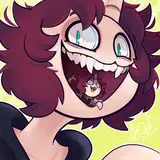
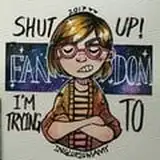
One of the things I wanted to do with Eltingville from the beginning was bypass the pop culture stereotype of the meek little nerd, because not only are some nerds little monsters, but many of them end up in the entertainment industry, and as we've seen over the years, a nerd with power can be a dangerous entity. People can decide for themselves if it was ahead of it's time or not. I don't know what else there might have been out there along the same lines. But for some reason it's resonating with a new audience, the fandom is stronger in 2025 than it was in 2002, when the pilot aired, or 2016, when the comic collection came out. I knew there were some folks under the radar making fan art and shipping the characters, but what's been happening in the last year or two has been kind of extraordinary. I'm getting ten to thirty messages a day from fans who weren't alive when the pilot first aired, kids sending me questions about the characters and their fan art and original Eltingville characters. It's been unreal. I don't know. Maybe it is ahead of its time in some ways, but it's not like The Eltingville Club walked so The Big Bang Theory could run forever and not be funny. No one heard of Eltingville. It's still just a cult comic book with a failed pilot.
How do you feel the internet has impacted fandom?
I think it's similar to how the internet affects every area of our culture. The positive aspects are allowing like-minded folks to find one another, share information and enthusiasm, build communities, and potentially create their own work for an audience. These were things I would have loved growing up in the 70s. On the other hand, it allows a lot of shitty people to reach out anonymously with fan outrage and entitlement, which has grown worse, along with gatekeeping and straight up hate speech. For decades nerds pissed and moaned that no one took them seriously, that women weren't interested in their hobbies. Then when things got popular and women and non-white fans started coming into the hobbies, a lot of idiots lost their minds and took to the internet to act like Bill and Josh. Eltingville types used to make shitty fanzines and sometimes annoy people at conventions, if that. Now Eltingville types can lash out all over the place to spread bullshit and try to affect how things are made and enjoyed. It's not just the standard nerd stuff, I've alwys said Eltingville could be about any hobby or fandom. Sports, cars, gambling, beer, stamp collectors, barb wire collectors, anything that brings any people together has an Eltingville contingent. I just wrote about the fans I know and the fandom I'm a part of..
In 2015-16, you wrote the final two issues of the Eltingville club. What made you want to bring the boys back and end their story?
I started planning the end of Eltingville since the late 90s. I actually started “This Fan, This Monster” back in 2000. The first page was drawn then and a year late I drew page two, and then I put it aside. Basically, I couldn't afford to work on it. SLG, my original publisher, didn't pay upfront on anything, you got paid, if the project earned money, all in royalties. That worked for me for a while because Milk & Cheese and Dork were collecting my creator-owned work done in a variety of places, along with new content. But eventually I ran out of reprint material, and doing entire 24-28 page comics without anything upfront was n't feasible. I tried it with Dork #11 and it was a disaster. I was friends with Dan and we went through a lot together and I couldn't bring myself to leave. I should have left a long time before I did. When I went to Dark Horse I was able to finally finish Eltingville up and collect it all.
In 2024 I must ask: is this the end of the Eltingville club?
Yeah, it's done. Someone would have to hand me lawsuit settlement money for me to make another Eltingville comic. But it doesn't seem to be the end of the fandom, at least not for the time being, which is pretty wild.
Beyond Eltingville, you have a pretty extensive library of work and a shelf of awards. What keeps you motivated to continue creating?
Bills, debt and groceries.