Dynamics of gold trade and consumption in South-East Africa and the Swahili coast, and the historical links between Great zimbabwe, Sofala and Kilwa ca. 950 to 1820.
Added 2024-09-01 13:03:05 +0000 UTCThe Swahili coast of East Africa was one of the world's leading exporters of gold since the middle ages, with about as much gold passing through the port town of Sofala every year in the 15th century as was owned by Mansa Musa --the wealthiest person in history.
The coastal town of Sofala, which was referred to as 'Golden Sofala' in medieval Arab geography, was the terminus of long-distance trade routes exporting gold and ivory from the Shona kingdoms of South-East Africa, such as Great Zimbabwe and Mutapa, to the Swahili city-states of Kilwa, Pate, and Lamu.
While this ancient gold trade has long been understood as a product of external demand from the Indian Ocean world, a closer analysis of the dynamics of gold production and consumption in Swahili and Shona societies reveals that the export trade in gold only augmented pre-existing domestic demand and internal exchanges of gold in south-east Africa.
This article explores the dynamics of Gold trading and use in the various kingdoms and cities of South-East Africa and the Swahili coast since the middle ages.

Ruins of Sofala, Mozambique.
The gold emporium of Sofala from the 10th to 15th century.
Map showing the port town of Sofala and the kingdoms of south-east Africa mentioned in this text.

The earliest references to Sofala appear in the commentaries of medieval Muslim geographers and seafarers, most of whom regarded it as the southernmost section of the East African coast called Bilad as-Sufala (land of Sofala). While its doubtful whether any of them actually visited the region, most of their information was derived from merchants who frequented the region.
The account of Al Masudi in 916 mentions that "The sea of the Zanj (Swahili coast) ends with the land of Sofala and the Waq-Waq, which produces gold and many other wonderful things" The Persian merchant Buzurg ibn Shahriyar in 945, describes how the WaqWaq sailed for a year across the ocean to reach the Sofala coast where they sought ivory, tortoiseshell, leopard skins, ambergris and slaves. In 1030 CE, al-Bîrûnî writes that the port of Gujarat (in western India) "has become so successful because it is a stopping point for people traveling between Sofala and the Zanj country and China"
(The Swahili world pg 370, 181, 372)
The above references indicate that Sofala had been sufficiently integrated within the long-distance trading patterns of the Swahili coast and the Indian Ocean world. By the 12th century, the account of Al-Idrisi indicates that "Golden Sofala" was composed of many centers such as Jantama, Dandama, and ports such as Sayuna, Bukha, and Daghouta. He adds that the two centers did not sell gold or ivory, but instead only sold iron ingots (likely smelted in the interior), that were exported to India. His contemporary, Yaqut (d. 1229) refers to Sofala as “the last known town of the Zeng (ie: Zanj).” and notes its wealth in gold.
(The Quest for an African Eldorado pg 4-6)
According to a local chronicle written in the Swahili city of Kilwa around 1550, Kilwa's sultans had in the late 13th century managed to assume loose hegemony over sections of the southern coast, likely encompassing the region Arab accounts refer to as Sufalat adh-Dhahab (Golden Sofala). At the beginning of the 14th century, Sultan al-Hasan bin Sulaiman of Kilwa issued coins with a trimetallic system (gold, silver, and copper), one of these coins was found at Great Zimbabwe, thus providing the most conclusive evidence of direct contact between the Swahili coast and interior.
(A history of the ancient Swahili town pg 125-128, A material culture pg 59-68)
Later Portuguese accounts that could be used to describe the pre-existing conduct of business, refer to the king of Kilwa as the “absolute owner of the gold trade” describe how traders were required to pay in coin and in merchandise before departing for Sofala and were further assessed on their gold after their return journey.
(Les cites etats Swahili pg 60, The Swahili world pg 47)

Location of Sofala and Kilwa on the Swahili coast.

Silver coin of Kilwa sultan al-Hassan bin Suilaiman found at Great Zimbabwe, photo by T. Huffman.
Silver coins from Kilwa, Tanzania museum.
The trade of the Indian Ocean was dominated by the monsoons which allowed ships from India and the Gulf to reach east Africa between October and March. Return journeys had to be made between April and September if shipowners wished to avoid having to wait another six months on the African coast. It was difficult to reach as far south as Sofala and return in a single trading season, so towns further north on the Swahili coast acted as staging posts.
(A history of Mozambique pg 9)
The relative inaccessibility of the southern coast after Kilwa thus created different patterns of trade than the northern coastline between Kilwa and Mogadishu, enabling Kilwa to extend some control over Sofala's outbound trade as a middle-man. However, it's important to note that external accounts continue to refer to Sofala as a largely independent region, likely indicating that Kilwa's control was limited to a few sections of the coast.
The Andalusian geographer Ibn Said (d.1286) cited Sofala’s capital as Sayuna and its most southerly entrepot as Daghouta, adding that Sayuna’s inhabitants were non-Muslims who were ruled by a local king. The Syrian geographer Abu al-Fida (d. 1331) mentions that after passing Sofala’s capital Seruna (Sayuna), one arrived at Leirana, adding that “Ibn Fathuma, who visited the town, said that it was a seaport where ships put in and whence they set out. The inhabitants profess Islam.” Ibn al-Wardi (1290-1349) claimed that “Golden Sofala” possessed remarkable quantities of the precious metal "one of the wonders of the land of Sofala is that there are found under the soil, nuggets of gold in great numbers.”
(The Quest for an African Eldorado pg 7-8)
Despite the apparent absence of Kilwa's suzerainty over Sofala in external texts, the account of Ibn Battuta, who visited Kilwa in 1331 suggests that Kilwa maintained links with Sofala. Battuta writes that "A fortnight's sail beyond Kilwa lies Sofala, where gold dust is brought from a place a month's journey inland called Yufi."
Yufi was apparently a site in the interior, likely to be Great Zimbabwe, where gold was collected and dispatched to the coast. A similar toponym occurs in Ibn Battuta's visit to the West African empire of Mali, where Yufi was the source of copper but in this case, likely referred to the ancient Yoruba city of Ife. The town of Sofala which Ibn Battuta cited must have been within Kilwa’s political orbit.
(The African lords of Intercontinental gold trade pg 232-233)
At the close of the 15th century, the Arab navigator Ahmad ibn Majid (c. 1432-1500) also left an ambiguous description of the perilous Sofalan littoral listed various ivory and gold-exporting emporia. He also noted the existence of powerful and wealthy states in the interior, likely in reference to Great Zimbabwe and other kingdoms of the Shona-speaking groups in Sofala's hinterland.
(The Quest for an African Eldorado pg 8)

Great Zimbabwe, elliptical ruins.
Sofala in the 16th century: Sheikh Yusuf and the era of Portuguese interlopers.
Portuguese sailors entering the Indian ocean acquired first-hand information on Sofala's fabled land of gold from a sea pilot captured near Mozambique island by the crew of Vasco DaGama in 1497, but the latter didn't sail to the region. In 1501 the crew of Pedro Alvares Cabral sighted but didn't land at Sofala, though they received information that “Golden Sofala” was ruled by the King of Kilwa.
It was in 1502 and 1504 that Vasco DaGama and Pero Afonso landed in Sofala, observing the brisk trade in gold that was linked to Kilwa, and sending back laudatory reports on its wealth and its legendary status as King Solomon's Ophir, which prompted Portugal to send a military expedition to colonize it and Kilwa.
(The quest for an African Eldorado pg 14-17)
In 1505, Captain Pero de Anhaia made landfall at Sofala and was generously received by its ruler, Sheikh Yusuf, who granted them permission to build a stockade (fortress of wood), probably because they had learned the fate of their peers in other Swahili cities like Kilwa that had been sacked for resisting the Portuguese.
(A history of Mozambique pg 18)
Yusuf's Sofala was a town of a few thousand living in houses of wood, populated by 800 Swahili merchants who wore silk or cotton robes, carried scimitars with gold-decorated ivory handles in their belts, and sat in council/assembly that governed the town. The rest of the population consisted of non-Muslim groups wearing cotton garments and copper anklets, they provided military aid, fighting with assegais (spears), clubs, and incendiary arrows.
(The Archaeology of the Sofala coast pg 84-85)
Excavations at four sites around the town indicate that it emerged during the 15th century. Its material culture includes local pottery still used in the coastal regions today, regional pottery styles similar to those found in southern Zambezia, and imported pottery from China dated to between the 15th and 18th centuries. Finds of elite tombs for Muslims, spindle whorls for spinning cotton, and small sherds of Indian pottery point to its cosmopolitan status similar to other Swahili towns, but with a significant local character, that's accentuated by finds of an ivory horn that shares similarities with those made on the Swahili coast and at Great zimbabwe.
(The Archaeology of the Sofala coast pg 93-103, An Ivory trumpet from Sofala)

Portuguese fort at Sofala, Yale University Library.
The early years of the Portuguese occupation of Sofala were fraught with conflict. Attempts by the Portuguese to monopolize the gold trade away from the Swahili merchants failed as the former lacked valuable goods to exchange for it, and their interloping forced the Swahili to attack the fortress in 1506, during a three-day long battle that ended with the execution of Sheikh Yusuf. By 1507 a stone fort had been built to replace the stockade, and by 1511, its captain Anténio de Saldanha, attacked the neighboring Swahili town of Angoche, where most merchants had relocated to avoid the Portuguese monopoly on gold trade.
(A history of Mozambique pg 20, The quest for an African Eldorado pg 20-22)
Despite their efforts, the Portuguese realized that they knew little about the dynamics of trade at Sofala, and the town quickly became a financial fiasco as expenses for maintaining men outstripped revenues from the dwindling gold and ivory trade.
One Portuguese factor at Sofala in 1513 noted that "although there is gold in all the land it is spread out, no communities have it in such quantity as to allow them to come so far as Sofala to trade it, and also because they wait for the merchandise to be taken to them where each one may buy what he wants; so they come to establish fairs where there are sheiks here from Sofala, the factors of these merchants, and where they buy the merchandise that is sent to them from here"
It soon became apparent to the Portuguese that they needed to expand to the interior to assume direct control over the gold mines themselves.
(A history of Mozambique pg 50, The quest for an African Eldorado pg 22-23)

Ivory horn from the Swahili section at Sofala, and a similar horn from the Swahili city of Pate in Kenya., photos by James Kirkman.
Volume of Gold exports from Sofala and its competitors; Angoche and Quelimane.
During the 15th century, a number of new urban settlements rose the southern coast, the most important of which was Angoche, an old town dating back to the early 1st millennium. The traditions of the ruling family of Angoche link its "foundation" to the arrival of dissidents from Kilwa when the city-state was torn by factional strife, but archeological studies on the old site suggest that this tradition relates to later events when one of its settlements, known as Quilua, acquired importance.
The Angoche sultans also acknowledged kinship with the rulers of Mozambique island and may also have been involved in the establishment of other settlements, including Quelimane near the mouth of the Zambesi, for in 1517 the Portuguese geographer Barbosa was to write of the Muslims of Quelimane that "these Moors are of the same language and customs as those of Angoya"
(Settlement and Trade from AD 500 to 1800 at Angoche)

(top to bottom) Angoche, Quelimane, Sofala and neighboring ports during the mid to late 2nd millennium

Quelimane, Mozambique, ca. 1914, photo from picryl
Angoche and Quelimane owed their ascendency to the shift in gold trade from an overland route to Sofala to a combined overland and riverine route along the branches of the Zambezi River to Quelimane, and then north to Angoche. These patterns of trade facilitated the emergence of river ports and seasonal markets (fairs); the first being established at Sena to serve the fairs of the Manyika region, and at Tete to serve the fairs of the Mazoe and Mount Darwin.
Portuguese accounts from 1511 describe the travel of Swahili merchants upriver that involved paying tribute to local rulers who gave them canoemen to transport their cloth to the fairs and exchange them for gold. (very similar to the Swahili traveler Mwenyi Chande's description of his journey from the African interior.)
(A history of Mozambique pg 11-12, Angoche: An important link of the Zambezian gold trade pg 1-5)
However, by the mid-15th century, Quelimane had developed as the main port of access to the interior and Angoche declined in importance, though it continued to enjoy a modest trade in ivory. Besides Angoche and Quelimane were the Querimban islands, whose maze of coastal waterways, creeks, and sheltered dhow harbors were ideal for clandestine trade in gold until the 17th century.
(A history of Mozambique pg 187, 192)
While the Portuguese believed the volume of the gold trade from Sofala and Kilwa to be much greater than in fact it was, and influenced their early actions on the coast, the quantities of gold exported from Sofala to Portuguese Goa were by no means insignificant, and this is despite alot of smuggling and "clandestine" trade that didn't go through Portuguese customs.
According to a Portuguese account from 1506, at least 1.3 million mithqals of gold were exported each year from Sofala, and 50,000 came from Angoche, which translates to 5,744 kg a year. Other more detailed accounts estimate that from an initial 8,500kg a year before the Portuguese arrival, Sofala coast exported an estimated 573kg in 1585; 716kg in 1591; 850kg in 1610; 1487kg in 1667. Another account provides an estimate of 850kg in 1600, and 1,000kg in 1614. These figures fluctuated wildly at times due to "smuggling", eg in 1512 when the Portuguese exported no gold from Sofala, but illegal trade amounted to over 30,000maticals (128kg).
(Port Cities and Intruders pg 49-51)
South-east Africa therefore constituted a major export region of Gold in the 16th century that rivalled the world's top exporters including West Africa; where the Portuguese at Elmina received around 700kg a year from 1500-1520 and south America, where the Spanish exported over 4,300kg a year in the 1550s. However, by the latter half of the 16th century, most of the profitable trade from Sofala, Kilwa and Mozambique Islands was derived from Ivory as clandestine gold trade undercut Portuguese profits.
(Port Cities and Intruders pg 52, A History of Mozambique pg 25-27)

Gold exports through the ports of Mozambique. These figures exclude internal consumption. Eighteenth and nineteenth-century figures also include some gold from north of the Zambezi
taken from: Drivers of decline in pre‐colonial southern African states to 1830.
Gold Mining and domestic demand of gold in the kingdoms of south-eastern Africa.
Although gold mining and trade were an important economic activity of the kingdoms of the 'Zimbabwe culture', they were not the primary occupations of the societies, but rather part-time, seasonal activities. While commerce provided the local aristocracy with prestige goods, agriculture sustained the economic system and cattle were the mark of wealth. Artifacts of personal adornment found at the various 'Zimbabwe culture' ruins sites show that gold was mostly a preserve for the nobles, as the majority of gold artifacts were found within the elite areas.
Archaeological investigations across all of the Zimbabwe culture sites have uncovered extensive evidence of gold mining and working across virtually every important settlement between eastern Botswana, northern South Africa, and much of Zimbabwe. More than 4,000 pre‐colonial gold workings are known from Zimbabwe alone, and over 2000 from eastern Botswana. Most important are the finds of gold crucibles at the ruins of Khami, Great Zimbabwe, and Thulamela which provide direct evidence for gold processing, as well as the cup-shaped depressions of eastern Botswana that provide evidence for gold milling next to old ruins like Vukwe and Domboshaba.
(An archaeological study of the Zimbabwe culture capital of Khami pg 14, 55, 166-167, New Perspectives on the Political Economy of Great Zimbabwe pg 13-16, Butua and the end of an era pg 19, 30, 229-230)

Gold melting crucibles from the Fireguard Midden, Great Zimbabwe. photo by Shadreck Chirikure.

The approximate distribution of sources of ore and other resources within the territory of the Great Zimbabwe state, map by Shadreck Chirikure.
The Portuguese historian Antonio Bocarro (d. 1649) observed that in the Mutapa’s land, “the greater number of the Africans are inclined to agriculture and pastoral pursuits, in which their riches consist." Another Portuguese account by João dos Santos, wrote of the southern state of Butua that "there is a quantity of fine gold, but the natives of the country do not trouble to seek it or dig for it . . . but they are much occupied with the breeding of cattle, of which there are great numbers in these lands."
(The Quest for an African Eldorado pg 27, A History of Mozambique pg 36)
On the whole, gold production was an extremely labour intensive work that constituted a high-risk, low-return investment that made it a relatively unattractive economic activity compared to herding cattle and farming. The work was done from August to October during agricultural off-seasons when the water table was low. Most gold came from alluvial sources and shallow mines, the latter of which were often quickly exploited because of the limitations of extraction technologies used at the time.
(The Quest for an African Eldorado pg 32-33)
According to one typical Portuguese account, the miners, consisting of men, women, and children under a village leader, were organized into working groups which began to dig narrow shafts. When done, steps were constructed within the pit, and the workers began to excavate by slowly passing the dirt in bowls to the surface for washing. Gold veins were followed in every possible direction, but sometimes the mines were not well ventilated, could cave in, and were subject to flash floods, forcing rich sources to be abandoned for lack of any way to pump out the water.
(The Quest for an African Eldorado pg 32)
For some Shona, the winter season was spent panning a few grains and particles of river gold, a process which required neither extensive social organization nor complicated methods. Gold from alluvial sources may have sustained an "informal" trade uncontrolled by the local authorities, and the exchange may have satisfied the demand for imports without upsetting the political economy.
(The Quest for an African Eldorado pg 33)
The existence of the trade routes to the gold fairs encouraged peasants to produce surpluses for sale as noted in contemporary documents which mention how local communities lying in the river ports brought agricultural products to sell to passing merchants. Another account from 1573 also mentions how imported trade goods such as cloth were included in internal exchanges such as the payment of dowry. The interior markets thus grew into towns with large communities of Swahili merchants, complete with their own local representatives.
(A history of Mozambique pg 52-53)
<<It should thus be noted that there was no professional trading diaspora in South East Africa unlike the Wangara of West Africa possibly due to the dispersed nature of the gold trade, but the activities of Swahili merchants certainly came close to replicating this dynamic, and the Yao in the north were very much similar to the Wangara, except that they traded in Ivory >>

The Vukwe ruins of north-eastern Botswana, located near the edge of the gold belt

Photographs of the iconic gold rhinoceros (A) and gold anklet coils (B) recovered from selected graves on Mapungubwe Hill.
Political economy of gold trade between Mutapa, Manyika, and Sofala during the 16th and 17th centuries.
Despite the predominantly agro-pastoral economies of the kingdoms of south-east Africa, their commercial links to the coast meant that Long-distance trade undoubtedly, affected local economic perceptions and social relations. The nature of the gold trade concentrated commercial activity in a small number of places. Gold was obtained in very small quantities and had first to be brought from many different points of production for sale at markets that could be controlled and taxed by the state and be integrated into the political economy of inter-elite exchange, patronage, and diplomacy.
(Drivers of decline in pre‐colonial southern African states to 1830, pg 8-12)
These patterns continued after contact with the Portuguese. As early as 1506, the Mutapa king Matope sent an envoy to Sofala, whom the Portuguese noted was coming from "the interior of Menapotaque” to initiate trade. A succession dispute after Matope's death forced one of the claimants, Inhamuda to move eastward and found the kingdom of Kiteve, located right between Sofala and Mutapa, and thus cutting off the latter from the former.
Inhamuda sent also envoys to the Portuguese at Sofala in 1515 seeking military assistance in exchange for gold and mining rights, but after the Portuguese had delivered on this aid in 1519, he made an about-face and blockaded Sofala, killing and robbing merchants who defied his order. Inhamuda would only reopen trade with Sofala when it was conducted by the local Moors (ie Swahili), and trade would continue until his death in 1529, after which part its goldfields were reconquered by Manyika.
(A history of Mozambique pg 42, The quest for an African Eldorado pg 27, 30-31)
Located to the northwest of Sofala was the important gold-producing area of Manyika, whose rulers were loosely linked to the Mutapa rulers through intermarriage, but were otherwise independent sovereigns that only occasionally allied with Mutapa. Contemporary Portuguese accounts suggest that trade was of more significant economic importance in Manyika than in Mutapa, whose gold was mostly obtained from alluvial sources as well as a few mines.
(The Quest for an African Eldorado pg 29-30, A History of Mozambique pg 51 )
A Portuguese account from 1574, written in the context of a military expedition to control the gold mines of the interior indicates that Manyika's contained high-quality gold in its mines, but that it was of relatively low quantities and that great numbers of workers and machines would have been necessary for the crown to turn a profit. A similar observation was made in Kiteve in 1575 after the Portuguese had sacked its capital but only saw riverside gold washings instead of the deep gold mines they expected.
(A history of Mozambique pg 57-59, 96)
Within Mutapa, the ruler controlled gold production, taxing output and determining which mines were to be worked with offenders being executed. He also initially confined Portuguese trading activities to the fairs at Luanze, Bocuto, and Masapa. The fear of working unauthorized deposits was so great that accidental discoveries of ore were covered with branches in order to warn others to flee from the area. One ruler of Kiteve, for instance, executed a number of his people to provide the captain of Sofala with information about new gold mines.
(A History of Mozambique pg 98, The Quest for an African Eldorado pg 33)
After the Portuguese colonization of parts of Mutapa and Manyika during the early 17th century, they imposed themselves on the pre-existing systems to control gold mining and trade. Rulers were required to pay tribute in gold, private businessmen (Sertanejos) assumed control of several mines worked by their own retainers and slaves, and trade fairs at Makaha, Quitamborvize, Dambarare and Ongoe were controlled by Portuguese captains and priests. This era of Portuguese control of the gold trade would collapse after the rise of the Rozvi kingdom under Changamire Dombo whose armies sacked the fairs and expelled most of the Portuguese from Mutapa and Manyika in the 1680s and 1690s.
(A history of Mozambique pg 98-102, 195-196)

Portuguese fairs in the Mutapa kingdom. Map by Shadreck Chirikure

Portuguese governor's residence in Tete, by John Kirk c. 1880
Gold trade and internal demand for gold in the Swahili city-states of Kilwa, Lamu and Pate..
Gold featured prominently on the Swahili coast. Starting from the early 2nd millennium CE, gold became not only pivotal in commerce but also the backbone of political and economic power for the rest of the Swahili period. Archeological finds indicate that gold was worked in some parts of the coast, for example, a complete crucible with a lump of gold embedded in it was recovered at Chibuene, a Swahili settlement in northern Mozambique dated to its early occupation phase from c. 600 to 1300–1400 CE
(The Swahili coast pg 179)
Various accounts from the Swahili coast include mention of tribute paid in gold, especially during the Portuguese period. These include the one-time payments of tribute at Kilwa in 1502 where 1,500 mithqals of gold was received by the Portuguese, and at Lamu in 1506, where 600 mithqals of gold were paid. Additionally, at Pate in 1503, the Portuguese seized a Swahili ship loaded with 160 mithqal of gold under the guise of tribute payment.
( Les cites etats Swahili pg 66, 69-70)
However, the relative absence of gold objects in the material culture recovered from Swahili ruins likely indicates that most of the gold passing through the coast remained unforged. Even at Kilwa, where the sultan controlled much of Sofala's outbound trade and issued a few gold coins, the minting of gold was rarely undertaken. With the exception of copper alloys that were used extensively in coinage, objects of precious metals are rarely found on coastal sites despite their ubiquity in Portuguese accounts.
(A material culture pg 169)
In his extensive excavations at Kilwa Kisiwani, the renowned hub of gold trade in eastern Africa, Neville Chittick uncovered only four gold artifacts, as well as 12 coins from Mtambwe Mkuu on Pemba Island (Tanzania), dating to the 11th century CE, said to be of Fatimid mints or imitations of Fatimid issues, and three others found on Zanzibar but believed to have been minted at Kilwa.
(The Swahili World pg 308, The Indian Ocean and Swahili Coast coins)
The abovementioned gold coins issued by the Kilwa mint belonging to al-Hassan bin Sulaiman in the early 14th century are the only coins reporting the name ‘Kilwa’ on them, and they can be situated in the mainstream Islamic coining tradition. They were used in international trade, given that they had a similar weight to the dinar, the standard Indian Ocean currency. The very limited number of surviving gold coins suggests that, contrary to copper coins, the gold ones were melted down for other purposes or used as gifts or tribute rather than as trade currency, something that's frequently attested in anthropological studies of Lamu during the 20th century.
(The Swahili World pg 450, Possible Sources for the Origin of Gold)

Gold coins of Kilwa's sultan al-Hassan bin Sulaiman, photos by Stephanie Wynne-Jones

Husuni Kubwa, palace of the Kilwa sultan.
Portuguese accounts from the 16th and 17th century note that gold and silver jewellery as a form of elite personal adornment. The chronicler Barbosa mentions that the Swahili men, especially in Malindi, Pate, Mombasa, and Kilwa were "sufficiently well dressed with many rich cloths of gold and silk and cotton, and the women also with much gold and silver in chains and bracelets which they wear on their feet and arms, and many jewels in their ears." Some of the gold-embroidered textiles of the Swahili of Pate were reported as far as Mutapa court, attesting to the multidirectional nature of the gold trade.
(As Artistry Permits and Custom May Ordain, pg 5-9, The Swahili World pg 296, Les cites etats Swahili pg 74)
In the modern period, the Swahili city of Pate on the Lamu archipelago in Kenya in particular has maintained its artistry in wood carving and metalwork, especially in copper and gold moulded into a variety of body decorations for women. Traditions about a section of Pate's population known as the Wang'andu, emphasize their former occupation as "gold carriers" prior to their movement from the neighboring island of Manda to Pate. Later ethnographic studies from Lamu and Zanzibar during the early 20th century highlight the continued importance of gold in the social economy of the Swahili coast.
(The Swahili World pg 619, Les cites etats Swahili pg 557, Weddings in Lamu, Kenya)

Female retainers of Swahili household in gala dress, photographed by Sir John Kirk. ca. 1858. The jewelry they wear includes gold and silver bangles and armlets.
Stagnation and decline of gold trade during the 17th and 18th centuries.
By the early 17th century, the town of Sofala had been in steep decline, the fort was in disrepair and its small community was only sustained by a clandestine ivory trade with little gold passing through it. A report from 1634 notes that they resided near the fort by the indulgence of the ruler of Kiteve, whose kingdom surrounded the settlement and controlled its nominal commerce. An English visitor to Sofala in 1650 found that the fort was in ruins and that the settlement was defended by an ill-equipped rag-tag garrison.
(The quest for an African Eldorado pg 46-50)
In 1695, Changamire Dombo's attacks on Portuguese fairs in Mutapa and Manyika forced the settlers to flee to Sofala, which they found in a sorry state. However, by 1715 and 1720, the Rozvi kingdom had re-established cordial relations with the Portuguese, permitting them to settle at the fairs of Zumbo and Manyika (both located just outside Mutapa) where only authorized African traders were permitted to penetrate into the rich southwestern plateau in search of gold and ivory. Settlers were not only prohibited from commercial expeditions but also had to pay a large annual tax and were prevented from mining, in exchange for Rozvi protection.
(The Role of Foreign Trade in the Rozvi Empire pg 384-387, A History of Mozambique pg 201-202)

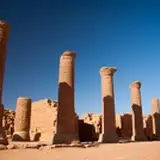
Ruins of Naletale, one of the Rozvi capitals in Zimbabwe.
However, the volumes of gold exported during this time had collapsed from their heyday in the 16th and 17th centuries, with Manyika only traded 1,650 ounces a year, while Zumbo exported around 9,00 ounces a year at its height in the 1740s, for a total of about 300kg of gold a year. By the late 18th century, Zumbo’s wealth was waning as Rozvi exports shifted from gold to ivory, and despite the best efforts of the Rozvi rulers and the Portuguese, the insecurity of the overland route made it costly to maintain the fair.
(A history of Mozambique pg 203)
Besides the gold coming to Zumbo from Rozvi territory, other sources included the Maravi country north of the Zambezi river (in what is today Malawi and northern Mozambique), which were however quickly exhausted after a gold rush from 1740-60 and traders shifted their focus to the ivory and copper from the Lunda empire. The kingdom of Kiteve, located between Sofala and Mutapa, also continued to export a little gold to Sofala, about 800 ounces (22kg) a year, but remained relatively unimportant. In the early decades of the 19th century, internal conflicts in the Rozvi and Manyika kingdoms precipitated the decline of both states as well as their diminished gold trade.
(A history of Mozambique pg 209-216, New Perspectives on the Political Economy of Great Zimbabwe pg 29)
Estimates of Gold exports from the ports of the Sofala coast, which averaged 300-400kg a year between 1750 and 1790, plummeted to just 10kg by 1820. As early as 1722, the resident Portuguese population at Sofala had fallen to just 26 supported by a few hundred Luso-Africans and other locals, the fort was threatened by inundation and the church was even being utilized as a cattle kraal. By 1762, Sofala was nearly underwater, and the garrison had been reduced in four years from thirty to six. In October 1836, Sofala was sacked by the Nguni, and by 1865 its inhabitants ultimately abandoned it for the town of Chiloane, 50 miles south.
(The Quest for an African Eldorado pg 54-55, 58, 63-67)
The northern expansion of the Nguni-speaking groups associated with the mfecane of South Africa during the early 19th century radically transformed the political landscape of the region. Gold production and gold trading all but ceased, and the mines and fairs disappeared one by one until not one was operating by 1840.
(A history of Mozambique 264-265, 350)
It wasn't until the 1880s that bands of European prospectors reappeared in the region in the context of colonial expansion, as old mines were reopened, and ancient ruins were torn apart by looters seeking the legendary Ophir of King Solomon, and a convenient rationale for colonial dispossession.
While the bejeweled royals of Mapungubwe and Thulamela had long been buried, the richly dressed Swahili women of Lamu and Pate continued to place a high value on gold, from the wealthiest noblewoman to the humble peasant, gold remained an important store of wealth. However, by this time, much of it was imported from the Indian Ocean, rather than from Sofala and the ancient mines of Zimbabwe.
 the gold jewelry of Swahili women from Lamu, Kenya.
references
The Swahili world edited by Stephanie Wynne-Jones, Adria LaViolette
The Quest for an African Eldorado: Sofala, Southern Zambezia, and the Portuguese, 1500-1865 by Terry H. Elkiss
Les cités-États swahili de l'archipel de Lamu, 1585-1810: dynamiques endogènes, dynamiques exogènes by Thomas Vernet
A History of Mozambique By M. D. D. Newitt
An archaeological study of the Zimbabwe Culture capital of Khami, south-western Zimbabwe By Mukwende, T., Bandama
Butua and the End of an Era: The Effect of the Collapse of the Kalanga State on Ordinary Citizens : an Analysis of Behaviour Under Stress by Catharina Van Waarden
As Artistry Permits and Custom May Ordain: The Social Fabric of Material Consumption in the Swahili World, Circa 1450-1600 by Jeremy G. Prestholdt
The Archaeology of the Sofala coast by RW Dickinson
An Ivory trumpet from Sofala, Mozambique by BM Fagan
The Indian Ocean and Swahili Coast coins, international networks and local developments by John Perkins
Settlement and Trade from AD 500 to 1800 at Angoche by Edward Pollard, Ricardo Duarte, and Yolanda Teixeira Duarte
Angoche: An important link of the Zambezian gold trade by Christian Isendahl
Drivers of decline in pre‐colonial southern African states to 1830 by Matthew J Hannaford
Weddings in Lamu, Kenya : An Example of Social and Economic Change by Patricia Romero Curtin
Possible Sources for the Origin of Gold as an Economic and Social Vehicle for Women in Lamu (Kenya) by Patricia W. Romero
New Perspectives on the Political Economy of Great Zimbabwe by Shadreck Chirikure
The Role of Foreign Trade in the Rozvi Empire: A Reappraisal by S. I. Mudenge