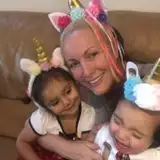
Does extended breast-feeding lead to early osteoporosis? Myth or fact?
When, considering to extended breast-feed, a mother should not only be aware of the health benefits to herself, and her child, such as preventing some cancers, allergies, calories burned etc…but also the negative health benefits to herself.
Our bodies are made to feed our children until they are ready to wean, but does this always come without consequences?
I like to teach you through my own experiences on what I have learned and what I go through each day as a Breastfeeding Mother, so that you can make the best educated decisions for you and your family.
I have currently been breast-feeding now for over five years straight. My oldest was breast-fed and she will be turning six in June. My youngest is now 4.
We have been trying to conceive a third child, but have yet been unsuccessful. As we age our bodies and eggs age and nature as well. Every year after 30 the number of eggs and fertility rate declines making it much more difficult to conceive.
Also, due to the fact that I have endometriosis, which I will go through later to educate you about here, it is much harder for me to conceive in the first place. I was one of the lucky ones who have this who was able to conceive naturally twice. When a person has endometriosis once a pregnancy is achieved it puts endometriosis into remission and having another birth is more possible when accomplished close enough to the first birth.
I definitely consider myself lucky as I absolutely love and live for my two children.
Now I feel I’m getting off course a little bit. Let’s get back to osteoporosis.
The google dictionary definition defines osteoporosis as this:
“a medical condition in which the bones become brittle and fragile from loss of tissue, typically as a result of hormonal changes, or deficiency of calcium or vitamin D”
Let’s point out hormonal changes first. Hormonal changes from breast-feeding are enormous.
The hormonal changes I have gone through from pregnancies, and Breastfeeding are astronomically crazy. There’s ups and downs and mood swings weight gain cravings breast sagging engorged breasts pain acne and more that come from hormones. Hormones play a big role in the production of breastmilk as well..
when our bodies make breastmilk, we are excreting the majority of the nutrition that we consume during the day to give to our children. Although it does have benefits for us, it is extremely beneficial for our children, but can cause us to lose a lot of the calcium and vitamin intake that we need to maintain strong, healthy bodies and strong, healthy bones for ourselves.
Mix that with an advanced maternal age (a person who conceived after the age of 35) and you bet like a crap . shoot on the high chances of early onset osteoporosis.
You might think this can be prevented with proper nutrition, and most likely it could be, but there are still high chances that a body creating milk for an extended ammount of time, is much more likely to develop early stages of osteoporosis from extended breastfeeding especially when it is present in past family genes.
Even if this has not run in your family in the past, it is still possible for a person to develop early osteoporosis from extended breast-feeding.
I do not want to tell you this to discourage you from breast-feeding your family in anyway I just want to let you know the things that I am experiencing with my own body from breast-feeding my two children after having my second child at an advanced maternal age.
I have noticed very easily, torn muscles and very brittle bones. I have had to be a lot more cautious when playing rough with my children or doing any hard impact exercises which have also caused me to unfortunately not burn as many calories as I’m used to.
Now I have occurred an EASILY broken tailbone and severe coccyx pain in result to this.
What I’m doing about it is upping my vitamin intake, along with my healthy diet and consuming foods that naturally make more calcium in my body A long with an iron rich diet. Calcium and iron tend to cancel each other out those so when eating for iron space the use of calcium rich food intake for at least 3 hours between.
A good way to get iron is to eat an egg and drink some orange juice (or eat vitamin C rich citrus fruits) together.
Iron rich protein and vitamin C help to digest iron. Wait at least 3 hours in between meals to digest a calcium rich meal such as cottage cheese etc because iron interrupts calcium and calcium interrupts iron but we need both of these vitally important nutrients in our diets to help prevent the loss of bone density from extended breastfeeding our children.