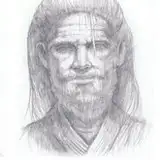
Development Sneak Peek: Crowns of Old, Part I
Added 2022-11-02 21:19:29 +0000 UTCHey all, hope your week is going well so far!!
For this month's sneak peek, we're going to look at some Crowns who haven't been named yet in the story. The Royal Codex so far goes from the 1st Crown, to the 11th and 12th Crown, to the 18th Crown and onwards. That's a lot of Crowns that were skipped over, so I thought, why not introduce them here?
I ended up writing a lot more than I expected for each Crown, so we'll do 3 Crowns this month, and 3 Crowns next month!
The Second Crown: Cunning Arsāma
Crown Arsāma was originally a boy from one of the tribes of Sur who lived in what is now known as Zerat. His appointment as Ashadūna's successor was seen as rather fortuitous, if not convenient, for Ashadūna's newly-founded Empire: it strengthened the ties between the tribes of Sur and Arsur itself during a tumultuous time of transition. Not all tribes, after all, were like-minded or willing to submit.
Even with Arsāma's appointment as Ashadūna's successor, however, there was still considerable anxiety among the other tribes. Some in the province of Hathura, as well, considered his appointment to be an act of revenge from the tribes that King Fravastis had previously waged war upon, which made them fear for what would become of Hathura under Arsāma's rule.
After Ashadūna's passing, however, Arsāma accomplished something remarkable: he prevented civil war, and solidified harmony within the empire. It may not seem a great achievement, and is often underestimated by those who look to Crowns with more distinguished achievements, such as Zana's brokering of trade routes or Keybanû's treaty with Ivia. However, Arsāma continued the unification process that Ashadūna had originally started. Not through force, but through diplomacy, as well as political cunning.
Threats from neighboring nations loomed large upon the horizon. Historians have recorded the ways in which Arsāma would deliberately provoke threats from the outside in order to give people within the Empire reason to remain united. One famous anecdote exemplifies this best: during a visit from a rather arrogant and temperamental Thalloi prince, Arsāma provoked his ire with subtle remarks that would seem innocent to most, but ones that targeted the prince's weaknesses expertly.
The Thalloi prince lost his temper in spectacular fashion, threatening to run Arsāma's Royal Protector--who was also Arsāma's promised one at the time--through with a spear. The prince was apprehended, jailed for three days and three nights, then finally banished from Arsur, leaving in disgrace.
The storytellers that Arsāma had invited to the event recounted it throughout the Empire and beyond. Upon arrival home, the prince was stripped of his royal status by his mother, the queen, and disowned for his failure. Beyond humiliating the prince, however, it more importantly served as a cautionary tale to those who sought to sow discord from within: Arsur's enemies would destroy the Empire, if given the chance.
The Third Crown: Mighty Humati
Crown Humati's reign was not as peaceful as her predecessor's. While Arsāma built a unified foundation for Arsur, that same unification now meant that the Empire was a greater threat to its neighbors. Arsāma's methods had provoked many foreign relations, and once he passed and the young Humati took his place, several Thalloi city-states as well as nomadic Sacati tribes from the northern steppes above Arsur, saw this as an opportunity.
Fortunately for Arsur, Humati was no stranger to war.
Her prowess in military tactics and battle strategy was second to none. She outmaneuvered the Sacati nomads as easily on land as she sunk Thalloi warships at sea. Humati oversaw key battles personally, as she not only understood military tactics but also the importance of logistics. She revolutionized the organization of the army, which now incorporated the combined soldiers of Hathura and Rojan, as well as the warriors of the tribes of Sur.
Humati's armies were considered to be the most fearsome foe to have to battle at the time: Arsurian mounted warriors and battle magi still invoke fear to this day. Arsur came to breed horses with specific magical abilities to aid in battle, making them a nearly unstoppable force, and the specialized training of battle magi made them devastating on any battlefield. There are famous ballads written about the Battle of Artioch's Pass, where Arsurian battle magi summoned enormous whirlpools in the Sea of Igris that pulled countless Thalloi warships under, wiping out the entire fleet.
During Humati's time as the Crown, Arsur did not lose a single war and did not have to make a single concession. For every battle she lost, she paid her enemy back tenfold. Despite her military might, however, Humati did not go on an expansionist campaign. Rather than conquer new land, her military principles were not guided by aggression, but self-defense: Arsur would not attack anyone, so long as they did not form a threat to the Empire.
Despite her talent as an army commander, Humati realized the importance of building relationships, and moreover, she had personally experienced the horrors of battle as a young child and did not wish to inflict it upon her subjects unless it was absolutely necessary. While her tactics seemed ruthless to some, Humati always sought for ways to end a battle as quickly as possible, if it could not be avoided altogether. This mindset has become a lasting guiding principle for how the High Generals of Arsur are also expected to act, taking Crown Humati as their example.
The Sixth Crown: Eccentric Bardiya
Crown Bardiya is a very odd case, in that there is next to nothing known about his/their reign. At least, not officially.
Royal historians have been employed at the Royal Palaces from even before Arsur existed. It is a holdover tradition from the Monarchy of Ardia that Ashadūna continued after founding Arsur. These historians record all the Crown's daily activities, as well as when they are handling matters of political importance or at notable events. These records remain for future generations, as well as future Crowns.
Unfortunately, most of Crown Bardiya's records were destroyed or disappeared. For the longest time, no one knew why or how, until a grave-robber managed to break into Bardiya's tomb, but instead of riches, they discovered a single book. It was a personal journal that Crown Bardiya left behind in secret.
The grave-robber was apprehended upon an attempted escape and later executed, but not before they were made to reveal their discovery. Scholars unearthed the journal and, to their enormous surprise, discovered that Crown Bardiya kept record of their own activities and, furthermore, was the culprit behind the destroyed records of his reign in the first place. The first journal was, in fact, the start of an elaborate treasure hunt that would lead the scholars on a 3 year long journey to collect all the journals that Crown Bardiya had written. Apparently, Bardiya detested the plain and objective way of writing from the royal historians, and was determined to have his records told in their own voice.
This eccentric behavior was not unusual for Bardiya. He was known to have a flair for the dramatic, and enjoyed outwitting, confusing or teasing others with riddles, personally-made puzzles, and philosophical conundrums. While this could make them quite frustrating to deal with in person, Bardiya also was a prodigious scholar of magic. In fact, they refused to take on a Sorcerer as he was of the opinion that he could do much better than any other magus out there, and they were probably correct in that assessment.
Bardiya is known as a founder of contemporary warding magic; before them, there was a very simple magic system and only a dozen sigils to choose from. Bardiya managed to find a way to invent new sigils through combining bits and pieces of the old ones, eventually creating the 4037 sigils currently in use. This warding magic increased the Empire's security immeasurably, aiding the armor and weapons used by its armies, and still keeps many of its important landmarks safe from harm.
That was it for this month! Next time I'll be introducing The Ninth Crown, The Thirteenth Crown (Ardashir's successor), and The Fifteenth Crown!
Until then 💖