[COLUMN] The Third Season of Strange New Worlds is Same Old, Same Old | by Darren Mooney
Added 2025-07-21 14:00:18 +0000 UTC
Note: This piece contains spoilers for the first two episodes of the third season of Star Trek: Strange New Worlds, now streaming on Paramount+. And lots of discussions of earlier Star Trek episodes. However, it’s maybe unfair to describe recycled plot elements as spoilers. Anyway, I was not a fan. But if you want to watch the episodes first and then come back, feel free to bookmark and come back when you’re ready to engage.
The title of Star Trek: Strange New Worlds has always represented something of a paradox.
On the one hand, it represents that platonic ideal of the larger Star Trek franchise, the promise of an endless array of possibilities and of “infinite diversity in infinite combinations.” The title includes the promise of “strange” and “new”, two properties that are to be commended and encouraged in the modern landscape of “cultural fracking”, particularly in the context of a futuristic science-fiction franchise that is build on the promise “to boldly go where no one has gone before.”
On the other hand, it also speaks to the empty nostalgic stagnancy of most modern media intellectual properties and of the contemporary Star Trek franchise in particular. It is an invocation of the monologue from James T. Kirk (William Shatner) and later Jean-Luc Picard (Patrick Stewart) that played over the opening credits each episode, something that Star Trek: Deep Space Nine and Star Trek: Voyager had moved beyond. Strange New Worlds is a franchise boldly going in reverse.
Of course, prequels are nothing new, whether in pop culture in general or in Star Trek in particular. Star Trek: Enterprise was, thanks to the wonders of time travel, both a sequel to Star Trek: First Contact and a prequel to the original Star Trek. JJ Abrams’ Star Trek was a reboot of the franchise, but also spiritually a prequel, set at Starfleet Academy. The first Star Trek streaming show, Star Trek: Discovery, began as a prequel before warping into the distant future.
However, what is surprising about Strange New Worlds is just how much of a prequel it is. Of the eight credited leads in the first two seasons, only one – Erica Ortegas (Melissa Navia) – is a wholly original character. Of the remaining seven, two - Spock (Ethan Peck) and Nyota Uhura (Celia Rose Gooding) – were regulars on Star Trek, while two more – Christine Chapel (Jess Bush) and Joseph M'Benga (Babs Olusanmokun) – were recurring guest stars.
Christopher Pike (Anson Mount) and Una Chin-Riley (Rebecca Romijn) both carry over from an unaired pilot from 1964, with showrunner Henry Alonso Myers quipping that Strange New Worlds represents “the longest pilot-to-series pickup in the history of television.” The seventh and final of the remaining regulars is La'an Noonien-Singh (Christina Chong), a blood relative of Khan Noonien Singh (Ricardo Montalban).
The show’s guest and recurring cast is packed with familiar faces: James T. Kirk (Paul Wesley), Montgomery “Scotty” Scott (Martin Quinn), Spock’s fiancée T’Pring (Gia Sandhu). The show heavily features Sam Kirk (Dan Jeannotte), James’ brother who was famously played by William Shatner in a fake moustache for a single shot of “Operation -- Annihilate!” It even made a point in its first season to tease the return of Sybok, Spock’s long-lost half-brother from Star Trek V: The Final Frontier.
Strange New Worlds feels less like an actual television show than it does a collection of reference points and iconography clumsily stitched together in a shape vaguely resembling televisual drama. It is Star Trek as a “cargo cult”, a surreal and extended ritual in which the show tries to conjure Star Trek into being by simply doing things that Star Trek does and featuring things that Star Trek features. There is a point at which self-referential becomes autocannibalism.

Watching a random episode of Strange New Worlds often becomes a game of pattern recognition. Where is that plot element lifted from? What precise episode of the Star Trek franchise are they evoking here? How many times has Star Trek done this exact plot, with minor variations, over the course of nearly sixty years and nine-hundred episodes? Does the show use the same reset button from Star Trek: Voyager, or did they have to build their own?
The third season of Strange New Worlds, which launched this week with a two-part premiere, is more of more of the same. It contains little new. The first episode, “Hegemony, Part II”, picks up from where the last season cliffhanger left off pitting the crew against the Gorn, an alien species that debuted in “Arena” in June 1967. The second episode, “Wedding Bell Blues”, features old Star Trek characters Trelane (Rhys Darby), Roger Korby (Cillian O'Sullivan) and Q (John DeLancie).
As ever, these episodes just feel like reheats of decades-old ingredients. Most obviously, “Hegemony” feels like a direct invocation of the classic Next Generation season-bridging two-parter “The Best of Both Worlds”, just replacing the Gorn with the Borg. The episode even hinges on the exact same deus ex machina, with the crew figuring out how to take advantage of their opponents “resting cycles” and using that knowledge to “tell [them] to go to sleep.”
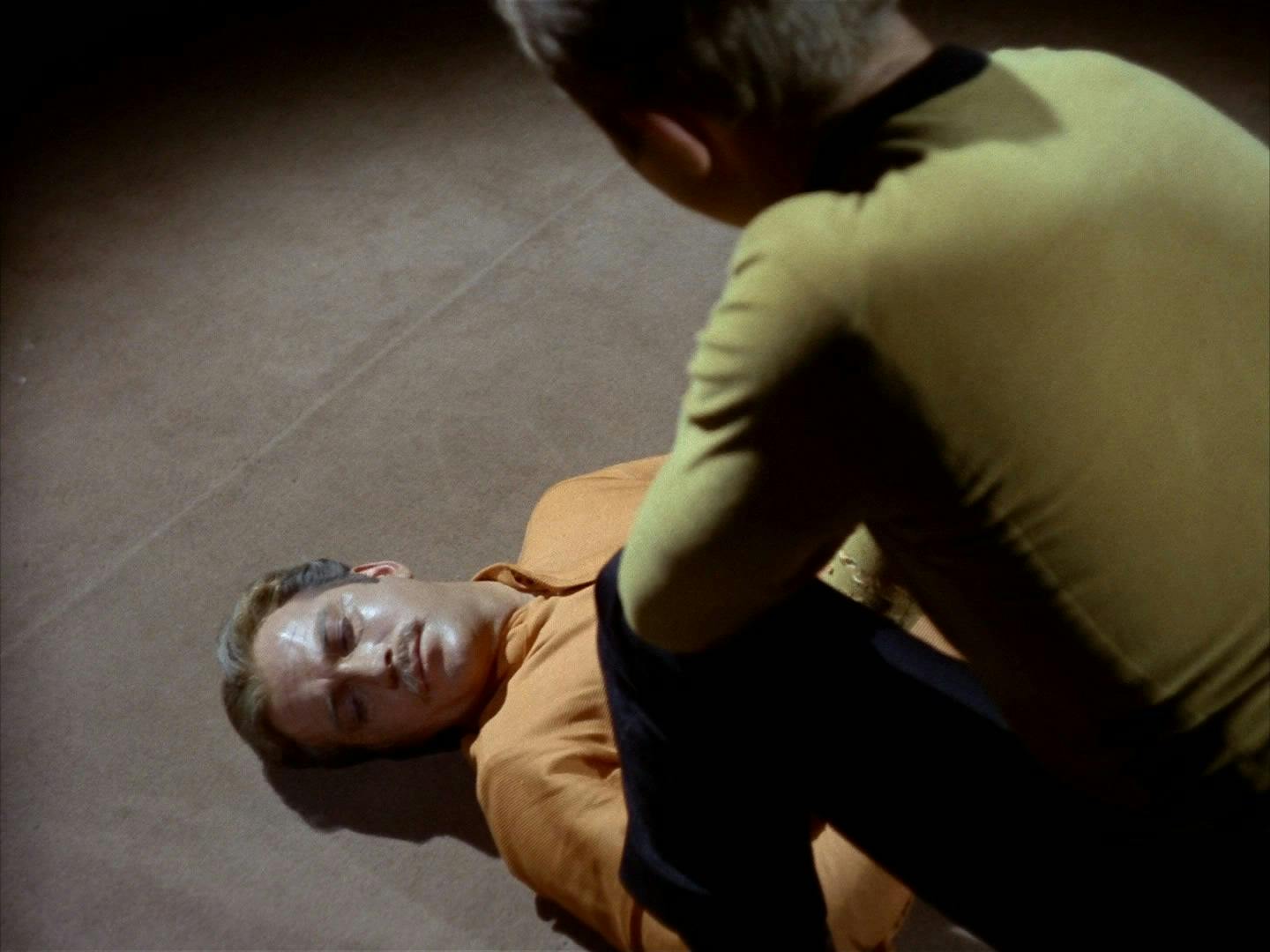
“Wedding Bell Blues” is a classic parallel universe episode where a character is thrown into a reality different than their own and has to find their way back to the life they were supposed to lead, like “Non Sequitur” or “Parallels.” The involvement of the meddling godlike alien and scenes of that alien harassing the stoic main character lying in bed strongly evoke “Tapestry.” Also, Trelane’s plot resolves exactly the same way it does in “The Squire of Gothos”, with his parents showing up.
It is worth noting that Strange New Worlds is not just inviting comparison to a set of random Star Trek episodes. “The Best of Both Worlds”, “Tapestry” and “The Squire of Gothos” are correctly regarded as among the best episodes of Star Trek ever produced. If Strange New Worlds is going to invoke those specific episodes, it needs to be able to compete with them. Otherwise, it just spends forty or so minutes reminding the viewer of other better episodes of television.
There is perhaps an argument to be made that, after nine hundred episodes, there are only so many different stories that can be told within a forty-minute episode of television. It might also reasonably be pointed out that the possibilities are even more confined when the characters involved in those stories are pre-existing and pre-defined characters. However, these are unforced errors. These are the results of choices that the production team made.
There was perhaps a reason Deep Space Nine and Enterprise pushed towards serialization. There was also a reason why Deep Space Nine introduced new character archetypes to Star Trek, like Kira Nerys (Nana Vistor), Odo (Rene Auberjonois) or Quark (Armin Shimerman). This gets at one of the bigger issues with Strange New Worlds. It is not just the hollow invocation of pre-existing Star Trek without the skill to match. It is a show entirely lacking in any distinct identity of its own.
The identity of Strange New Worlds is entirely defined in relation to the original Star Trek show. Strange New Worlds is worshipful of the larger Star Trek brand, to the point that the show’s very first episode, “Strange New Worlds”, earnestly argues that the key to world peace might lie in making everybody Star Trek fans. The show is desperate to demonstrate that its writers have scoured Memory Alpha like it is some ancient holy text.
However, there is a constant sense that Strange New Worlds misses the forest for the trees. This is most obvious with the Gorn. Every Star Trek series has its own distinct alien menace: the Klingons and Romulans in Star Trek, the Borg, Ferengi and Cardassians in The Next Generation, the Founders, the Vorta and the Jem’Hadar in Deep Space Nine, the Kazon, the Vidiians, the Hirogen and others in Voyager, the Suliban and Xindi on Enterprise. However, in each case, the aliens are humanized.

Key to Star Trek is a humanist optimism that alien species can come to understand each other. Kang (Michael Ansara) is an honorable Klingon in “Day of the Dove” and Kirk (William Shatner) brings peace with the Klingons in The Undiscovered Country. Jem’Hadar Goran'Agar (Scott MacDonald) sacrifices himself for Bashir (Alexander Siddig) in “Hippocratic Oath.” Janeway (Kate Mulgrew) makes peace with the Hirogen at the end of “The Killing Game, Part II.”
Even the original Star Trek made peace with the Gorn. “Arena” ends with Kirk refusing to kill a defeated Gorn, recognizing the personhood of this reptilian monster in the same way that “The Devil in the Dark” found some humanity in the strange Horta. However, Strange New World has no such empathy. The Gorn are just computer-generated monsters. The characters can kill Gorn children without guilt. Khan can place her phaser to a Gorn’s neck and blow its head off in graphic detail, and it is just a cool moment that requires no thought.
There is something off-putting in the slavish worship that Strange New Worlds has for classic Star Trek without ever seeming to really understand it. Television prequels are a tough assignment, but recent shows like Better Call Saul and Andor have found ways to reverse-engineer truly compelling and engaging prequel narratives by earnestly engaging with their source material and understanding that the nature of prequels is inherently tragic. The audience is watching characters who cannot change their fate.
For anybody familiar with Star Trek, most of the cast of Strange New Worlds are doomed. Pike is destined to end up paralyzed and unable to speak, trapped in a wheelchair. Sam Kirk will die on a colony world, and his brother will never even mention his name again. James Kirk will get crushed by a falling bridge. Chapel will lose her fiancé Roger Korby when he discovers the ruins of an ancient civilization that engineered androids, transferring himself into a synthetic body and plotting to infiltrate the Federation.
Producer Akiva Goldsman has boasted that Strange New Worlds “will drive right into The Original Series”, but doesn’t seem to understand what the first season of the original Star Trek was. Much of the press around Strange New Worlds emphasizes a desire to get back to the franchise’s “optimistic” roots, but that seems more evocative of The Next Generation than of the original Star Trek. The original Star Trek, particularly in its first two seasons, was often a surprisingly bleak show.
The original Star Trek was populated by dead worlds and monsters. In “Where No Man Has Gone Before”, the first episode shot, Kirk has to murder his best friend (Gary Lockwood). “The Man Trap”, the first episode aired, was about a vampire stalking the ruins of its world. Spoiled children held godlike power in stories like “Charlie X” or “The Squire of Gothos.” Insanity swept through the cosmos in adventures like “The Naked Time” or “Operation -- Annihilate!” Colonies were frequently the site of atrocities in stories like “The Conscience of the King”, “Arena” or “Miri.”
Strange New Worlds has a laissez-faire attitude to all that. If the show’s first season had an arc, it was effectively that it was a good thing that Pike had to go in the torture chair because it meant that Star Trek episodes like “Balance of Terror” were still canon. At the end of “Hegemony”, having put the Gorn to sleep, Pike shrugs off the fact that he has basically set in motion the massacre of the Cestus III colony by the Gorn in “Arena.” “I can’t help wondering if we didn’t create a problem for someone else to solve later,” he muses, but it’s a winking joke to the audience rather than an actual dramatic stake. Confronting that reality would really kill the optimistic vibes.
Star Trek has always spoken to its moment. Often clumsily, but also earnestly. Even in the streaming age, Lower Decks had things to say about the millennial understanding of work. However, Strange New Worlds never feels like it has anything to say about the modern world beyond pointing at something from Star Trek and self-congratulatorily declaring “Star Trek!” really loud. If one consistently repeats a word without engaging with its meaning, at a certain point it just becomes noise. To quote the villainous Shinzon (Tom Hardy), a clone of Picard, it is “the triumph of the echo over the voice.”
In this sense, Strange New Worlds is emblematic of where many major franchises find themselves today, evoking the empty iconography and continuity of earlier instalments without any meaningful engagement with those works. It is diminishing returns. It was announced a few weeks ago that Strange New Worlds would end with a truncated fifth season. While the Starfleet Academy spin-off is still on the slate, it does feel like the franchise’s “25-week, 29-episode run of non-stop Trek” era is well and truly over.
They end, not with a bang, but with an echo.
Comments
I think this is a fair critique of a lot of the show (certainly that pilot episode was just, abominable) but as others have pointed out there are bright spots. They seem to careen between playing it super safe and taking wild swings like a full-on musical, or Those Old Scientists. Part of the problem of course is that with all these amazing production values, the short seasons leave less room for experimentation, which combines with the Kurtzman / Hollywood Corpo cargo cult reading of the franchise to render most episodes "safe." Part of the draw for me as well is just watching this cast run away with it. I want these actors and this design aesthetic to be given the kind of work that made TNG and DS9 such standouts, but as you said, that's just not the era we're living in (with the exception of Andor, which is such an extreme outlier that I don't know it's worth even categorizing it as "a streaming show").
Precious Roy
2025-07-23 02:52:30 +0000 UTCI think this critique of SNW is a touch harsh - there has been some properly "Star Trek" episodes that feel original to SNW (the one with M'beng's daughter and the nebula, the Star Trek: MASH episode as well) That being said, holy heck, I did not spot the Best of Both Worlds and Tapestry reheats I did spot the repeat of Archer's like from Regeneration tho. To draw this comment to a close, Star Trek has always had a bit of navel gazing, but top much and it ruins the fun for me. I guess we will see how the rest of SNW pans out .
Wills
2025-07-21 19:15:31 +0000 UTC