[COLUMN] Five Years Ago, Green Book Pulled a Surprising Best Picture Win. How Did That Happen? | by Darren Mooney
Added 2024-02-19 15:00:12 +0000 UTC
This week marks the fifth anniversary of one of the great surprises in the modern history of the Academy Awards: the night that Green Book won the Best Picture Oscar.
It wasn’t quite as big a surprise as “envelope-gate” two years prior, which had seen the statues handed to La La Land instead of the rightful winner, Moonlight. Still, it caught a lot of observers off guard. A Star is Born and Roma had been early favorites. Even after Green Book gained traction at the Producers’ Guild Awards, its odds were still second to those of Roma according to the bookies. It was also notably one of only six films to win Best Picture without even a nomination for Best Director.
Looking at the archived odds for the previous winners, Green Book had the longest odds of any champion since Moonlight. It was a less likely winner than Parasite, the first non-English language film to take home the prize, or The Shape of Water, a movie in which a woman (Sally Hawkins) has carnal relations with a fishman (Doug Jones). Green Book was also criticized as the weakest winner in recent memory, a regressive choice for a body trying to move forward with the times.
Green Book stands apart from other recent winners. It’s sandwiched between The Shape of Water and Parasite. It is very different in its content and perspective than something like Moonlight or Everything Everywhere All At Once. Even if it is thematically or narratively similar to Nomadland or CODA, in being a story of working class white Americans, it lacks their indie sensibility. If anything, it’s closer to winners from earlier decades, like Forrest Gump or Driving Miss Daisy. In terms of critical response, it ranks among the weakest winners at MetaCritic and Rotten Tomatoes.
So, without casting any judgment on the film itself, how did Green Book win the Best Picture Oscar? How did a movie that most early prognosticators didn’t even bother to list as a potential nominee take home the top prize? It’s an interesting question, and it offers a compelling illustration of the mechanics of awards season. The film’s path to Oscar glory wasn’t necessarily orchestrated or planned, but happened due to a confluence of circumstances largely unrelated to the film itself.
The first thing to understand is that an Oscar campaign doesn’t happen organically. Even something like Andrea Riseborough’s successful grassroots campaign to secure a Best Actress nomination for To Leslie requires considerable industry clout. Oscar voters don’t tend to find films, they tend to require that films be presented to them. Awards campaigns are famously expensive, and attention is a finite resource. As a result, studios tend to make pragmatic choices in the movies that they push.

For example, this year, there was frustration this year that A24 didn’t pick up more nominations for movies like The Iron Claw or Priscilla. The studio has some major award experience. It was the most nominated company at last year's ceremony, and Everything Everywhere All At Once swept. However, despite campaigning equally for a slate that included The Whale, Aftersun, After Yang, Causeway, and Marcel the Shell with Shoes On, its only Best Picture nominee was Everything Everywhere All At Once.
This year, perhaps responding to that lesson, A24 appears to have made the tactical choice to push two films from their slate ahead of the others, securing Best Picture nominations for both Past Lives and The Zone of Interest, and a Best Director nomination for Jonathan Glazer. It’s hard to overstate just what an accomplishment that is, given how alienating The Zone of Interest is as a film. The gambit paid off. A24 might be small, but it is the only studio with two Best Picture nominations.
Green Book was distributed by Universal Pictures. However, it was not the studio’s first choice as a horse to back in the race. Heading into awards season, Universal put all their weight behind Damien Chazelle’s First Man, a biopic about Neil Armstrong (Ryan Gosling). It was a smart choice. Chazelle had become the youngest person to win the Best Director Oscar, when he claimed the prize for La La Land. Indeed, La La Land had been such a near-miss that there was a sense Chazelle might be due.
Universal bet big on First Man, securing it the slot opening the Venice Film Festival. It seemed, as Adam B. Vary noted, “Destined For The Oscars.” As Scott Mendelson observed at the start of September 2018, First Man was (with A Star is Born) one of “the two obvious big-studio contenders.” Then Fox News got involved. Following the film’s premiere, right-wing media and politicians stirred up a strange culture war alleging the film had an insufficient number of American flags.
Of course, this argument has no bearing on the film’s quality. However, the mechanics of the Oscar race are built around perception rather than reality. The Academy Awards are more about narrative than about formalism, as demonstrated by familiar archetypes like “the Oscar villain.” In an insanely heightened political climate, this controversy – coupled with underwhelming box office – was enough to kill First Man as a serious contender. The film would be locked out of the major categories.
So, when First Man faltered early in the race, Universal had to find a viable replacement. There was no point channeling all the money and effort into a major awards campaign for a film that had no traction. Its two other potential awards contenders were Robert Zemeckis’ Welcome to Marwen and Peter Farrelly’s Green Book. Of course, as is obvious to anyone who has seen the film, Welcome to Marwen was a non-starter. That left Green Book.

Timing is everything. One of the issues that kept The Iron Claw out of this year’s awards race was that it was not ready in time for the festival circuit. It would likely have played well at the Toronto International Film Festival, where Green Book premiered. Green Book screened late in the festival, on the sixth day, “a time when most of the presumed front-runners already have played.” The previews of the festival that did acknowledge the film tended to have an air of resignation to them, with Brian Tallerico noting that director Peter Farrelly “may not seem like an obvious choice for a TIFF dramatic premiere, but here we are.”
Behind-the-scenes gossip suggests that critics weren’t the only people to write off Green Book. On the podcast Blank Check, actor Griffin Newman recounted reports that the Toronto International Film Festival only decided “to accept the movie to strengthen the relationship” that they had with Viggo Mortensen, who is a frequent collaborator with David Cronenberg, who is the festival’s “own patron saint.” Green Book went on to win the audience award, clearing a path to Best Picture.
Of course, it’s impossible to know why the voting body went with Green Book over the other nominees. Its victory was at odds with the attempts made by Academy President Cheryl Boone Isaacs to diversify the body’s membership. Was Green Book’s triumph a result of internal “revanchism” against these measures? It’s impossible to know. However, it’s also worth acknowledging that Green Book’s biggest rival was Roma, a movie from Netflix, a streaming service that has faced hostility from the establishment and seen a number of presumed frontrunners meet surprising defeats.
Still, these coincidences were necessary to put Green Book in a position where it could take a run at the Academy Awards. Had any of these dominoes fallen in a different way, the movie would have likely been forgotten about, rendered nothing more than a historical curiosity from the one half of the directing team behind Dumb and Dumber, Me, Myself & Irene, and Hall Pass, and the solo director of the upcoming raunch comedy Ricky Stanicky. Instead, it took home the top prize.
This is not an atypical path to awards glory. Another of that season’s major contenders charted a similarly haphazard trajectory into the race. At the start of the season, 20th Century Fox bet heavily on Widows, a prestige crime thriller written by Gillian Flynn and directed by Steve McQueen. McQueen’s previous movie, 12 Years a Slave, had taken home the Best Picture Oscar just a few years earlier, although McQueen lost the Best Director Oscar to Alfonso Cuarón for Gravity.
The film had a lot of potential. Star Viola Davis was an early favorite to take home the Best Actress Oscar, despite having won just two years prior for Fences. The film opened the London Film Festival, effectively McQueen’s home turf. However, like Universal’s big bet on First Man, Widows experienced failure to launch. The film struggled at the box office, which caused serious problems for a movie that was positioning itself as a pulpy crowd-pleaser.

So, much as Universal had done following the difficulties with First Man, Fox looked for another candidate that it could throw its weight behind. James Gray’s Ad Astra seemed like a possible contender for a moment, a science-fiction riff on Heart of Darkness starring Brad Pitt. However, genre movies tend to face an uphill battle with the Academy Awards, Ad Astra failed to rally audiences behind it, and Gray has since acknowledged his own disappointment with the finished film.
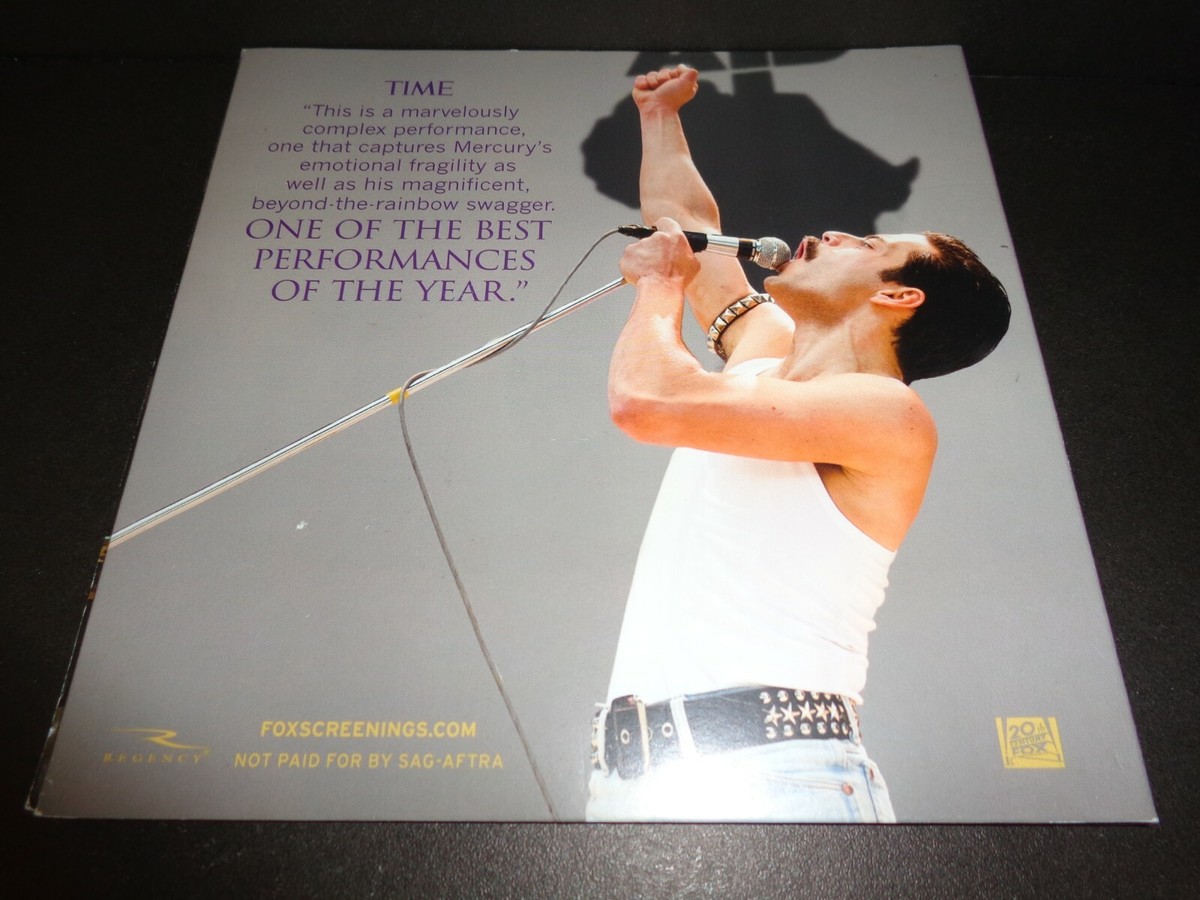
Fox had to find another horse to back. The only real candidate was Bohemian Rhapsody, a biopic of Freddie Mercury that seemed like a potential contender for Rami Malek as Best Actor, but which was likely rendered radioactive by the accusations of sexual assault against credited director Bryan Singer, which were playing out during the season. Indeed, early awards screeners were very specific that they wanted voters to support the film’s cast, and to pay no attention to the man behind the curtain.
However, while critics really didn’t care for Bohemian Rhapsody, the film gained traction with audiences. It was a massive success, grossing $910 million worldwide. It became the highest-grossing biopic of all-time (it has since been surpassed by Oppenheimer) and the second-highest-grossing of that slate of Best Picture nominees. All of these conspired to make Bohemian Rhapsody seem inevitable, although – like Green Book – it would not secure a Best Director nomination.
These are the silent mechanics of awards season. If not for that bad-faith (and frankly Simpsons-esque) attack from politicians and pundits who hadn’t even seen the movie, there’s a decent chance that First Man would have been Universal’s big awards contender heading into the season. If the Toronto International Film Festival hadn’t accepted Green Book as a gesture of good faith to Viggo Mortensen, the film might never have emerged as a viable contender.
It's comforting to think of the Academy Awards as a measure of merit. To the institution’s credit, it has at times picked worthy winners. Some true underdogs, like The Silence of the Lambs and Everything Everywhere All At Once, have even managed to triumph despite an early release slot, tantamount to running a year-long gauntlet against potential challengers. This year, Oppenheimer might take home Best Picture despite opening as a mid-summer blockbuster.
However, just as frequently, the path to the Best Picture Oscar is full of dead-ends and wrong turns, the result of luck and timing more than skill or quality. A basically competent movie in the right place at the right time can go much further than a comparatively stronger film that stumbles due to factors outside its own control. In its own way, Green Book was true to the spirit of Forrest Gump, a feather caught in a breeze that happened to blow in the right direction.
Comments
I think this was around the dawn of the subtitled movies being able to properly compete. After all, this was the year that "Roma" seemed like the frontrunner. And "Parasite" would win two years later, which gets to the point where "All Quiet..." can become a major contender by volume and this year where three of the Best Picture nominees are primarily subtitled. But I don't think we were there yet. Neon was only founded in 2017, and A24 was just solidifying itself. It had won for "Moonlight", but that was a surprise victory and many of its early Best Picture campaigns misfired for movies like "American Honey", "The Lobster", "A Most Violent Year", movies that feel like they'd be major contenders just five years later. I don't know the infrastructure was there for those movies, yet.
Darren Mooney
2024-02-22 23:50:54 +0000 UTCDarren, thank you for this glimpse into the insanity of the awards season. I had no idea TIFF held so much power! Green Book winning seems particularly odd considering the Cannes lineup for 2018 included Shoplifters, Burning, Cold War, and Capernaum. Was it just that non-American films couldn't compete in the Oscars in 2019?
W. Fry
2024-02-22 07:12:42 +0000 UTCSelf-censored, by the way. Not sure if it’s allowed in these forums, so played it safe.
erakfishfishfish
2024-02-21 22:13:04 +0000 UTCSidenote: I’m so bored of people simplifying The Shape of Water as the “fish f***er movie”, much like how I’ve seen Nomadland described as the “sh** in a bucket” movie. It does films a disservice to distill them down to that. Especially in the case of The Shape of Water, where, the film heavily implies she’s already half fishfolk herself.
erakfishfishfish
2024-02-21 22:12:26 +0000 UTC