Kissuara, Magi, and Djinn Overview
Added 2021-09-23 05:49:52 +0000 UTCCreator God - Al-Kamaria
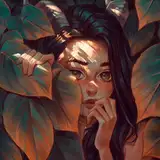
Moon goddess. very strict, but very kind. Main themes are purity and grace.
Wears a burka to conceal her beautiful silvery skin which is blinding to mortals, and her priestesses wear burkas to honor her.
Her worshippers must pray to her every night when the moon is out, and they must face the moon. Kissuara has no winters and the hours do not change, meaning the moon will be out the same time.
Worshippers view the night time as a time of peace, saving them from the harsh heat of the sun. It's possible to freeze out in the desert, though, so it's taken as a reminder that there is danger even in times of peace.
In Kissuara, every new moon is a day of rest. Worshippers take this as Al-Kamaria resting, and they believe it dangerous to do things under a sky where she is not currently watching over them.
Kissuara Overview
At the dawn of time, there was only the sun and moon. Chaotic life stirred inside the sun, and caused it to so hot that it created a massive explosion, and its ashes flew into the blackness down below to create a realm of flittering Sand. From within the explosion were born the first Djinn, along with their wicked ruler, Shaitan.
Shaitan led the Djinn into the world below and they made this curious flat disc of sand into their chaotic playspace, spending their time wallowing in sin and violence. In its earliest days, Kissuara started off as a chaotic realm unsuitable for life but it would not stay that way for long.
Within the moon, another life bloomed into existence when the first Djinns stirred. She was Al-Kamaria, the immaculate and supreme moon who watches over all with strict kindness. After her birth the first thing the Goddess did was look down at the Realm as it was, and then she saw the Realm as it could be. Such squandered potential made her weep, and her tears became the Mala'ikah (Angels. Singular; Malak). The heavenly beings represented her will, and among them the one who stood as the greatest and most powerful son was known as Iblis.
With a host to call her own, Al-Kamaria descended from the moon on a pillar of silvery light to lead the charge against the Djinns herself as she brandished a shimmering scimitar that was as curved and glimmering as the crescent moon. Thus began an war known as the Jihad against Shaitan.
The Jihad lasted for seven years. During this time a portion of Al-Kamaria's Mala'ikah would lose their faith in the creator. Iblis in particular fell from grace after falling to Shaitan's temptation during the sixth year. Shaitan appealed to Iblis's pride and convinced the mighty Malak that as a Djinn he could find freedom and would not have to spend an eternity in servitude. Iblis took with him a quarter of Al-Kamaria's Mala'ikah, and they became corrupted Djinns known as the Shayateen.
Despite the monumental blow to her forces and morale that this horrid betrayal caused, Al-Kamaria pushed on in her journey to free Kissuara and shape it into the beautiful Realm she knew it could become. Ultimately, through godly meditation she became enlightened and devised a magical trick that would change the tide of the Jihad forever. Al-Kamaria discovered the secret to binding a Djinn and capturing them in servitude. With this new tool in their arsenal, her army of Mala'ikah set out capturing their enemies and turning them on their former comrades.
Once they bared down on the Djinns with these increased forces, the Jihad was practically already over. A final showdown took place, with Al-Kamaria and Shaitan meeting at last in battle. They fought and they fought but even after the evil Djinn tried every last trick he could think of, the moon Goddess whittled him down to a weakened state and with her magic she captured him within a deep, black and red lamp, ending the Jihad once and for all.
With her godly power and with Shaitan serving essentially as a battery, Al-Kamaria utilized him and uttered the first wish. Shaitan had no choice but to help her create a race of lesser beings, humans, and together he and Al-Kamaria tailored the world to suit the needs of these new fleshy creatures. They gave the desert life to be hunted, created the ocean and rivers, oases, and all sorts of resources that humans could ever need.
That being said, not all the Mala'ikah were thrilled with their mother's decision to create a new race that would serve as the masters of this Realm. Al-Kamaria insisted that the Djinns are of the sun, she and the Mala'ikah were of the moon, and that the earth needed masters of its own. This logic did nothing to dissuade them, and some more stragglers left to join the survivors of the wicked Djinn.
These last unbound Djinn still inhabit the Realm to this day, looking for opportunities to cause trouble or restore chaos.
For a time, Al-Kamaria remained in the realm which she had since named Kissuara. By watching Al-Kamaria command Shaitan, these early humans learned how to harness the powers of Djinns for their own, and the first Magi were born.
The greatest of these early Magi was known as Suleimon. He proved so powerful that no manner of Djinn could escape his influence, no matter how strong. Al-Kamaria was impressed with this and offered to make him the King of Kings if he proved able to command the captured Shaitan into doing his business. It took the Magi weeks to wrestle with Shaitan until finally he overcame his will. With Shaitan's power, Suleimon created a mighty palace of gold that towered into the sky, built in honor of Al-Kamaria.
This would become the city of wonders, Salmazah.
Impressed with Suleiman's ability, Al-Kamaria made good on her word and proclaimed him Sultan (female quivalent is Sultana). This title made Suleimon not only her divine emissary, but also leader of the entire Realm. 'Sultan' is a title that is not passed down, but inherited by proving themselves in the same way. Magi can live for hundreds of years due to magic, but when one dies, the Realm falls to darkness and the city of wonders loses its lustre. Shaitan's power starts seeping out of the palace with no one to temper it, and Djinns start running amok even more than usual. During this dark period, any Magi is welcome to enter the palace and attempt to claim the title of Sultan, but few succeed.
These recurring periods without Magi are one reason why Kissuara hasn't advanced past their medieval status.
Now that the humans had a leader and were doing alright for themselves, the great Goddess found it was the time for her to return home to the moon. She still intervenes in the life of her subjects, albeit not as often as many other creator Gods. Al-Kamaria is content to simply watch on from above, answering prayers here and there at her discretion and leaving most important duties to her Mala'ikah.
When the Goddess and Mala'ikah left, they cast the lamps and bottles containing the Djinns they captured and used during the Jihad against Shaitan deep into the sands. Magi and fortune seekers alike still comb the deserts of Kissuara searching for these ancient and powerful Djinn, as many of the older Djinns are much more primal and powerful than the ones seen in Kissuara today.
Afterlife
When she returned to the moon, Al-Kamaria created an endless resting place for the souls of humans know as Pardis. Upon death, worshippers of Al-Kamaria will be taken by the Malak of death, Az'rail, to be judged by two more Mala'ikah, Jibril and Mika'il. Souls go to one of two places.
Firdaus
Every righteous Sultan who dies is gifted a new kingdom to rule in death, and collectively these kingdoms are known as Firdaus. Each kingdom is a beautiful garden on the moon where the souls will live without want or need of anything.
Sa'eer
Literally the sun. Sinners are cast into the blazing pits to repent for their wicked ways and are endlessly tormented by the Djinn who live there. After enough time has passed their souls will be purified and allowed into Firdaus.
Magi and Spellcasting in Kissuara
A Magi is Kissuara's main form of mage. The humans of Kissuara do not rely on their own mana for casting spells, but instead specialize in using their mana to control Djinns to do their bidding. Casting a 'spell' is therefore done by unsealing a Djinn and willing it to use its powers in a specific way. Using mana will allow the Magi to control the intensity of the spell. Having a wide variety of Djinns makes the Magi more powerful, as there are many types of Djinn who can do things that others can't.
Rather than spells it's closer to say that Magi cast commands or make demands, and then the Djinn will follow the directives if enough mana is produced by the Magi. This isn't to say that this is some unique form of sorcery, or even that it's unique to Kissuara. Rather, their culture forced magic down this one narrow path. Both Kissuaran magic and Karnallian magic are formed from the user's own mana, and they both are centered around vocally enforcing their will into existence. The only difference is that Karnallian magic enforces the user's will on reality, whereas Kissuaran magic enforces the Magi's will on a Djinn.
Traditional spellcasting is rarely seen in Kissuara, as it's the stuff of Djinns. It's considered ethical for a Magi to control Djinns, but not to learn their power for themselves. Kissuarans believe that learning actual magic from a Djinn will corrupt the Magi's soul, and in some cases they're right. Djinn are not kind-hearted entities by any means and they will surely lie and lead their Magi astray if it suits them.
Some fundamentalists disapprove of other Realms having their own methods of performing magic and believe them to be heretical, but the predominant understanding is that Karnallian Mages and so on do not derive their powers from being taught by Djinns. Therefore, they are not sinful by nature.
The only other approved type of spellcasting in Kissuara are the Priestesses of Al-Kamaria who can create miracles with their Goddess's blessing. Some random Kissuarans out there are capable of using cantrip-level magic, but that's about as far as it goes. Such displays are usually kept on the downlow less they be accused of heresy.
There is nothing stopping a Kissuaran who has emigrated to another Realm from learning that Realm's magic other than religious reasons.
Djinn Overview
Djinn as a whole are entities created entirely out of pure arcane energy. Someone who is proficient enough in controlling such energies, a Magi, can easily capture and seal a Djinn away in a suitable container. They can take physical forms, but their true forms are wispy and ethereal. Each Djinn has a preferred form they take and often a preferred gender, but they are genderless by default and can switch it up at any given moment if they so choose.
Djinns tend to be chaotic and sometimes even malevolent in nature, but no matter their personality they cannot defy the demands of their Magi. Not all Djinns are evil by default, though, and some change their ways over time. There are many examples of Djinns growing as individuals and learning human emotions. Because they are spiritual beings, the react to the intention of their Magi. If their Magi is wicked at heart and commands them for power and personal fortune, they will remain set in their wicked ways. But if the Magi uses their Djinn for good and helps others with their power, then this will slowly have an influence on the Djinn and start to shift its alignment.
Unfortunately, this isn't permanent. If another Magi were to acquire the same Djinn then their influence would start overtaking them. The only way it would be permanent is if the Djinn was released from service, but then if they were captured by yet another Magi the cycle of influence would begin anew. There's no way to use a Djinn without your mana having an impact on it.
Shaitan is a notable exception to this. His will and evil personality cannot be tempered no matter the character of the Sultan who wields his lamp.
Another way that Djinns are influenced by their Magi is their power. Simply put, the more powerful the Magi who wields the Djinn, the stronger the Djinn will inevitably become over time. This influence does not wane, it's permanent. Some Magi even make their living by training and shaping Djinns for other Magi in this manner.
Lastly, to answer an important question. Is this slavery? Yes and no. Djinns are often destructive, primarily wicked, and in some cases incapable of being judged on a human's morality scale. They are personified chaos and magic and the mere suggestion that a Magi's control over a Djinn is comparable to human slavery would get you laughed out of any room in Kissuara. Even 'good' Djinns can become violently temperamental under the right circumstances, and if Djinns were not captured and controlled by Magi then the vast majority of them would do unspeakable harm. At best one might argue that the more ethical thing to do would be to seal them away, but that doesn't take into consideration that Djinns can be influenced and become kinder under the right master, let alone the fact that society thrives because of Djinns in the first place.
It's complicated.
Types of Djinn
Janni
The most basic type of Djinn who take the form of traditional-looking 'genies' wearing silk vests, turbans, gold jewelry, and other such things. Each of them represents a different type of magic. There are Djinns relating not only to the elements but also more abstract types of magic such as 'transformation' or 'healing'. Despite their basic skill sets, Janni can become immensely powerful over time in the hands of the right Magi.
Hinn
Beastial Djinns shaped like dogs who have existed since the beginning. To keep with the Arabic theme of Kissuara, all of them resemble dogs who are found in the middle east. They speak the human tongue and are fully sentient. Hinn are very stubborn, prideful, and full of themselves to a comical extent but they're ultimately dogs and can be tamed by a Magi the same as any other dog. They act like they're tsundere dogs in a way reminiscent of cats, sort of. Hinns are still incredibly dangerous, though, and shouldn't be underestimated just because of their cute looks.
On the same topic, Kissuara does not have non-Hinn dogs. When going to other Realms, many Kissuarans are shocked and afraid of what they believe are Hinns but are actually just domesticated companions.
Ifrit
The Ifriti are especially wicked and demonic Djinns who burn with the fires of the sun. While they aren't definitively the strongest type there is, Ifriti are one of the hardest types for a Magi to control. All of them are filled with endless rage and are incapable of chilling out, even with a Magi's personality influencing them.
Si'lat
The most powerful type of Djinn by default are the Si'lati, who are masters of many sorts of magic all at once. They tend to be more good natured by default, but plenty of naturally evil Si'lat exist as well. Si'lati are fond of living as if they were humans, and because their magic is so strong, they are able to do this virtually undetected. If someone approaches a kind Si'lat with the knowledge of the Djinn's true identity, they will grant a wish in exchange for silence on the matter. If someone tried to blackmail one of the not-so-kind Si'lati in the same way, though, they're in for a tragic death.
Because of this, Si'lati have become known over their penchant for granting wishes. They are the most sought after type of Djinn, and also the type who resists containment the most. Si'lati are actually strong enough that they can slightly deviate from their Magi's command. If they find their Magi is a cruel master, the wishes they will grant wishes that follow the literal definition of the wish but add in twists meant to harm their Magi. Often they will promise to save their Magi, so long as freedom is offered in return.
Marid
Giant spirits who are the most physical type of Djinn. Very limited magical ability, but their size and strength is tremendous. Each Marid is worth an entire army of soldiers, and they are unmatched laborers. They're also stubborn as all hell and they take a skilled Magi to reign them in.
Ghul
A type of Djinn that evolved as humanity developed in Kissuara. Was not present during the Jihad against Shaitan. Some Djinn took to feeding from the flesh of human corpses and this evil act tainted their spiritual make up forever, creating the first Ghuls. Nowadays Ghul are just another naturally occuring Djinn for whatever reason, and they frequently dwell within cemeteries at night.
They look like wispy, starving spirits with sunken stomaches and skeletal faces. Dehydrated, dark gray skin. Ghul's magic is focused around darkness, hunger, and terror. Ghuls are the least utilized type of Djinn by Magi, and some even see them as disgraceful. Conversely to this, Ghuls are the easiest Djinns to capture and control because of their primitive minds.
Shayateen
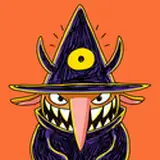
Demons who were once Mala'ikah, led by fallen Malak Iblis. They are twisted creatures to look at, coming in all sorts of devilish shapes and sizes. Controlling a Shayateen is only for the most skilled of Magi, and some consider it heretical to use them at all since they used to be Mala'ikah. Inexperienced Magi who attempt to control a Shayateen are at incredible risk and may be consumed by evil.
Half Djinns
A child born of Djinn and Man, but belonging firmly to neither world. They are hated by Djinns because many of them go on to become Magi and control other Djinns themselves, and other Magi hate them for being naturally more talented than them. Similar to Elves, they are creatures of both flesh and mana made form. Their blood is glowy and ethereal. While not immortal like Djinns, they can live for a very long time and even slowly become full Djinn if they wish.
Other Gods
There is no other major deity in Kissuara besides Al-Kamaria. There are many Djinn who are revered and worshipped similarly to Gods, but a central tenet of their faith is there's no comparable to Al-Kamaria. This doesn't make them zealots when dealing with other Realms and their religions, though. Even Shaitan himself is not a God, he's just the most powerful Djinn there is.