Tutorial: Digitigrade Legs
Added 2019-07-15 22:51:24 +0000 UTCA lot of people have told me they find it really difficult to draw (or sculpt) digitigrade legs. It can be really easy to upset their structure, they can easily look tremendously off balance, or as though they have two ankles. I've seen a few instances of this and while I don't claim to be an anatomy expert, perhaps my method can assist anybody looking to learn how to draw them.
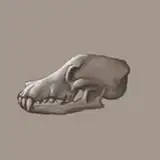
Everything starts with foundation - Bones. Here are a couple of free-to-use models I found that I'd like to explain with - A human skeleton model, and also a feline one.
Credit where credit is due! The human skeleton was made by Diego Luján García, and the feline model was made by Westerly.
You can immediately see how the hips and leg joints differ drastically between humanoids and digitigrade animals. Though all of the bones are essentially the same, they are skewed in length and angle between species and type.
Here's my attempt at showing where the same bones lie in each different creature:
In quadrupedal animals, (at least in this instance) the pelvis is so elongated, and the angles of the bones are heavily diagonal, rather than straight down in the instance of plantigrade.
When I plan the layouts for my bones, I simplify the bones and joints with dots, lines and boxes, like so:
From there I find it easier to flesh out where my outer lines will go. It's also really important to study the muscles and tendons that lay on top of the bones. I'll attempt to cover muscleature in another tutorial.
After you know the basics between the two extremes (Humanoid and quadruped) you can start playing with the two to find some middle ground for anthro legs.
Here's the middle ground I go to immediately, but balance and proportion is really important to establish. Shapes like boxes and lines can also help you define where to establish balance:
If any part of the leg goes outside of the guide box, it can easily look off balance:
^ Some examples of how weird the legs can look when sections of them come out from the guide box. It looks like the character might easily fall over. This is just an example of when a character is standing upright though, of course there may be instances where this looks correct - for e.g. when a character is running, in an awkward pose, or trying to keep balance.
Practice! I love trying different proportions on legs and different angles, and experimentation helps me find cuter, more realistic, etc ways of drawing leggies.
And finally, a do-not!
Avoid mistaking the back of the foot for the ankle. It's only there if you are drawing a plantigrade leg. (Humanoid) When drawing digitigrade, the heel is up in the air, not at the back of the toes! Avoid doing this because it looks like the foot has two heels!
I do hope this helps anybody aspiring to draw digitigrade for the first time! <3
I hope this helps! ❤












![gal ha had[The Sir]](https://xaiju.com/istorage/53465.jpg)