My relationship with Suda51's games, an overview
Added 2021-09-02 02:01:00 +0000 UTCOne of my favorite kinds of game directors is the kind that clearly are capable of drawing those in their team into a production that goes against conventional design wisdom. I dislike the term auteur because video games are made by huge groups, but the kind of person who is able to consistently pull a team in a direction that shows a consistent vision. This is particularly true if it is one that is against the grain. Few people are more infamous for this capacity than Goichi Suda.
I could do the Wikipedia rundown of this man's career. His time in a funeral home, his writing of what is likely to forever remain the most odd ending to a wrestling game produced by a major studio, his breakaway from Human Entertainment after the production of the sadly lost to time and rights issues Moonlight Syndrome. I could even reasonably start with the founding of Grasshopper Manufacture, his studio that has produced a number of odd games many of them implicitly or explicitly set in the same meta-universe. This time though I want to touch on my relationship with his games in general, the two games mentioned here will definitely get their own essays eventually, but for now I want to talk about my broader relationship with his work.
In 2002, early in the GameCube's lifespan, Capcom announced 5 Gamecube exclusive games to be published in the coming years. While the checkered history of those developments is well explored, this is also the first introduction we would have to the game that put Suda on the map in the west. It certainly helps that it was also the first of his to actually see release in English. That game was the inimitable Killer7. It honestly doesn't sound too out there when you're a kid reading a magazine with one blurry screenshot from a reveal trailer. Harman Smith's an assassin with 7 personalities living in his head that he swaps between to fight the Heaven Smiles organization and its leader Kun Lan. You boil it down to that and it sounds pretty at home in the early 00s game industry. You could honestly probably construct a fairly typical game there in your head, some action, some light puzzle solving by swapping characters. The weirdest thing is that wouldn't even be... that far afield of what the game actually was. The thing is, the second you saw how it was executed it was clear that Killer7 was built with complete disinterest in conventional design. Entirely on-rails the game reveled in undetailed texture gradients, it used transitions between them to frame entire scenes. The art direction and cinematography showed a much greater eye for shot composition than just about anything in the industry, with a clever and careful understanding of chiaroscuro. On such an intentionally limited canvas was a game filled with a foreboding atmosphere. It was the attention to detail, aesthetic and atmosphere of a great horror game, in a game that was only ever occasionally meant to be scary.
Art direction was immediately striking to me even at that age, but it wasn't what made the game matter to me. It wasn't what made the game live in my head for years, off and on driving obsessions. Killer7 was incredible because it was also a game driven unapologetically by metaphor and politics. A driving theme of much of Suda's work is actual, honest-to-god cultural critique. The U.S. and Japanese governments are often targeted and Killer7 has little kind to say about either. This was a major game, in 2005, published by a huge mainstream publisher, that managed to have meaningful commentary on U.S. empire by wrapping it in metaphor so dense that many people assumed it had no meaning despite much of it being quite obvious on the surface. I have immense respect for managing to produce such a work in that environment at that time. It is wild to me to that this brilliant flawed gem of a game, with its wild script its obvious scars of having been trimmed and retooled, its love of the combinations of high and low art. That said, even this isn't what endeared it to me.
To date myself a bit, I was in High School when Killer7 came out, and I was incapable of understanding metaphor on any real level. Thematics were not something I could truly engage with. Some of that was life experience, some of that was my own non-neurotypical mental makeup, the point is I didn't even know how to engage with something on a thematic level. Hell I didn't realize that was a thing it was really possible to do. To put it simply though, I needed a game like Killer7. really I needed a story like Killer7. I needed a game that could not be engaged with on any sort of literal level. The only thing that would break me of trying to read something literally was to be forced into a situation where it was so obviously unsatisfying to read the text literally. Killer7 when engaged with ignoring subtext and themes is a hollow experience, for all its artistic triumph it is a void pursuit. I needed a game that would completely refuse to allow me to engage with it on a surface level, actively combative to "wasn't that cool" interpretation. I didn't understand the game at all on first play, on some level I still don't fully, but every time I see it, think about it, I get more out of it. That is why it is one of the most important games to me and why when I play it again I will write something much more in depth about it.
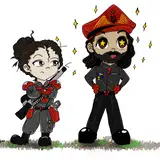
So I didn't understand Killer7, but I knew I cared about it and I cared what the people who made it went on to do. For a while things went quiet. I didn't hear about Kurayami when that was announced, I heard talk of the teaser Grasshopper gave for a game tentatively titled "Heroes" but I wouldn't really have the game on my radar until I had a Wii and heard tell it had a full title now and saw a description. No More Heroes would go on to be the closest thing to a mainstream breakthrough Suda has ever had in the west. An unexpected success as a hyperviolent Wii game earlyish in that system's lifespan. My personal relationship with it started with that initial summary though. No More Heroes was to star Travis Touchdown, a nerd living out of a rathole motel called No More Heroes who wins a lightsaber (or "Beam Katana" as it's referred to in-game) in an internet auction and kills a guy he gets into a fight with at a bar. The man he killed turns out to be the number 11 ranked assassin in the world and Travis is now invited to fight number 10.
That description is absurd, but it's not even the same kind of absurd most games could be if you broke them down. The concept of winning a functional lightsaber in an auction immediately undermines any pretense of Travis being cool. This guy is at best an unpleasant weirdo no matter how cool simply describing what he's doing sounds. Between that and the hunt for software on a system I had just gotten my hands on I had to take the risk on NMH. Continuing the themes of cultural critique, No More Heroes is a violent game about being utterly inured to human suffering. The game isn't calling the player out for playing it, so much as it's reminding the player every step of the way that its world is a hellscape that doesn't even revel in suffering, it barely notices it. To play NMH is to spend a solid 50% of your time cutting humans in half, each of them shouting something comically inappropriate ("MY SPLEEN!" etc) as geysers of blood fire out of their bisected bodies. Travis himself and those around him barely register interest in this. The only time Travis shows any interest or distaste for killing, it's when it's a beautiful woman. Far from being a trait of nobility this showcases the arbitrariness of Travis's morality, that violence only registers to him when it's to something that viscerally attracts him in other contexts. Travis in this area better critiques the audience's relationship with games, and here it intends to.
I could and will natter on about No More Heroes more but suffice to say this game helped me better understand Killer7 while being a much more approachable game in both themes and gameplay. That isn't to say NMH has any less thematic depth, I've barely scratched its surface, but the two games helped contextualize each other for me. No More Heroes also represented a much better grasp of what the Wii was good at than most any other third party developer. It would have been tempting to have the player swing the Wii remote more often to do attacks, but the game uses the controller to determine whether to swing high or low and for finishing moves, allowing it to only be used for broad easy to interpret movements. Far from feeling like it lacks depth the game feels deliberately simple and visceral. To this day it is one of my favorite action games and absolutely worth playing at least once. I think there is a tendency to assume Grasshopper doesn't have a good grasp of game design and that that's why their games are unapproachable. While they do misfire as anyone does, I feel that in general a Grasshopper game is unapproachable mostly in ways it intends to be.
This is of course not the end of my relationship with Suda's games, but I think it hits the overview. Suda's games are important to me because they challenged both what games could be and, for me personally, how I interacted with media as a whole. They helped me to learn to engage with media in a much richer fashion than I had to that point. In many ways they, intentionally or not, helped educate me a lot. There will be many ups and downs in both design and writing when I revisit this man's work, trying to plumb the depths of flawed works like Flower, Sun and Rain, but I don't think I'll ever feel like I wasted my time or even like I didn't have something to think about.
Comments
I remember seeing these games and just never interacting with them. I’ll have to finally take a look.
Richard
2021-09-04 14:28:20 +0000 UTC