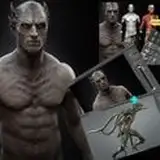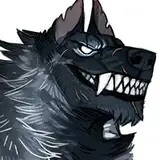
I've posted numerous sketch compilations of Tsaga (1 2 3) that showcase both his design and his cocky personality, as well as several nsfw scenes (1 2 3 4) with his eventual husband, Latif. He's a loveable douchebag who's simultaneously quite terrible and very charming, in that unpolished, anti-hero, bad boy way. Many would describe him as unpredictable, impulsive, and even chaotic, to say the least. He usually solves most of his problems with either violence, sly cunning, or seduction (because he's well aware of how hot he is) but rarely has a plan, preferring instead to make shit up as he goes.
However, Tsaga wasn't always so confident, and his early childhood was steeped in trauma.
If you remember the Tha'ra spotlight, it tells of how the first gods created other divine beings by shaping them in clay and firing them in a godly kiln. A similar method of artificially creating "clayborn" life is known by a select few mortals, who may use it to help childless couples have offspring of their own. It entails a complex ritual for which you need hair, scales, feathers, bodily fluids, or another little piece of each parent-to-be, but it's an incredibly delicate and difficult process that takes decades to learn and master. People with such knowledge are incredibly rare, and adoption is a far more common way for childless couples to expand their families. The practise is also heavily regulated by the Empire, because it happens that immoral people use this method to craft soldiers and followers rather than children. You need a permit to even begin studying this craft, another to actually practise it once your mentor deems you ready, and each application for a clayborn child likewise has to be vetted and approved by imperial officials.
Tsaga's werewolf mother, whose name was Dahira, thought that having a clayborn child with the rhaajim she was in love with would solve all her problems. Foremost among these was the fact that her love was unrequited, and for good reason. See, Dahira was cruel, manipulative, narcissistic, and volatile. The object of her desires -- a rhaajim woman named Tasnim -- was deeply uncomfortable with Dahira's affections, knowing full well how it was merely a possessive, jealous, and unhealthy obsession mistaken for love. They were part of the same raider clan, and no matter how many times Tasnim turned Dahira away, the werewolf would not take no for an answer. It soon became a matter of pride (of winning the prize she had set her eyes on, if you will) and Dahira's twisted mind decided that the rhaajim would be forced to become her partner if they had a child together.
Through her many sketchy contacts she was able to hire an underground craftsman capable of creating clayborn children. No state-approved artisan would agree to craft a child for a criminal like herself, but the black market craftsman operated without the approval of the Empire and didn't ask for any paperwork -- only due payment. Dahira didn't care about why they had lost their license, if ever they had possessed one to begin with. The only thing that mattered to her was the child -- the snare she would use to capture her target. Secretly, she had stolen a few of Tasnim's shed scales to use for the ritual, and delivered them to the filthy, messy workshop along with some of her own fur.
Unsurprisingly, the underground artisan botched the job.
When the god Khuthlya was fired in the divine kiln, something went wrong, and cracks resembling a shattered mirror formed in the scales over his heart. Similarly, the tell-tale sign of a "failed" clayborn child is a fractured patterning across their bodies, like broken pottery that's been patched back together. The baby that emerged from the craftman's kiln was covered with such cracks. In addition, he looked nothing like a simple cross between a werewolf and a dragon. Aside from the tufts of fur and brass scales that Dahira had provided for the ritual, other samples -- from an unknown number of other people -- must have contaminated the clay used to shape his body.
Just as certain gods had viewed Khuthlya as a flawed and imperfect creation, common superstition has it that failed clayborn are walking mistakes, that they should not exist. Folks say that the cracks in their skin reflect how they are inherently broken, inside and out -- that they are bad omens, marked with divine disapproval, who should be avoided lest they bring misfortune in their wake. Despite being perfectly healthy, the distinct appearance of "failed" clayborn usually means they end up as socially stigmatised pariahs, suffering the prejudiced fear and hatred of the masses.
Dahira was disgusted with her son from the moment she first saw him. But then she thought better of it. Surely the child's unfortunate state would only serve to further convince Tasnim to accept her love, because how could the gentle rhaajim abandon such a pitiable little thing? Would she not want to protect him from the cruel world?
When Dahira presented "their" child to Tasnim, her sense of triumph was quickly replaced by bitter disappointment. Tasnim, naturally, was incredibly upset with the werewolf's deplorable behaviour. Without her knowledge or consent Dahira had stolen her scales, tasked a careless craftsman with creating a child that would suffer all his life for the artisan's mistakes, and now she was trying to blackmail her into marriage? It was the last straw. Shortly thereafter, the dragon lady left the clan.
Dahira blamed it all on the child. If he hadn't been such a failure, her plan would have worked. Now, because of him, she would never see the love of her life again. And just look at him, with the fractures in his skin and the irregular patches of scales on fur. What a defective, regrettable, hideous abomination you are.
Most of the clan members avoided Tsaga, wary of even looking at his "broken" face. He wasn't welcome anywhere, had no friends, and met very little kindness from strangers. Even those who pitied the lonely child kept their distance, just to be on the safe side. Being an absolute mutt didn't help. Not that hybrids or unique monster people are uncommon in this world, but Tsaga's uncertain pedigree only made it even more obvious that he was a “faulty” clayborn, crafted by someone who hadn't even cared to clean up their workshop. There was no telling where the contaminating samples had come from and what other kinds of blood might flow through his veins, aside from that of a werewold and a rhaajim. In any case, there was certainly nobody like him, no people among whom he belonged, or could relate to. As a child it made him feel even more lost and alone.
But worst of all was the way his mother treated him. The one person in the world who should have loved him no matter what absolutely loathed her son, and behaved accordingly. What began as neglect quickly evolved into verbal, emotional, and physical abuse. It was a miracle he even survived his first few years, because she would ignore his needs and leave him to freeze, to starve, to fend for himself. If he got sick or hurt, she didn't care. If he cried, she would yell at him to stop, lock him in a dark closet, or hit him. She could always come up with a cruel excuse to beat him if she felt like it; for doing something she thought was wrong; for saying something she didn't like; for not getting out of her sight fast enough; for simply existing. And she never shied away from telling him what a mistake he was and how everything about him was wrong. I should have smothered you in your crib. I should have drowned you in a well, or thrown you in a pit. Not that it's too late. You shouldn't be alive, and I could still take care of that.
In short, his childhood was a nightmare of constant fear, of desperately trying to appease his mother or at least avoid her anger and her fists. He tried his best to be good, to do as she said, to predict her fickle moods, and to understand what would make her happy. But it was never good enough. He never knew what he had done wrong or why she hated him so much. Instead of motherly love she showered him in abuse, and his heart hurt watching the other children of the clan happily play with their parents.
Along came the day when Dahira decided she'd had enough. He was still just a child when she took one of the clan's horses, pulled him into the saddle, and rode into the desert without a word of explanation. When he meekly asked where they were going, she hissed at him to shut his foul little mouth.
Miles later she shoved him off the horse, and by the time he’d stumbled back onto his feet she had already turned back around. Momentarily paralysed with terror and disbelief, he watched her spur the horse into a gallop. As soon as he could move he started running after her, blinded by tears and begging her to stop. Mom, don't go, please, I promise to be good, I promise to be better, please mom, please don't go, please don't leave me --
His short legs were no match for the horse. Within minutes he could no longer see her, but even then he kept running, trying to follow the hoofprints in the sand. It was no use. She had abandoned him, with no food or water, alone in the desert.
Before long he collapsed in the sand, too thirsty and weak to move. While drifting in and out of consciousness, he thought he saw the outline of a tall woman in a black hat, lifting him up and saying something he couldn’t understand. Not today. Not yet.
-----
Shortly thereafter, a rhaajim boy named Savas spotted something strange among the dunes. He was part of another raider clan, the Majhul, on their way to a nearby oasis. When Savas ran over to investigate he found another kid, curled up in a ball and half dead from exhaustion and dehydration.
Clan Majhul tookTsaga in, even though some of the elders had reservations about whether it was wise to allow a broken clayborn into their midst. Regardless of which,, they couldn't just leave him to die.
For the first time in his little life, Tsaga was treated kindly. He was nursed back to health, with Savas regularly visiting his sickbed to see if he was well enough to come out and play yet. As one might well understand he was very fearful, at first, but little by little he learned that the folks of clan Majhul were not like his mother. There was food whenever he was hungry, water whenever he was thirsty, a soft bed whenever he was tired, and a warm fire to gather around whenever he was lonely. If ever there was a problem there was understanding and help instead of yelling and fists, and if ever he did something "bad" there was always forgiveness and guidance instead of punishment and abuse. As time went by he started to trust them, to feel safe among them. At last, he had a family.
Sure, there were dissonant voices among the clansfolk, who whispered and murmured about how broken clayborn are outcasts for a good reason. They bring misfortune wherever they go, remember? Broken, inside and out. Would they anger the gods, if they cared for him? Would the child himself eventually punish them for their kindness? Fortunately, the majority were willing to take the risk, hushing the more superstitious among them. How bad could it really be?
Over the next few years, the scared little kid learned self-worth and confidence. Savas was his best friend through thick and thin, always encouraging him and helping him forget about his fears. The warriors of the clan started teaching Tsaga to fight, arming him with the ability to defend himself against danger. Not to mention that Majhul was a raider clan, so if he was to be one of them he'd need to know how to fight, raid, and kill. He learned to have fun, too, as they welcomed him into their songs and dances and their traditions towards the gods. As most nomadic clans they paid particular attention to Ubdyi, the unpredictable god of the desert, and Dha'agha, the vagabond -- and like most raiders they also paid their respects to Khuthlya, the god of killing, and Hayat, the god of war. The rhaajim and the werewolves of the clan helped him improve his shapeshifting, since his mother had only ever left him to figure it out on his own. He learned not only how to survive in the desert but how to thrive in it, to hunt, to find water and shelter and apply first aid when necessary. With every passing month, he stood taller, and laughed more. If at first it had been difficult to get him to speak at all, it wasn't too long before he'd barely ever shut up, and what had began as a hesitant smile eventually turned into a wide, cocky grin.
But that's not to say everything was perfect. The trauma Tsaga had suffered throughout his early childhood had left such deep scars that nobody in his new clan knew quite how to help him heal. Putting a band-aid on the hurt made the wounds shrink, but could not entirely cure them. As the years went by, the fear and pain started morphing into something more aggressive and destructive. Unlike most other children he had never had a chance to be innocent, naive, or think the best of people. Can you truly blame him from feeling bitter, cynical, and misanthropic? Frustrated? Angry? It was as though something sharp had lodged itself into his heart, eager to claw its way out at any loss of self control. Always scratching away at his mind, it left his fingers itchy with frustrated restlessness and no good idea of what to put it towards. Whenever it boiled over he'd lash out, because he couldn't possibly keep it all inside. It would have been like trying to hold off a tidal wave with tissue paper.
By the time that these urges started surfacing, Tsaga was no longer defenseless and harmless. He was starting to really come into his own power, partly from learning how to fight and partly because he was growing into a far more tall and beefy teenager than anyone would have expected of the starving kid he'd once been. Life in the desert hardened his muscles and yet, despite all his brawn, he was strangely agile. Regardless of which form he shifted into he moved much the same, prowling on quick and soundless feet like a natural-born predator.
Truth be told, he didn't handle his growing strength gracefully. As a child, all he could do was to cry, hide, and plead. But no more. Now he could fight, and even kill, and he was good at it. Instead of being afraid he could cause fear in others, and found it strangely ... addictive. Some people were scared of him simply because of the cracks across his skin. Why not use it to his advantage? If they wanted so badly to think he was dangerous, why not prove them right? Instead of get beaten, he could do the beating; instead of get yelled at, he could intimidate people into silence; instead of hiding away, he could hunt down and hurt anyone he felt deserved it. Often, he'd lash out simply to relieve the restlessness nesting in his bones, to which outbursts of violence seemed the only cure. Not that it'd soothe him for long.
An angry, bitter teen who's grown stronger than his judgement and with poor impulse control is a recipe for disaster. Gaining the upper hand turned Tsaga into a bully, quick to prey on another's weakness any way he could think of. Confidence had long since grown into cockiness and whenever he was bored he'd find a way to cause trouble. He'd fight dirty when training with his peers, even by raider standards, and needed little reason to pick fights outside the sparring ring too. As soon as he became old enough to take part in raids he gained a reputation for habitually disobeying orders and deviating from the plan, either out of impatience or a stubborn unwillingness to dance by someone else's pipe. No matter how important the mission he'd barely listen to anyone else, choosing instead to follow his own whims and improvising all his next moves. He'd often butt heads with the clan elders for recklessly putting himself (and others) in danger's way, and for refusing orders simply for the hell of it. Every now and then (especially after such arguments) he’d disappear into the desert without telling anyone where he went or when he planned to come back. In other words he was unreliable and uncontrollable.
As his behaviour turned increasingly problematic, more and more people started wondering if maybe there was actually some truth to the superstitions about failed clayborn. Perhaps he was inherently broken, after all. Why else would he behave like such an asshole, after they took him into their clan? After they did their best to raise him right? After all their attempts to offer support and help through his struggles? It was almost as if he didn't want to be put back together. The only person he might listen to was Savas, ever his best friend, but even then they had their fair amount of arguments. While the two of them usually solved it by way of drinking together and/or a brotherly fight, Tsaga had increasing difficulties keeping any friends in the rest of the clan.
Moving into his early twenties, the explosive temperament and poor impulse control of his wild teenage years gradually cooled into something that was arguably even worse -- a sly type of cunning. He was no less dangerous, destructive, disruptive, or violent, but he had gotten much smarter about it. Now that he was fully grown his monster form was as big as a rhaajim, but he was agile like a sphinx and quiet as a shadow, with the nose of a werewolf, the eyes of a bird of prey, and the reflexes of a mongoose. He was a masterful shapeshifter, a formidable fighter, a skilled hunter, and an all-around overconfident douchebag.
On that note, Tsaga had noticed something interesting about how certain people would react to him. The vast majority only needed a glance at his skin pattern to condemn him, out of fear, hatred, disgust, suspicion, or any mix thereof. To them he was irreparably broken, a pariah, unwanted, and unwelcome. But then there were others who would behave quite differently around him. See, at this point Tsaga had become dangerously aware of his good looks and had observed (through extensive empirical studies) that if someone didn’t immediately turn away from his "broken" self with an anxious or appalled expression, there was a good chance they were actually attracted to him. To Tsaga, that presented an irresistible opportunity to get his dick wet.
Practise makes perfect and oh how he practised, until he became as good at flirting and seducing as at fighting and killing. He was just as shameless about how much he enjoyed it, too, and had absolutely zero qualms about using his sex appeal to his advantage. Hence his vanity -- he knows the power of a shirtless outfit, putting care into the way he does his hair, and wearing gold jewellery that makes his scales pop. Sure, he's not everyone's cup of tea, but if you're into the dangerous bad boy type he's more or less irresistible and he knows it. There would be regular meet-ups among the clans, and if Tsaga had once been known for starting unnecessary fights, he soon became equally known for sleeping around -- and proud of it. He still had few friends, but plenty of friends with benefits.
Not that it made him any more popular with his critics. His unwillingness to follow orders -- and his readiness to take risks often deemed too big by more sensible people -- put him in increasingly bigger trouble with the elders. Even those who tried their best to give Tsaga some leeway found it difficult to forgive all his trespasses against the safety of the clan at large. Whenever someone tried to extend a helping hand, wise enough to empathise with how most of his destructive habits were rooted in trauma, he always refused to meet them halfway. The more cynical among them started saying that he was a lost cause.
During a certain mission he goes too far in deviating from the plan, putting his fellow raiders in too much danger. A heated argument follows back home, that ends with the elders giving him an ultimatum -- get in line, or get out.
Without taking the time to think about it, Tsaga tells them all to fuck right off, packs his things, and turns his back on clan Majhul. Anger and bitterness makes his blood boil, but worst of all is the feeling of betrayal. Apparently he didn't belong among them, after all -- just look at how readily they were willing to abandon him. Savas tries to change his mind, saying that the clan members do care, but that it's not a one-way street. Nobody can help unless he let's them help.
Tsaga doesn't listen. Without any goal or plan he heads straight into the desert, pissed off and more deeply hurt than he'd be willing to admit. This time it's him walking away, true, but it still feels the same as when his mother had left him alone among the dunes so long ago.
-----
For the next few years Tsaga aimlessly roams the whole empire, like a chaotic force of nature without rhyme, reason, or purpose. It's not as if he has a home to return to, or a family waiting for him somewhere. He's free to go anywhere he can think of and do whatever he wants (which usually involves crime, fighting, or sex), with nobody trying to give him orders. It's a bitter freedom, though, lined with people who never lets him forget that he's broken. Prejudice and superstition meets him around every corner and at the end of every path. It's easy for him to meet unsavoury people to work with, shady drinking buddies, and reckless one night stands, because all things considered he is very charismatic, in his own rough way. But none of them stick around very long, and none of it entails any sense of belonging. At the end of the day he's always different and alone, an outsider looking in.
Brought up by bandits, it should come as no surprise that he takes to robbing and mercenary jobs now that he's working solo. He'd already been pretty well known among the raider clans, and as he travels through the empire his reputation starts extending into its various corners. Little by little he gains infamy with the imperial police force, known as the sentinels. He loathes them as much as they despise him, not least after he pays the capital a visit. Long story short he ends up very wanted, and after fighting his way out of many a skirmish with the sentinels, a sly captain finally manages to lay a successful trap for him.
After capturing Tsaga they put him in magical shackles that disable his shapeshifting abilities, and strap a muzzle to his face to keep him from biting. But the captain -- whose name is Emhat -- doesn't stop as that. Tsaga had eluded him and his crew for so long, and it's a long way back to the capital. To ensure that he's "easy to handle" Emhat stabs Tsaga in the side and leaves the wound open, hidden under his clothes but effectively weakening his body with bloodloss and fever.
Such is his state when the prison transport arrives to Ubdyi's Rest, a town dedicated to the god of the desert.
Aside from inhabiting every grain of sand, Ubdyi is associated with wildness, nomads, magic, creativity, chaos, unpredictability, and natural catastrophes. They symbolise an untameable and unruly principle, mirrored in the very architecture of their massive temple: it’s assymetrical, labyrinthine, and sprawling. In fact there's little point in trying to tell where the sacred buildings end and the civilian ones begin, since the sacred and the mundane intermingle at every corner.
Ubdyi's Rest is an important stop along many routes through the desert, situated on a large oasis where people can rest and recuperate, as the god themselves once had. Besides being an immensely important and ancient sacred place it’s also a hub of trade and commerce, and a meeting point for travellers, nomads, and pilgrims alike. In a sense, all roads in this part of the empire lead to Ubdyi's rest; here you can stock up on supplies, catch up on news and rumours, and perhaps hire protection for the next leg of your journey. During religious festivals or multi-clan meetings the town grows to many times its regular size, due to the camps set up around it. Pilgrims use the town as a base for visiting the many sacred sites in the surrounding dunes and cliffs, foremost among which is the carved gates leading to Ubdyi's Trial. Beyond them lays an ever-changing labyrinth, which only the worthy can pass through. Stories both modern and ancient tell of criminals choosing to face the judgement of the god rather than the courtrooms of mortals; those who manage to traverse the maze are redeemed of all past sins, but most who enter never come back out.
Such an approach makes particular sense in the context of Ubdyi embodying a certain kind of lawlessness, or at least an unwillingness to play by any conventional rules. The town itself is rather unusual, since all of it is essentially a temple, and therefore it’s run a bit different from other imperial settlements. Instead of a mayor Ubdyi's Rest is ruled by the head priest, a naga named Kamau. In place of a local regiment of sentinels or soldiers, the priests (many of which have a martial streak) are the keepers of peace and protectors against danger. Conflicts are solved by being brought before Kamau and crimes are investigated by trusted temple officials rather than imperial agents.
It's here that a faun named Latif has lived all his life, working as a baker for the temple. He joins the curious crowd that has gathered to watch the entry of the prison transport, but while many others whisper and murmur and gossip about the clayborn criminal behind the bars of the carriage, Latif feels a strange twinge of ... empathy. The man in the cage is glaring bloody murder at the masses, but at the same time he seems so exhausted and lonely.
A couple of the sentinels had sustained injuries during their confrontation with Tsaga, so they decide to stay in Ubdyi's Rest until they've healed up, giving them plenty of time to stock up on supplies and chart the best course. Latif is the first to notice the sentinels' negligence towards their prisoner. They lock him away in an underground cell, but through a ceiling grate the faun can see how they shackle Tsaga to the wall, barely ever giving the chains enough slack to let him rest comfortably. Nor do they bring him much to eat, and every day the man seems more feverish.
Despite his gentle demeanour, Latif is stubborn enough to convince the sentinel guard to let him at least bring Tsaga more food, a couple of times per day. Even though he's chained up and sick, Tsaga doesn't miss a beat and immediately starts flirting with Latif, because the cute faun is very much his type. The guards won't let Latif remove the muzzle, so he has to hand-feed him little morsels through it, which quickly turns into a rather intimate experience. Latif is used to brushing off flirtatious attentions, but with each meeting he grows more fond of the crude yet charming criminal. One the other hand, Tsaga is not used to such kindness, and barely knows what to make of the way Latif cares for his well-being except talk dirty to him.
He's certainly loath to reveal any weakness, which must be why he doesn't tell anyone of the stab wound, even as it drains his strength. Latif is shocked to discover it by chance, suddenly noticing a sticky spot on Tsaga's shirt and lifting it to reveal the nasty-looking injury. He rushes for the town doctor and the sentinels can hardly find an excuse for keeping her out. When questioned about the issue captain Emhat coldly explains that harsh measures had been necessary to handle such a cunning fiend. And besides, the imperial court would no doubt sentence Tsaga to death. What would it matter if the wound had claimed his life on the way there?
The doctor had had to sedate Tsaga to even get close enough to examine the wound, so she entrusts Latif with changing the bandages, since for some reason the criminal is all too happy to let him near. Cue even more intimate moments, with Tsaga expertly tickling all the kinks Latif barely knew he had until then. It's certainly a strange situation for both of them, where the initial spark of mutual sexual attraction promptly roars into a raging wildfire. It escalates quite quickly, from Tsaga nibbling Latif's fingers through the muzzle to literally promising the faun the best fuck of your life if he just helps him escape. Latif isn't that reckless, but oh how he loves the filth that comes out of the prisoner's mouth. The things he says regularly leaves Latif red as a tomato and hurrying away from the cell lest he combust -- but he always comes back for more, shyly admitting to thinking about Tsaga when he touches himself at night. One day the seemingly so innocent baker literally can't keep his fingers to himself and sneaks his hands into Tsaga's trousers for a handjob. Since his arms are chained to the wall Tsaga can't return the favour, but he can slide his tail between Latif's legs and tell him exactly what he would do, if he could.
In other words their story begins with both of them being horny on main, but that's not all there is to it. Tsaga certainly finds himself feeling something new and unfamiliar, a kind of warmth he'd long thought himself too bitter and cynical to ever experience. It's the way Latif never once seems to worry about the fractures in his skin, how he's never looked at him like he's a walking mistake or a bad omen personified. Even after learning of his life of crime, Latif insists that he's not irredeemable. He's not a lost cause.
The beginnings of their unconventional romance is not the only strange thing to happen in that dark cell. One day, as Tsaga slumbers against the stone wall, he wakes to a snake crawling out between the rocks and slithering past his shoulders. Bright spots of colour signal the deadly venom in its fangs, and Tsaga remains completely still, barely breathing until it has fully disappeared into the shadows. Snakes are associated with both Khuthlya and Ubdyi, but even though it had been close enough to touch its forked tongue to his neck, Tsaga doesn’t read anything into it. It’s hardly unusual to see a reptile crawling through a dark, damp space.
Later that same day, however, captain Emhat comes to harass him, like so often before. The man viewed his triumph over Tsaga as a turning point for his career, and liked to rub it in his face. But mid-sentence, Emhat suddenly reels back, his leg on fire and the tail of the vibrant snake slipping away through a crack in the wall. The sentinel is rushed to the doctor, but the venom has already reached his heart, and he soon turns cold with death. In any other town, the incident might have been brushed off as coincidence. But it's a different story in Ubdyi's Rest, where snakes are often viewed as the god's deadly messengers. Did Ubdyi favour the prisoner?
Without their captain the remaining sentinels are unsure of what to do next, so they send word to the capital and await instructions. By now Tsaga's wound has healed, and he's eager to regain his freedom before another officer takes the dead man's place. Now he asks Latif not only to help him escape but to come with him, on adventures unknown in the far reaches of the empire that Latif had only heard of in stories and songs. The faun hesitates. It's a tempting offer, but he loves his home town, his family, his friends. He wants to help Tsaga, but surely there must be some other way than committing even more crimes? One can avoid a death sentence by joining the Dead Men of Khalafa, but that would condemn Tsaga to a life on the road, hunting monsters and wichelen instead of being able to live in peace with Latif. There's Ubdyi's Trial, of course, but it's much too dangerous ...
Before they've managed to hatch any kind of plan, disaster hits. The reason that people usually hire protection when going to and from Ubdyi's Rest is that the desert and the mountains surrounding the wealthy temple town is ripe with bandits. Most of the time they prey on caravans and travellers, but it happens that they attack the town itself, and one day Latif wakes up to the sound of fighting in the streets.
Everything is chaos around him as he runs through the streets towards Tsaga's cell, with the priests holding the raiders off as best they can, fire and blood painting the town red. He finds the guard gone from their post outside the dungeon, having joined the fray. Free me, Tsaga urges him, I'll help drive them off. After choosing to trust him Latif finds the keys, and one by one unlocks the door to the cell, the chains that restrain his arms, the collar that keeps him from shapeshifting, and the muzzle strapped to his face.
First thing Tsaga does is to grab Latif and kiss him up the wall, like they both have thought of for weeks. For a moment he lingers, forehead to forehead, murmuring at him to stay here, to hide, to keep safe. I'll be back for you, alright?
As he races out the door and down the street, Tsaga's body changes. Soon a massive monster with patches of brass scales on brown fur leaps from rooftop to rooftop, and when he reaches the fighting he comes down hard on the attackers. Before they’ve had any chance to brace themselves he's already killed a handful of bandits, effectively turning the battle around. Turns out the raiders are Galtais, which means most of them are werewolves; they manage to inflict a fair bit of damage on Tsaga as they swarm him, but before long the surviving bandits are driven back into the desert.
Once the clatter and shouting starts to fade away, Latif sneaks out of the cell. He can't help but wonder -- what if Tsaga had lied? What if he had taken his chance to disappear into the mountains, leaving the town at the attacker’s mercy, and leaving Latif behind? Upon reaching the main plaza, he sees Tsaga stand in a ring of dead bandits. Their eyes meet for but a moment -- then he stumbles, collapsing from his injuries.
Hours later Tsaga wakes in an unfamiliar tent, all his wounds neatly bandaged and Latif hovering by his side. At first he can barely remember what happened, but the faun helps him piece it together. The raiders had killed the remaining few sentinels except one, who hadn't put up much resistance when Latif insisted on bringing the injured criminal to his own home instead of back to that horrible cell. If Tsaga had wanted to escape, he had argued, he would already be long gone.
Once again the faun nurses him back to health, and this time there's no muzzle in the way of many a soft kiss. Come evening Latif would curl up beside him so they could talk the night away, and in the day, while the baker goes about his chores, Tsaga has plenty of time to think. Sure, he could sneak away and once again go on the run from the law ... but that would mean he'd never again see Latif turn to him with a smile, arms full of leftover sweet rolls for them both to share. Despite the ache of his healing wounds and the uncertainty surrounding his future, those few days he spends resting in the faun's cozy tent are some of the best of his life so far. And the more he recovers, the more he can deliver on the naughty promises he made to Latif in the cell, free from the chains that once prevented them from exploring each other's bodies. But it's not just about sex. Far from it. One morning, he decides it can't be the last time he gets to wake up with Latif slumbering in his arms. Then and there, he makes up his mind.
Together, they go before head priest Kamau in the heart of the temple, and Tsaga announces his intention to undergo the Trial of Ubdyi.
Latif is worried, and for good reason. Nobody knows quite what lays beyond the carved gates in the mountain, since the labyrinth changes depending on who enters. On the other hand everyone knows that it's severely dangerous, and that the odds of surviving are very slim. More than anything it's a test of character, and Ubdyi is a supremely fickle god. However, making it out alive means you're one of their chosen few, and with such a status the law wouldn't be able to touch Tsaga. He'd become one of Ubdyi's priests, which might seem like an absurd notion until you consider that Ubdyi is the god of chaos, unpredictability, and wildness. Tsaga expertly embodies all of those principles. Perhaps the captain’s death at the fangs of a snake had been a sign, after all? Most importantly, as a priest to Ubdyi he could stay here in their temple town. With Latif.
As soon as he's fully recovered a procession leaves the town, heading towards the tall cliffs. Latif is coming with him, of course; as is Kamau, to watch over the mystical event, and with him a string of priests. Ronghui, the last remaining sentinel, feels it her duty to come along, and then there's a host of curious townsfolk, who can't resist watching the criminal's destiny unfold.
After the appropriate rituals have been performed in front of the gates, Tsaga and Latif share a kiss, well aware that it might be their last. The massive doors open by themselves before him, and close behind him through equally mysterious means, sealing his fate. The priests guide Latif to the exit, where Tsaga would reappear a few days later -- or not at all.
The winding paths of the labyrinth prove just as deadly and erratic as he had been told. Beyond many a twisting turn he has to prove his strength against the hostile beings that roam the maze. Some are monsters and beasts, but others are the restless spectres of mortals who had once failed the trial. The very environment is equally perilous. Any step risks springing a trap that makes the stones fall away under his feet or from the ceiling, testing his reflexes. He might have been trapped in the mountain forever, had he not been fast enough to slide under a closing grate last minute, or escape a room flooding with water. Another dead end proves a test of wit, where Tsaga has to solve a mechanical puzzle to unlock a hidden door. His survival skills come in handy for sniffing his way to running water, finding food, and patching up wounds and bruises from battling the monsters.
He completely loses track of time, and never being able to rest or let his guard down would be exhausting for anyone, but by virtue of stubborn willpower Tsaga keeps pushing forward. His entire existence has been a neverending test of grit, strength, speed, reflexes, and cunning. The desert itself had taught him to be more unpredictable than his enemies, to think outside the box, to be unstoppable and untameable. He's not going to die in here.
At long last, he thinks he's reached the end. Further down the path he can see a column of light between two open doors, and feel a fresh breath of air on his face. By then he's battered, bleeding, hungry, and dehydrated, but that must be the exit, beyond which lays salvation and triumph.
All of a sudden, upon reaching a fork in the road, he hears a small child whimper and the loud cracks of wood on skin. To the left, he sees a woman lift a stick to beat the little girl that covers in front of her; to the right, the door out of the labyrinth has started slowly closing. Tsaga has to choose.
Next second he dives in front of the child, tearing the stick out of the mother's hand and growling at her to back the fuck off. The woman screams at him to not get involved, that her daughter must be punished. Oh, I should have smothered her in her crib, I should have drowned her in a well, or thrown her in a pit. Hearing these familiar words, Tsaga lashes out at her, but she disintegrates into a strange cloud of smoke and disappears into the labyrinth with a blood-curdling shriek.
He crouches next to the child, comforting her with the softest words he can think of and promising he won't let her mother ever hurt her again. After a moment's hesitation the little girl takes his extended hands and clings to Tsaga in a desperate hug, crying into his shirt and shaking like a leaf. He sits with her until she's calmed down a little, humming a lullaby he'd learned from Latif and using strips of his sleeve to gently clean and bandage the burning rashes left by the stick. He learns her name is Mona, but she can't remember why she and her mother are here, or even where ’here’ is. Tsaga doesn't ask too much, because it matters less than bringing her to somewhere safe, to a new and better life that won't hurt.
With Mona’s little hand in his they go to investigate the closing door he'd seen earlier, only to find a blank stone wall. Had the gates he'd seen even been real...? In any case the unlikely pair has to continue down a different path, and this time Tsaga sneaks them by the monsters in their way instead of fighting them head-on as before. Similarly, he chooses the slow and roundabout but quiet and safe routes now, rather than the fast and risky ones. Protecting Mona is what matters the most, and though Tsaga is tired from his ordeals, this new purpose strengthens his resolve. He has to find a way out.
Finally, the air seems to once again grow fresher, as if they're nearing another potential exit. They reach a large room, lined with statues of Ubdyi and with heaps of bones strewn across the floor. Suddenly the ear-piercing shriek echoes between the walls again and Mona’s mother storms into the hall, transformed into a horribly malformed creature, her cruel soul made manifest in her flesh. She lurches at her daughter and this time Tsaga has little choice but to fight her. Ultimately he stands triumphant over the monster’s dead body, but it was a difficult battle and he was already worn down from the preceding trials.
Exhausted, he sinks to his knees, but Mona lays her short arms around his neck in one last hug and whispers thank you. There's a smile on her face as the little girl gently crumbles into dust, fading away into nothing but air. Only her yellow tunic remains.
Tsaga sits there for a few long minutes, palms pressed against his eyes, his breath and shoulders shaking for Mona’s sake and his own.
But at least she's at peace now, and he must not give up. Tsaga wipes away the tears, and wills himself back on his feet. Was this great hall really another dead end?
He investigates the room and tracks the puffs of cold air to the wall behind one of the great statues of Ubdyi. Upon closer inspection there's thin strips of light, too, hinting at a way out. Problem is, statues of a god are as sacred as the gods themselves, and harming an image of a deity is strictly forbidden. If the god themselves doesn’t punish you for disrespecting their statue, their mortal representatives will. Perhaps the unfortunate souls whose remains litter the room had also found the hidden exit, so close to making it out but too afraid of sacrilege to break through.
Tsaga, however, has no intention of leaving his bones among theirs. Fortunately for him, he doesn't respect divine rules any more than he follows mortal law. Full of determination he shifts into his massive monster form and starts tackling the Ubdyi statue until it topples over, breaking into pieces upon impact with the floor. It reveals a wider crack, but he has to use the last of his strength to claw and scratch at it, tearing away stone after stone until finally he can squeeze through.
On the other side of the exit Latif jumps to his feet from hearing the strange noises, and watches the door mysteriously open to let Tsaga stumble through. For days he's worried away at the temporary camp and there's no words for the immense relief that washes over them both, Latif throwing himself around his neck and the two of them tumbling to the ground. At this point Tsaga is drifting towards unconsciousness and is barely aware of the priest that inspects his palm, where a strange mark appears in front of everybody's eyes. It's Ubdyi's sigil, etching itself into his skin.
It's only later, through discussions with head priest Kamau, that Tsaga begins to understand the meaning of what he went through in the mountain. Odds are that the god never truly cared to test his martial prowess, and that the fights against the monsters and the perilous traps of his path were little more than diversions. It was through choosing compassion for the child over his own salvation through the closing door that he truly proved his worth. And where others had been too afraid to break Ubdyi's statue, Tsaga hadn't thought twice about it. In a way it makes sense that to pass the chaos god's test, you'd have to be chaotic and unpredictable enough to break both divine and mortal rules. Ubdyi is lawless, after all; they prefer to make their own rules instead of following those dictated by others. At the end of the day Tsaga doesn't have to put in much effort to live by Ubdyian principles -- it comes naturally to him.
Few among the townsfolk would ever forget the ceremony a couple of days later, when the bruised but victorious Tsaga is made a priest. In an example of perfect timing a group of sentinels arrive shortly thereafter, with orders to pick things up where the dead captain left off and bring the prisoner to the capital. Instead, Tsaga shoves his palm in their faces, flaunting the divine sigil that puts him above and beyond any mortal law.
Don't make the mistake of assuming that becoming a priest improves his personality. Nor does he ever look the part, since he still dresses, behaves, thinks, and talks like a common bandit. He’s the same unpolished but charismatic asshole as always, which also means he’s all too happy to use his status as "one of Ubdyi's chosen" to get away with shit he wouldn't otherwise. But that’s not to say that the sigil on his palm guarantees any tolerance or acceptance from his surroundings. He’s still a “faulty” clayborn, and plenty of people still treat him accordingly. Many visitors to the town scowl at him, saying that "they let anyone become a priest these days" or making snide remarks about his "broken" nature -- but that usually earns them the ire of a very angry faun. Latif doesn't hesitate to come to his boyfriend's defense and read people to filth, or even headbutt them if they go much too far.
Deep down, however, his new role does give Tsaga a sense of purpose. Most of the townsfolk are initially very wary of his presence in their midst, finding it difficult to ignore his criminal past and the superstitions about broken clayborn. Tsaga's rude attitude and crude ways don’t help, but he soon starts feeling quite protective of the town and its inhabitants, and his actions begin to reflect this sentiment. His martial talents come in handy whenever any kind of danger rears its ugly head, and Kamau decides to entrust him with protecting caravans and pilgrims on their journeys through the surrounding desert. Him and the naga regularly butt heads over Tsaga's attitude problems (not least his intolerance of pompous aristocrats), but Tsaga seems to have finally accepted that sometimes, for the greater good of the community, he has to get in line. It hardly happens overnight but as they get to know him better, the rest of the town starts warming up to him, too. He's not so bad after all, is he?
Piece by piece Tsaga starts to fit into places he never has before. Not so long ago he would have laughed his ass off at the idea of being a priest, but in the context of Ubdyi's unruly principles it makes a strange sort of sense. After a lifetime of never belonging anywhere, he somehow makes friends with the other members of the priesthood. It certainly helps that Ubdyi priests tend to be a motley crew, honouring the chaotic nature of the god they serve with shenanigans that would never fly in more uptight temples. Back when Tsaga had first helped save the settlement from the Galtai raiders, nobody had even thanked him; years later he returns from a mission severely injured, and the whole town rushes to his aid, anxiously hoping the doctor can save his life. By then, they can't imagine Ubdyi's Rest without the unlikely ex-criminal among them. He's even started teaching people to fight, so they can better defend themselves if him, Kamau, and the other priests aren't around.
As for his personal life, Tsaga never expected to have a steady partner, but after a few years him and Latif get married. Best of all, he never thought he'd be a father, and then one day Latif reveals he might be pregnant. When their daughter is born Tsaga is speechless. He sits there in awe of the wrinkly little bundle in his arms and his gentle husband at his side, loving them both so much it makes his heart hurt. They name her Maya and though she looks like an adorable mixture of both her fathers, Tsaga admits to being relieved that she hasn't inherited the fractured pattern of his skin. She'll never have to go through the same lonely hell as he. On the contrary; he swears a silent oath that Maya will always know how loved she is, and that her life will be full of joy and laughter. He'd kept Mona's tunic, and when their daughter wears it her happy little smile seems almost … familiar. Perhaps Tsaga is just imagining things, but it still entails a sense of closure and peace. A second chance, if you will.
He's faced with a final test of sorts, when a person he thought he'd never see again disentangles herself from the crowds at a religious festival to Ubdyi’s honour. A woman's skeletal hand grabs his arm, and he looks down to see the face of his mother, her lips twisted in a venomous hiss. She yells at him as if not a single day had passed since last they met, as if she could still abuse him like she used to. But Tsaga is very different now -- and so is Dahira, her eyes hollow with paranoia and her movements erratic with madness. Her incoherent ramblings make little sense, but it seems that shortly after she abandoned Tsaga she started seeing a figure in the corner of her eye -- a tall woman in a black hat, emanating a frightening and malicious aura. Year after year the vision had crept closer and closer, appearing to her more and more often, until Dahira's every night was full of sleepless fear. She had tried to go on the run, but the woman followed her wherever she went, haunting every waking minute like a reaper of souls toying with its prey. Now Dahira blames Tsaga for it all, like she always did, saying it must be his fault. Make her go away.
Before his arrival to Ubdyi's Rest, Tsaga was bitter and hateful enough to sometimes think about killing his mother, should he ever meet her again. Now, he feels nothing. Suddenly being face to face with her again is a shock, of course, but in that moment he realises that she has no power over him anymore.
He has no idea who the tall woman in the black hat might be, but perhaps she's due punishment for what Dahira did to him, and everyone else who had to suffer her cruelty. In any case, Tsaga simply turns his back and walks away. Dahira shrieks and tries to claw her way to him, but the townsfolk get in her way, defending their crude but beloved priest from the crazed werewolf. She gives a scream, staring at something in the crowd that nobody else can see, and runs head-first into the desert, never to appear again.
His reunion with Savas is a much happier event. Clan Majhul arrives at Ubdyi's Rest for a multi-clan meeting, and none is happier than Savas to see the life Tsaga has somehow managed to build for himself. There's even a degree of reconciliation between him and the elders he used to blame for throwing him out, and Tsaga is once again invited to the Majhul campfires to share stories and sing songs. Naturally he brings Latif and Maya, and that joyful evening is a great illustration of how far Tsaga has come since he left the clan. Finally, he knows where he belongs.
------
I've been DYING to tell Tsaga's story for MONTHS and I'm so happy I finally got the chance. It's got everything I love: an angry murder lad becoming a protective murder dad (aka my two favourite character tropes in one); a redemption arc; an unlikely romance that starts with kinky horniness and ends with unbreakable bonds of love and trust; lessons learned the hard way; a lonely outcast who finally finds himself a home and a family; and so on. If you have any questions about Tsaga and his story, just comment below -- I'd be more than happy to keep rambling about him.
// Art + Tsaga © me; Latif + Savas + Nevanna © Kubi.