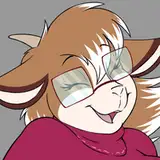
This text and sketch are older ones, but I felt it's appropriate to post it here now. The pictures above are new however! Lot of them ones I haven't shared elsewhere. ♥

This is an older sketch, but it felt appropriate to post again because it ended up being spookily accurate.
I drew this not long after Ellie’s colt foal sadly passed away at birth. I had decided to take Honey on at the time and was hoping that potentially, maybe, next year I might get another chance at bringing home one of Ellie’s foals or one of the other mare’s my friend has.
Honey had other plans.

For those who haven’t followed this weird and wonderful journey from Honey’s arrival to today:
Honey arrived in Shetland on the 20th of August. She coliced the following day and I spent over a week living in the stable nextdoor to her, barely sleeping and racking up a rather big vet bill. She had impaction colic due to not drinking enough on the boat to Shetland. Thankfully she recovered well and was able to join her friends on the hill.
For those who don’t know how impaction colic is treated, the equine is given fluids through a tube inserted in their nostril. This is to get as much liquid into the horse or pony with the hopes it’ll reach the impaction and help soften it up, making it easier to pass. Often it’s necessary to sedate the horse, administer paraffin or other oils and electrolytes. The horse is not allowed to eat until it has a poo on their own. So I was on poo watch for a very, very long time.The other ‘end’ is also scoped, meaning a gloved hand up their backside with an attempt to reach some of the impaction and removing it by hand.
Exactly a month later on 20th of September, the same thing happened again. This time we could not work out the cause of the impaction on the day. Several different vets treated her, including the lovely vet who was on call the week she coliced the first time.
The first vet couldn’t reach the impaction. He could feel it was there, but just out of his reach. The second vet was able to remove some of it. The signs of colic were exactly the same as last time, just more severe. I could not for the life of me understand how or why it happened again. Was she really not drinking enough? Was she more prone to it now? Was she going to start showing laminitic episodes too? Was this going to keep happening again and again in the future? What was I doing wrong?
I felt so awful that she was going through all this and I was unable to help her in any other way. It all felt like it was my fault and that she’d have been much happier and healthier in her old home.

I wondered this while I walked her around the school, in the cold, pale and bright moonlight of a Shetland autumn night. We were both exhausted, tired and wet. There was a storm on the way and I was terrified of losing her.
Third time the vet came, this time it was around 4pm on Tuesday the 21st of September, and she was the same vet who treated her during her first colic. She removed some of the impaction again but paused to ask me:
“Could she be in foal? I swear I just got kicked.”
“I think I can feel a head. And some feet.”
It brought everything to a halt. Honey had been declared barren the year before. She had been checked over by several different vets but nobody had considered she could be in foal. She didn’t look particularly big. She had a big crest and fat pads but no obvious pregnant belly. Her udders were not bagged up. There was a small amount of wax that had developed on that day, but nothing else obvious. Her cervix at this point was still closed.
Shetland unfortunately doesn’t have rectal scanners. We are fairly limited in equipment here in general.
I spoke to my friend, where Honey came from, and we tried to work out how and when it could’ve happened. There’s only one stallion that she could’ve been covered by, and he had already been trying to get her pregnant for years. She never took. The vet wanted to get a second opinion from her boss and look into getting blood tests done to confirm the pregnancy. But if that’s what it was, she was already far along. There was no way we could send her back south to give birth. She’d need to stay with me.
The vet left and promised to be back around 9pm to do another checkup and fluids. Around 6pm Honey started showing very different signs of discomfort. Lots of pacing around, tail lifting. Yard friend of mine (who owns Honey’s herd mates) sat with me in the stable.
Honey eventually lied down and pushed hard, her waters broke against the stable wall.
We rang my friend who used to own Honey and she got to watch the whole birth live.

Around 7pm on that stormy evening of 21st of September, Tammie Norrie, joined us in Shetland. Honey did everything on her own. I broke the sack and checked the little guy’s airways, but I didn’t need to do anything else.
He’s a strong, big colt and was definitely carried to full term. He stood up within the first 20 minutes and suckled for the first time within the first hour. The vet didn’t make it to us until well after he was already up, suckling strongly and pottering around the stable.

Everything came right in the end. He’s now SIX weeks old. Both him and Honey are doing great. Honey is loving being a mum and Tammie is proving to be a very cheeky little fella. He’s likely the first purebred fjord foal to be born here in a very, very long time.
I’ve mostly recovered now too. My body definitely took a toll with all the stress and adrenaline as well as lack of sleep in the last 2 months, but we’re all getting there. Everything is good and I’m very happy.
My little rainbow boy came back to me.