Episode 336 – 10 Influential East Romans with Anthony Kaldellis. Part 2
Added 2026-01-14 11:35:23 +0000 UTC
As we look back at Byzantium I turned once more to Professor Anthony Kaldellis. I asked him to present a list of ten influential East Romans who were not featured heavily in the political narrative.
Anthony Kaldellis is a Professor in the Department of Classics at the University of Chicago. He is the author of over a dozen books on Byzantium including the definitive history (The New Roman Empire: A History of Byzantium). Find out more here.
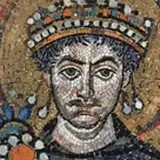
Pic: Saint Photios
Timestamps:
Photios: 0.47 secs - 15m 08s
Michael Psellos: 15m 09s - 31m 25s
Anna Komnene: 31m 26s - 39m 25s
Eustathios of Thessaloniki: 39m 26s - 47m 27s
George Gemistos Plethon: 47m 28s - 1h 07m 22s
Do you mean the Western Roman Empire pre-476 or the Holy Roman Empire getting back to Charlemagne levels?
Robin Pierson
2026-01-23 20:04:45 +0000 UTC
Some what off topic but if the Western empire was able to hold on and been able to bring it back to the level of the Charlemagne do thinks the great schism would have been resolved? To my thought I don’t see the Pope would gain the power and independence he did after the fall of the western empire
Pat Cronin
2026-01-21 14:06:22 +0000 UTC
Thanks so much, I'm so glad you enjoy the show
Robin Pierson
2026-01-19 13:40:49 +0000 UTC
You and Lori and Gavin and...:-)
Robin Pierson
2026-01-19 13:40:28 +0000 UTC
Loved the episode and I guess the end reference was to me haranguing you on the trip! Make Justinian great again :)
Steven Marshall
2026-01-19 08:02:21 +0000 UTC
Hi Robin,
I wanted to send a quick thank-you — I’ve been binge-listening and have finally caught up. The series is outstanding. The clarity, pacing, and care you put into the narrative (and the sources) really show.
I studied Classics and later focused on 19th-century European history, so I’m used to living in long timelines and messy transitions — and your work captures that texture better than almost anything else I’ve come across in audio form. It’s been a genuine pleasure to listen to.
One episode request, if you ever feel like doing a deep dive: I’d love a concentrated episode on George Gemistos Plethon and Mystras. I studied that late-Byzantine world and visited Mystras, and Plethon’s story still sticks with me — philosopher, reformer, the Florentine connection, and that sense of a culture trying to articulate what it is as the ground is shifting beneath it. Mystras itself almost becomes a character in that story.
Thanks again for the years of work you’ve put into this. I’m really grateful for it, and excited to keep following along.
Best,
Jason
Jason Siska
2026-01-18 16:16:25 +0000 UTC
Enjoyable 2 episodes. I think Robin's fuller treatments of Anna and Psellos compliment these episodes.
My only complaint, and I have it with The New Roman Empire, is that the philosophical issues are not covered enough. The listener and reader don't know what we're talking about. For example, what is Neo Platonism? How does it vibe with orthodoxy? Tell us more about monophysism. Tell us more about the filoque. I realise there are time and space limitations. Perhaps we could have a philosophy episode. Prof kaldellis could give us a slightly better map of the conceptual territory.
Mark Simms
2026-01-18 03:22:22 +0000 UTC
Also missing from this list was a monk called Joasaph who lived in the 14th century. I remember him having written a well-regarded and well-written history and he personally having a big influence in the roman society. But maybe some are biased against him.
Paul Astalas
2026-01-15 23:00:59 +0000 UTC
Haha, yes I'm sure my kids would love that. I will take a break when the podcast ends and see where inspiration strikes. But it seems likely to be the earlier Roman period.
Robin Pierson
2026-01-15 22:23:17 +0000 UTC
Yes the church was an obvious route of employment for intellectuals. What's also a contrast to today is that they were all polymaths. Today we're almost all specialists.
Robin Pierson
2026-01-15 22:21:47 +0000 UTC
Honestly if your channel from here on out did NOTHING else except have interviews with Anthony Kaldellis every other month or so, that would still be an honorable way to continue the channel! These are always delightful! Though I am hoping you will find a new narrative groove as well.
I bet now as a father and a busy person, you simply don't have as much time and energy as you once did to continue the channel. But hey... why not make it the FAMILY business, eh? Your kids could all get Classics majors or whatever in a couple decades and start making content WITH you, and then FOR you! (Making sure they TOO pass the job onto their progeny! This podcast could last for a THOUSAND years!)
But in all seriousness... a great way to continue the channel without having to do brand new research from scratch for every episode might be to do what many YouTube creators do: go back to your old episodes and re-release them, but first re-editing to remove any mistakes, updating it based on new archaeological stuff we've learned since then or based on new papers from experts, etc. That would both satisfy your old fans AND encourage new fans to get back on board to await each "new" episode in the narrative!
Another idea is to do NEW episodes, but from in-between the narrative episodes you already have. Go back to your old episodes and insert MORE info where you can, covering years or decades you kind of elided. You could even use a ".01" naming convention so as to keep them in the proper place, chapter-wise.
Though my FAVORITE idea would be if you could just go back in time a LITTLE bit to before where you started the series the first time. Maybe go back to Constantine the Great and start from there... perhaps with a focus more on the East than other chroniclers have done?
Or you could even go back further, maybe just for a few episodes per century, and start with Alexander or the Persians, as they affected the small port of Byzantium, which later would became the grandest city in the world! Surely people in Antiquity, prior to Constantine, realized the defensive and offensive potential of a bigger, fortified port city at Byzantium?
You know, surely one of the most impactful things in all of Roman history was the simple decision to make not one, not two, but THREE walls protect the city of New Rome, in their amazing defensive arrangement. If you could go back in time enough to lead up to talking more about THOSE decisions, I think this would be the ULTIMATE prequel!
The Children of Jack Acid
2026-01-15 11:26:30 +0000 UTC
Metochites, at least in his poetry, can also be very self-congratulatory in a way that’s off-putting. Like a lot of things I imagine it’s part of Byzantine rhetorical training, the encomium praise-poetry which was so popular is almost ludicrously flattering and sycophantic by modern standards but hey, that’s what people wanted to hear/pay for apparently lol.
Cole
2026-01-14 23:32:54 +0000 UTC
Wow I did pretty good. So almost all my guessed were correct about the people in part II. With the asterix of Palamas who almost made it. In this episodes we see almost all or at least the great majority of the relevant intellectuals of the roman state were churchmen or related in some way to the church. It is such a contrast to today where there is such a clear clerical/secular divide.
Paul Astalas
2026-01-14 19:15:40 +0000 UTC
After reading 14 Byzantine rulers I must say I really disliked Psellos, never failed to mention his own intelligence. It was an amazing book to be fair, but it seemed to be a history of the court more than anything wider.
Diarmuid Angland
2026-01-14 16:36:58 +0000 UTC
Very enjoyable interview, I appreciate the professor’s book recommendations
Cole
2026-01-14 14:27:55 +0000 UTC