HC: Handyman | Ch. 255 - Automatic Stupidity
Added 2025-10-13 08:32:52 +0000 UTCBack home, Jack finished wrapping a length of grass cord around the section of the metal axle where the cylinder would sit, then dabbed it with glue. The twine added friction; the glue would lock everything in place once it set.
Jack lined up the cylinder and guided it down the shaft. It slid smoothly until it reached the twine and caught. He pressed down, holding the cylinder in place while counting under his breath. The scent of the glue, tangy and acrid, curled up from the joint. After a few moments, he gave the cylinder a gentle twist. No wiggle.
Perfect.
With that, all four pinned barrels were locked into place. He tested the fit. It had taken three tries, but he’d finally nailed the exact measurements.
Next step, the pins.
He reached for the tin pegs—each one as thick as his pinky. Small, neat cylinders of tin, five coppers each. They fit straight into the pre-cut holes like they were made for it—which, technically, they were.
Now came the fun part.
Jack stared down at the bot. Humble beginnings—just clay, tin, and a few hours of persistence. But if it worked, it’d be the first of many.
“Let’s start small,” he muttered to himself.
The idea was simple: get the bot to pace back and forth across the room. Nothing fancy. Just a clean motion loop to get comfortable with programming the wheels, and maybe get a rough sense of how far it could go on a full wind-up.
He pulled out the instruction notes from the recipe.
Back Wheels — Pinned Barrel with Three Pins
0 0 0 – Stop
0 0 1 – Forward Slow
0 1 0 – Forward Fast
0 1 1 – Backward Slow
1 0 0 – Backward Fast
The programming for the left barrel was simple enough. He inserted tin pegs into all the rightmost track, the one that corresponded to slow forward movement. That would keep the pin on the logic box activated, and the wheel always turning, at a steady, gentle pace.
The right barrel was trickier. He wanted the bot to move forward, then pause the right wheel every few beats to force a turn.
“Forward. Forward. Stop. Forward. Forward. Stop,” he murmured, laying out the rhythm in his head. He slid two pegs into the rightmost slot, then left every third space empty. Hopefully, the pause in the right wheel would cause the bot to pivot just enough on its axis, giving it that back-and-forth pacing motion.
It felt like playing Battleship—slotting pins with precise clicks, half-guessing, half-planning.
“Let’s see if I did that right.”
He pushed the pot bot near one wall and wound the crank, taking steady breaths. When the resistance peaked, he let go gently.
There was a brief whir.
Then—movement.
The pot bot rattled softly as it rolled forward, its clay wheels clicking with each rotation.
“It’s alive!” he said, half-laughing. It was actually working.
The bot glided a clean four meters across the room before the right wheel stuttered. Just as he’d hoped, the left wheel kept turning, veering the bot right. It stopped as the robot made a 45-degree turn—then resumed its forward crawl. It rolled one meter before bumping gently into the wall with a hollow thud.
Jack rushed to catch it. He scooped it up before it could harm itself. The wheels kept spinning in the air, turning uselessly until the wind-up ran out with a final, soft click.
He let out a breath and grinned. “Okay. So… two meters per tin peg. There are twelve rows per cylinder. That means the pot bots can travel at most… twenty-four meters per cycle.”
Not bad. Not wonderful either.
The bigger issue was the two-meter increments. That wasn’t ideal for detailed navigation. If he wanted the bot to make more precise or complex movements—like weaving through a tight space or performing delicate tasks—he’d need better resolution. But he could just add more rows to the next pinned barrel he made.
Still, hiccup aside, it was a solid first test.
He got down to adjusting the programming again. The pot had gone forward, turned 45 degrees, then continued. What he wanted was a full 180. A clean turn that would send it back the way it came.
“Okay... maybe it’s not just about pausing the right wheel. Maybe I need it to help with the turn.”
He reached for the right cylinder, plucked out a couple of pegs, and began rearranging them. Instead of a steady forward rhythm, he tried a new sequence: forward, forward, backward.
0 0 1 – Forward Slow
0 0 1 – Forward Slow
0 1 1 – Backward Slow
“That way,” he muttered, “while the right wheel slows down, the left reverses—it should pivot harder, help spin the bot around.”
He double-checked everything.
Jack returned the bot to its starting position, wound it up again, then let go.
The bot rolled forward. Two meters. Four.
Then the turn initiated. The right wheel jerked backward. The left kept going. The bot rotated in a sharp pivot. Then it started rolling back the way it came.
Jack grinned.
“Alright!”
If he got better at this programming thing, there was no reason the pot bot couldn’t handle more advanced tasks eventually. But for now, watching it pace back and forth like a wind-up toy soldier was already deeply satisfying.
He cracked his knuckles and prepared his next experiment.
*
Jack watched intently as the pot bot performed its simple routine. It rattled over to a clay pot in the corner, lowered its claw, and snatched up a toy mouse. The bot wheeled back across the floor, dropped the toy into a second pot box, and reset its course.
Jack’s eyebrows rose. “Not bad,” he said with cautious enthusiasm.
But on the second lap, as the claw emerged from the pot, it came back up empty. Still, the bot trundled back just as proudly as before, gears humming with purpose, as if it had completed a perfect mission. Jack let it repeat the routine two more times. The robot lucked out on the third cycle but struck out on the fourth.
He sighed. This was as far as he could push it—for now. Unless resources always sat in the same place, the pot bot couldn’t be trusted to collect anything reliably. Only water and clay came to mind as consistent enough.
Crafting wasn’t any better. Even something as simple as braiding rope was impossible—the bot just didn’t have the dexterity. A claw was a clumsy thing compared to a hand. Trial and error only deepened his appreciation for just how capable human hands were.
There had to be more potential here, but right now, he couldn’t picture the bots doing anything more than harvesting some basic resources.
He’d already burned too many hours. Even with the time field’s buffer, the clock kept ticking, and he had to get moving if he wanted to do everything on his list before his team logged back in.
Which left the next item on his list: get his eighth minor. He opened up the guide he’d saved in his favorites.
Masonry
Do you enjoy building large structures? Are you a team player who wants to be useful to your guild? Do you dream of leaving a mark on the world with real, permanent structures? Then Masonry is your minor.
Masons build infrastructure—walls, houses, bridges, gates, towers. If you visit a castle run by a guild and see anything solid and permanent, a Mason probably made it. For a long time, this minor was considered underwhelming, with few practical uses and little fanfare. But that all changed with the Siege Patch, when player-owned strongholds became a central part of the endgame meta. Every single siege wrecks fortresses—and guess who has to rebuild everything? That’s right. Masons. That shift has made the minor skyrocket in popularity.
One of the most exciting things about Masonry is its universal synergy. It’s currently the only known minor that synergizes with every major in the game. These synergies unlock new, specialized structures. For example:
A Smith gains access to forges, smelters, and armories.
A Miner unlocks rail systems, mining carts, and shaft elevators.
A Chef can build kitchens, smokehouses, and baker’s ovens.
A Rancher? Stables, pens, and feeding troughs.
The list goes on.
That said, Masonry isn’t easy. In fact, it might be one of the most grueling minors to level. Every project is a serious commitment. Building a simple wood hut can take days, and XP gain at early levels is minimal. Unless you're working on high-value infrastructure consistently, progress is painfully slow.
Worse still, the entire novice tier is a money sink. You’ll have to fund your own materials, tools, and blueprints. Very few guilds are willing to pay for a beginner’s tin shack—so unless you get lucky with contracts or have friends willing to front the cost, expect to invest heavily at the start.
Still, for all its drawbacks, Masonry is a minor that gets better with time. As games age, infrastructure becomes more important. Specialized buildings, housing, and support systems only grow in value—and the players who can build them? Even more so.
To learn this minor, go around the city and look for scaffolding. There will be several locations in each city, but they move around. Volunteer to help any of the NPCs working in construction, and you’ll trigger the quest to obtain the minor.
Pros
Enables infrastructure building (walls, bridges, housing, etc.)
Universally synergistic—combines with every major
Strong demand from guilds post-Siege Patch
Scales extremely well with time and server age
Cons
Slow, grindy leveling process
High material and tool costs, especially early on
Little reward unless you’re building high-tier projects
Not solo-friendly; shines most when supporting a guild
Rank: B+
If building a village was anything like managing a Breach, this was the time to learn it. Traveling back and forth between a remote location and the city was a hassle he’d rather avoid, and he’d prefer to have every minor ready to be used once they got there.
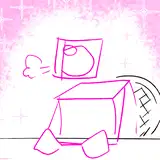
As he closed the door of the house, he caught sight of the pot bot. The smiley face he’d painted on it didn’t look nearly as cheerful as it had earlier—but that was probably just in his head.
The rush from excitement to disappointment had taken a toll. Learning a new minor would be a good change of pace.
The night sky was beginning to shift from pitch black to purple, hinting at the nearness of morning. He set off into the city, steering clear of the Slums and the main street. Instead, he let his feet take him through a winding route of side alleys. However, the side alleys were anything but quiet.
He passed a pair of players locked in a heated negotiation over the price of a rare mount, gesturing wildly at each other while a third tried to mediate. Then, he had his way blocked by two women in the middle of a full-blown brawl—punching, shouting, and yanking at each other’s hair. Jack had just stood very still, afraid that he could somehow become these players’ target if he got involved, but a trio of city soldiers arrived and hauled them toward prison.
In front of a modest house near the edge of a plaza, an NPC with a crutch limped through the doorway, embraced by a tearful wife and daughter—clearly the emotional climax of some cutscene. Nearby, a team of five players who had just completed the quest stood grinning, arms over each other’s shoulders, beaming smiles and tearful eyes.
He turned down another road in the middle-class district. Compared to the shabby neighborhood where his rented house was, this part of town felt clean. The cobblestones here actually fit together properly, the lampposts had working lights, and many of the houses had flower boxes in the windows, adding a pop of color to the city’s black.
It was here, in the middle of the block, that he finally spotted it at the end of the street: scaffolding on a house. Even from here, he could see a man shouting from the roof at someone below, waving a hammer in one hand.
“Bingo,” Jack said, “Let’s learn one more minor.”
Comments
There should be a relic or oopart that he could find that is a dialect primitive computer that could generate a minor or title “ innovator” which would advance tech level or as a minor allow the ability to analyze material to unlock various tech trees. Uses 1000 exp (from a minor class) to have a chance to discover something new. Example like using butcher by scanning let’s say a piece of meat could unlock “ parsing” which allow meats to be broken down into sections then would lead into specific recipes for meats like ribeye or steaks.
IdolTrust
2025-10-13 12:23:51 +0000 UTC