Matahouroa Worldbuilding: Other Races
Added 2017-07-28 11:02:55 +0000 UTC Manaia (Merfolk; Black, Green and Blue)
The Manaia are Matahouroa’s merfolk, their lower bodies those of seahorses and their mouths with a distinctive beak instead of teeth, akin to that of parrotfish, hidden by the lips. Their civilization extends all over the plane, spread beneath the waves, but the sea around Hiriwa is an important location for the Manaia, drawn to the Scolding Moai’s power. While they have public good relations with the Empire and the Parekareka, the secret of the Scolding Moai is kept from them, something not helped by Purū’s rather cryptic presence. As such, the Manaia have taken this into their own hands, trying to manipulate their way into the Scolding Moai.
Manaia society can best be described as a self indulgent, constantly back stabbing aristocracy, served by octopus like servants known as the Wheke. Although very similar to the cephalids of other planes, they are non-sapient, being basically like a mixture between a pet and a slave, living to tend the Manaia’s every need. The Wheke’s dutiful servitude is only one example the Manaia’s extensively biomantic society, warping sea life like corals into forming their underwater cities. The Manaia constantly innovate their realm, creating progressively more bizarre organisms that are basically their tools.
Tipua (Demons; Black)
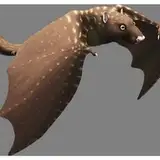
Tipua are Matahouroa’s horrific demons, born from the immense concentrations of Black mana in the Wairepomango, and to a lesser extent other swamps. Physically they tend to have bestial traits, resembling grotesque amalgamations of rodent, bat, dog and sometimes human flesh, bearing disgusting appendages and many mouths and eyes. Most Tipua are basically malicious predators, stalking the swamps for prey they don’t need to consume, and suddenly and violently destroying and absorbing their prey’s flesh and soul. Some, however, have acquired a dark intelligence over the centuries, and tempt Kawau and humans alike with promises of power, always granted but with a fatal price.
Pango, Wairepomango’s Taniwha, hunts down and kills the Tipua, who live in perpetual fear of the beast, a delicious irony appreciated by many who live in the swamps. Several Tipua escape the Wairepomango, however, invading Hinawahine’s lowlands and sometimes even flying or swimming their way to other islands, though some are born in other, less notorious wetlands. Out of the Wairepomango their cruelty can go unchecked, spreading diseases as they please. Hunting down these Tipua becomes thus the task of the Taniwha and Kahuna in the vicinity, many elaborate rituals having developed over the centuries to ward off the demons and call forth the attention their killers.
Patupaiarehe (Red and Green)
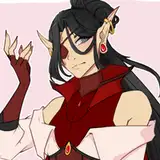
The Patupaiarehe inhabit the forests of Hinawahine, particularly the woods that border the Plateau. They strongly resemble the elves from other planes, being lithe, sharp-eared and agile, though with pale white skin and bright red hair. Their history is long lost to time, and some believe them to be the descendants of the passengers of another of the five Hōkūleʻa that came from Sawaiki, though the Patupairehe maintain that they are the older inhabitants of the whole plane. Regardless, most Patupaiarehe avoid contact with humanity, except for those that interact with Rinomaunga’s Tahepuia Kahuna, and those that live on the mountain slopes near Karatakara, who feel that the city has stolen their land, and thus have a long history of conflicts and assaults. In recent years, outright fighting has become more rare, yet more violent whenever it occurs. Occasionally, some Patupaiarehe lure people into the woods with their flutes, and blocking one’s ears is said to be of utmost importance when traveling alone in montane forests.
The Patupaiarehe live in small tribes, generally governed by a council of shamans, without any stratification below them. Music is an important aspect of Patupaiarehe culture, their favored instruments being flutes, and it is through music that their magic is weaved; the greatest way to find sympathy from a Patupaiarehe is to offer him/her an exquisite instrument. While definitely not hesitant in using violent force, Patupaiarehe stress the value of trickery and humiliation of the opponent before applying violence, finding it to be more effective than raw strength. In spite of their conflicts, Patupairehe do have a strong value for hospitality, and will provide for lost wanderers that aren’t part of their grudges.
Taika (Red, Green and White)
Large, anthropomorphic thylacines, there are three main groups of Taika: the Pīngao Taika, that inhabit Inanga, the Hāura Taika, that inhabit the mountain ranges in the north and west of the Plateau, and the Ware Taika, living south of the Ingikiwai, with several, lesser known groups living in between. It is thought that the Taika once had a unified nation spanning Hinawahine and the nearby islands, but gradually lost it or gave it away to the Empire.
Taika culture differs greatly between the individual groups, though a few traits do remain consistent. The Pīngao Taika have largely been incorporated into Inanga's human society, living alongside humans in the villages. They are particularly associated with the local "Pirita Kahuna", sharing natural wisdom with them, and offer a bridge between them and the more insular Hoiho. The Hāura Taika, on the other hand, interact agressively with the Empire, raiding the smaller settlements on occasion, and on occasion attacking the Patupaiarehe. The Hāura Taika is similar in some respects to that of the Pouakai, a warlike people that subsists primarily by hunting, though led by an “alpha”. These alpine Taika don’t see eye to eye with the Aven, however, both competing for resources and finding the other a mockery of their culture, solely not at open conflict because of their common enemity for the Empire. Meanwhile, the Ware Taika have a primal, matriarchical, shamanistic society, avoiding contact with all other races, reminiscing of times long gone.
All these societies have very similar traditions, preserved in spite of the isolation. All three Taika societies place an emphasis on a sense of morality independent from Tapu, to know what is intrinsically right and wrong by heart rather than enforced rules, though obviously this is expressed by vastly different philosophies, with the Pīngao Taika taking a humanistic approach, the Hāura Taika violently retaliating against offenders in a way no better than those who enforce Tapu, and the Ware Taika meditating and listening to the spirits. Regardless, all share the common trait of being the only sapient race on Matahouroa unaffected entirely by Tapu.
Dragons (Red)
Known as Tama-nuit-te-Whiro or Whirotātea, Matahouroa's dragons occur throughout the plane's volcanoes and mountaintops, being most common in Rinomaunga. They resemble massive winged tuataras, breathing fire, lightning or noxious gases. With slow breeding rates – taking ten years to reach sexual maturity, and laying eggs that take an year to hatch – and unarmored skin, they are generally content with remaining in the relative safety of the mountaintops, but every once in a while one descends to the lowlands, wrecking and burning everything in its path in search of prey, which can often be humans. The Tahepuia Kahuna have a particular endearment for these dragons, occasionally taming them as familiars, and indeed the Tama-nui-te-Whiro are a common motif in the sculptures made by the Kahuna. The dragons tend to be rather cunning animals, and a perfect alignment between the beast and the Kahuna is necessary, lest the human become prey.
Taniwha (all colors)
The Taniwha are large, aquatic reptilian creatures similar to mosasaurs, and by extent to leviathans and serpents from other planes. However, there is a strong divine component to their existence, being more akin to minor deities than animals. They are born from the spiritual essence of the waters all across the plane, mana gathering to form massive pearls from which they hatch. They can and do lay these egg-pearls themselves, though that is a rare event. They are technically immortal, but can be killed; murdering a Taniwha is severe Tapu, that usually results in instant death.
Being aquatic creatures, the Taniwha can either be bound to a specific area, or roam nomadically. Most Taniwha born in freshwater are bound to their lake or river, though many are instead bound to coastlines, deltas, bays and similar oceanic features, including portions of the sea bottom. Bound Taniwha are invariably benevolent guardians, protecting waters deemed as Rāhui and frequently acting in the service of the local people, though disrespect both for the Taniwha and their sacred space are harshly punished. Nomadic Taniwha are usually born either on the open sea, though some can be born in rivers. They roam about randomly and can be quite destructive, acting more as standard sea monsters. Both bound and nomadic Taniwha are nonetheless treated with respect, and offerings to appease them are the norm.
Five great Taniwha protect the waters around the Moai. They were all born when the stones were erected, spawning from the great concentrations of mana that accumulated soon after. Fed by the strong mystical energies emanating from the Moai, they are among some of the most powerful beings on the plane. They lend their efforts to protect their sacred posts, often working for the benefit of the local human communities.
- Kiwitea (White): Protector of the Plateau, Kiwitea dwells in the Kapongatakere river, blessing and purifying its waters, and rising in powerful waves when the Plateau is threatened by outsiders. Adorned with pearly, shining scales, Kiwitea once crossed the river every night, illuminating it like an underwater sun, but in recent memory he has seldom done this, spending more and more of his time hidden within the underground lakes beneath Hiruhāramānia. Throughout most of Hinawahine’s history, Kiwitea served as a messenger for Lālākea-kupu, with the Pūhihi Kahuna and even commoners descending to the river’s shores and communing with the Taniwha in a variety of ways. But as time went by, the Pūhihi Kahuna rejected Lālākea-kupu, and while many citizens still venerate the shark god, Hiruhāramānia’s Kahuna have successfully made the possibility of speaking with Kiwitea forgotten. Nonetheless, the monarch, the Tohunga Ahurewa and a few other people still descend to the caverns to speak to the ancient being.
Kiwitea, historically remarked as a calm, radiant presence, is described by the few who interact with him on a daily basis as melancholic and austere. In recent years, he has warned of a coming threat, which he won’t fight against.
- Purū (Blue): Purū dwells in the seas around Hiriwa, supposedly guarding them. She is very rarely seen, spending most of her time in the ocean depths, between the coastal coral reefs and the abyssal realms. Not even the Manaia see her frequently, Purū’s presence being exceptionally subtle, her normally cobalt scales reflecting and allowing light to pass through in a myriad of ways in order to make her invisible. It is said indeed that Purū has very little interest in fulfilling her duty, though on the rare occasions in which Hiriwa is attacked she manifests powerful sea storms and sends hordes of sea monsters.
The Karetai Kahuna, Parekareka and many other Hiriwa mages summon her on occasion, communicating with her via divination. Her answers are usually very cryptic and bizarrely structured, creating riddles that even the most experienced mages have immense trouble deciphering, testing thus the intelligence and worthiness of anyone who bothers to call upon her. Those who do successfully solve her riddles are rewarded handsomely for their trouble, not only acquiring the desired knowledge, but arcane secrets desired in even a subconscious level. The Alalā and Manaia both seek her, yet she refuses to interact with them, often even violently repelling their forces away.
- Pango (Black): Guardian of the Wairepomango, Pango is a sinister presence that is rarely seen, but frequently felt. With pitch black scales, he is hidden in the depths of the swamp, only his milky white eyes betraying his enormous bulk. Pango faithfully does his job, hunting down swamp monsters such as the Tipua and other enemies of Koronitiwa, stalking them in the murky waters silently, before suddenly striking and crushing them with his jaws. However, he also serves another purpose, to protect and grant access to the Grieving Moai. To this end, he seduces mages with whispers of power, tempting them to make contracts with him. These contracts are often rather twisted and potentially rather cruel, but Pango does keep his word, and rewards the mages with the secret of how to bypass the ravenous hordes that protect the Grieving Moai. These mages become the Ataata Kahuna, who are at Pango’s ultimate mercy due to the strength of these contracts. Nonetheless, Pango does occasionally absolve a contract if it grows bored with that person.
- Hīwera (Red): Residing in the geothermic lake in Tīrarae, Hīwera is a fickle creature, infamous for her temper. Whenever she feels like it, she floods forth the burning, bubbling waters of the lake, having little concern for who gets scalded. Often she leaves for weeks at a time: the geothermic lake is thought to be connected to a system of underground lakes and caverns, in turn connected to nearby rivers and streams, which she often floods over in scalding torrents. Nonetheless, she always returns, and turns these very lethal waters against any intruders who would desecrate Rinomaunga. Hīwera's passion is greatly admired by the Tahepuia Kahuna, who offer her crafts and food in return for inspiration, advice and precious gems and ores present in the depths of her underground lake system, which she generously offers.
When she leaves through the streams and rivers, she often makes her way into the sea. When she does, she almost invariably shows up in areas where there are local Kahuna identifying themselves as Tahepuia, before returning to her lake. This is taken as proof that external Tahepuia Kahuna are true members of the order, a fact that the Pūhihi Kahuna and the Pirita Kahuna have taken extreme dislike to, reffering to her as “the undutiful Taniwha” and “worthy of death”.
- Torouka (Green): The Ingikiwai river is the home of the Taniwha known as Torouka, protecting the mighty river from its source to its mouth in the Wairepomango. Torouka prevents monsters from Wairepomango from swimming upriver, oversees the passing vessels, and exercises the life giving properties of Ingikiwai, blessing crops and providing healing knowledge to those that seek it. He also manipulates the natural cycles along the river’s shores, speeding up the arrival of nurturing rains and guiding the spirits of the dead in the cycle of reincarnation or departure. In turn, it’s a tradition by all in the vicinity of the river, from farmers to Karatakara’s high merchants, to offer sacrifices to the Taniwha, usually in the form of food, though the emerald-scaled beast will accept anything given honestly. Usually easy to please and rather nurturing, Torouka has been growing restless and more temperamental in recent years, something that the Pirita Kahuna have observed with interest.