(Timeline Tuesday #107)
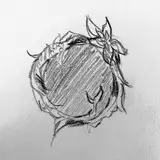
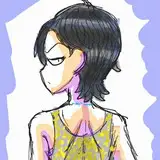
Named for their enormous, ring-shaped head, donumbs are a unique and strange species of humanoid who have arrived on our timeline and struggled to adapt to our way of life. The species features a skin tone range similar to humans, but the skin itself is much, much thicker. There is a specific elasticity to these creatures, likely due to the fact that they have no muscles or bones, and somehow hold themselves upright with a force that is unknown to this timeline. The inside of donumb bodies is instead filled with a firm, but mailable, jelly-like substance. Most donumbs can speak the languages of this timeline, but they also have their own tongue.
Donumb necks are long and slender. Atop this neck sits the creature’s giant head, which is the approximate shape and size of an inner tube. The creature’s wide-set eyes are placed upon this cranium, as well as their flat nose and small mouth. At the center of this ring rests a hole.
On the home timeline of donumbs, this hole—called a donker—is an important part of daily donumb life. Most donumb travel is carried out by sliding a post through the donker, and then whipping the post upward and sending donumbs flying through the air. Machines are often built to send donumbs soaring dozens of miles at a time, often crossing their world over the course of several flings.
Of course, the most pressing question in all of this is how donumb travel is possible given the incredible harm these aerial trips would do to a human body. The answer is that donumbs are almost completely impervious to physical blunt trauma. The unique makeup of their bodies causes this species to simply bounce and roll upon impact, and their incredible durability has caused these creatures to evolve without the nerve endings needed to feel any pain from these high-flying trips.
Because this timeline does not have the machinery to fling donumbs through the air, they are often late when it comes to meetings or travel.
_Photopotamus_
2023-08-15 23:56:05 +0000 UTC