This Week in Retro: Street Fighter Alpha [1995]
Added 2020-06-21 14:32:48 +0000 UTCJune 27, 1995 Street Fighter Counts Backwards Into Anime
by Diamond Feit
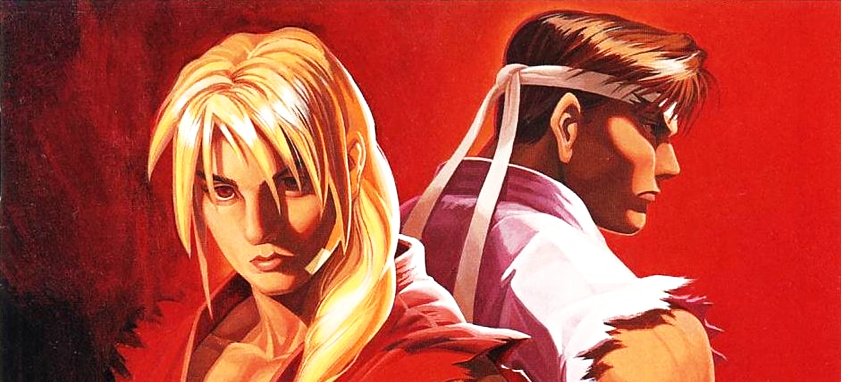
How do you follow up on a video game that redefined video games? It's a fair query, one devoid of hyperbole when the game in question is Street Fighter II. Capcom's 1991 fighting game both codified itself as a template for an entire genre and made that genre so popular in such a short amount of time that it dominated the entire medium for several years and rescued arcades from an early death. A case can be made for Street Fighter II being one of the most important video games ever made - so what comes next?
As imitations, direct challengers, and straight-up pirated ROM hacks of Street Fighter II flooded arcades in the early 1990s, Capcom struggled to keep up with the demand they themselves had created. First came revisions to the original game, which unlocked unplayable characters and tweaked the game speed. Then came a "Super" expansion, which added new characters into the mix, which was then revised again. But by 1995, regardless of how many updates and augmentations had been added, Street Fighter II was four years old and competing fighting franchises which began in its wake were already on their second or third sequel. It was time for a new game; it was time for a seq—wait. Prequel?
Yes, 25 years ago this month, Capcom held the Street Fighter dial in hand, looked out at fans who wanted a twist to the left, and promptly gave it a turn to the right to begin counting backwards. In Japan, this prequel was called Street Fighter Zero, a game-naming convention we now accept as shorthand for "here's how this whole mess got started." In 1995, that wouldn't have flown with English speakers, so the series became known outside Japan as Street Fighter Alpha. The localized title is in fact superior; even though Alpha is a prequel to Street Fighter II, it does not precede the original Street Fighter, which makes the "zero" designation very misleading. We don't count 0 between 1 and 2, after all.
By framing the first follow-up to Street Fighter II as a prequel to that game, Capcom gave their creative team a lot of freedom, with less of the pressure a full sequel would have demanded (and it would, later). Since Street Fighter Alpha exists between two previous games, the roster can lean on established characters without much fuss; hence we get Ryu, Ken, Sagat, Chun-Li, M. Bison, and Akuma from Street Fighter II facing two returnees from the first Street Fighter, Adon and Birdie. In a bit of world-building, Street Fighter Alpha also brings in Guy and Sodom from Final Fight (which was always envisioned as a Street Fighter spin-off) along with Charlie Nash, Guile's late friend mentioned in his SFII ending who plays just like Guile but looks 10 times cooler. This means Alpha has only two "original" characters: Dan Hibiki, a goofy karateman who exists to poke fun at Capcom's cross-Osaka rivals SNK, and Rose, an overt JoJo's Bizarre Adventure reference.
I should clarify that despite Street Fighter Alpha relying heavily on existing characters, there are no recycled sprites or backgrounds in the game (a cost-cutting practice common in fighting game franchises); instead, everything has been redrawn with a simpler, more animation-friendly look to them. To put it another way, if Street Fighter II had been a manga, Street Fighter Alpha would be the anime adaptation—something Street Fighter II had actually seen in theaters the year prior. Released abroad with the subtitle The Animated Movie to distinguish it from the live-action Hollywood film (also released in 1994), the anime is much more faithful to the events and ideas presented in the original game.
It's a meaningful connection. Street Fighter Alpha draws inspiration from both visual elements and a few key events from The Animated Movie: Young Ryu has a white headband instead of red, young Ken's hair is longer, M. Bison is now a big thick brute with no pupils (very different from his slender appearance in Street Fighter II), and so on. Street Fighter Alpha even includes a hidden "dramatic battle" mode where two players fight a computer-controlled Bison as Ryu and Ken at the same time, which comes straight from the climax of The Animated Movie.
Street Fighter Alpha's embrace of anime aesthetics and exaggerated fighting techniques arrived at the perfect time, as the rise of fighting games in the U.S. synced perfectly with the first major wave of anime imports. Just as Street Fighter II was blowing up arcades from coast to coast, all the while shouting "hadōken" and "shōryūken" at American kids, companies such as Streamline Pictures, Viz Media, and AnimEigo were introducing Japanese anime to a new audience in the United States.
By 1995 there was a substantial anime section at American video stores, and early internet users were actively discussing new releases, not just recent translations of older material. Likewise, early video game forums had begun trafficking in move lists for the newest fighting games, which were taken straight from Japanese arcade cabinets or magazines and were necessarily laden with Japanese words. The groundwork for a full-on anime chapter of Street Fighter had been laid, although when Street Fighter Alpha was ported to the PlayStation and Saturn, Capcom's U.S. branch ironically ditched the Japanese cover art in favor of some absolute crap. It's not NES Mega Man bad, since all the characters are recognizable, but it shows how publishers were still reluctant to advertise Japanese products as-is.
Street Fighter Alpha would quickly outgrow its "prequel" origins and turn into its own series, eventually expanding to include the entire cast of Street Fighter II and transforming into its own tentpole of Capcom's fighting game output in the 1990s. Significantly, it was the anime-esque Alpha characters that would provide the backbone for the Marvel Vs. series starting with X-Men vs Street Fighter in 1996 and culminating in Marvel vs Capcom 2.
All this goes to show that the Alpha series captured the attention of a large audience to the point that several of the most beloved Street Fighter characters today have their origins in Alpha, not II or III. Indeed, as of this writing there are six Street Fighter III characters who have yet to appear in the modern era of Street Fighter IV or V, but almost every Street Fighter Alpha character has made at least one appearance except for Sodom (currently MIA since 1999)—and even he seems to have a greater chance to show up in "Season V" this year over, say, Necro or Twelve.
If you'll allow me to employ some modern vernacular that I'm less-than-confident in using, Street Fighter Alpha slaps. The characters lack some detail that "mainline" Street Fighter games have—the animation certainly cannot compare to that of III—but that simplicity and versatility offers players more options than any other Street Fighter could at the time. Not to mention that the Alpha cast also found time to fight with Magneto and Spider-Man in-between bouts with each other! Capcom doesn't make 2D fighting games anymore, so the ’90s anime style has been shelved permanently, but Street Fighter Alpha games remain available today via the multi-platform Street Fighter 30th Anniversary Collection as well as vintage PlayStation Network ports and a special bonus-laden PSP edition, all of which play well on Vita.
Comments
WOW THAT COUNTS
Diamond Feit
2020-06-24 12:23:40 +0000 UTCI should clarify, it was a good CPS2 rendition of the song, but it was there! https://www.youtube.com/watch?v=9qLrA9PMFaU
RoryDropkick
2020-06-24 05:09:47 +0000 UTCThey had the actual song in SF ZERO?? Wow, I didn’t know that!
Diamond Feit
2020-06-24 05:07:49 +0000 UTCI love that the Dramatic Battle mode in the JP version includes the song played during fight scene from SF2 Movie, which made all of it so perfect to play after watching the anime. Understandably they cut it for the US version :(
RoryDropkick
2020-06-24 04:05:19 +0000 UTCYes in the Switch version it's similar. There's a SNES/GEN 2D fighting game called DRAGON: The Bruce Lee Story which is one of the few 2D fighting games with 3 players on screen with 3 separate life bars. It's pretty dumb fun playing it "coop" despite it being free for all since you can gang up on the lone CPU player.
SilverHairedMiddleAgedTuxedoMask
2020-06-21 23:25:25 +0000 UTC