Monster Essays: Minotaurs
Added 2020-02-08 00:41:39 +0000 UTC
Man, I went into this one wondering if I’d even have enough for a real story. Then I just got to the sexuality part and a lot of stuff started falling into place. Furries would be super into them, they’re be big on pregnancy and able to interbreed to make anime-style minotaurs over big shaggy beastmen. I’ll need to actually use them beyond background characters sometime… at least a holstaur (halfbreed) and dealing with that life.
Dylan Eywind
History of Interspecies Relations II
Year of the Bull. The History of Minotaurs
**A. Covered all your bases beyond a few grammar issues. I had to search to make sure furry wasn’t an offensive term in its conventional use.**
The mythical origins of minotaurs claim that they were a deformed offspring of humanity. The one and only minotaur was allegedly slain by a Greek hero.
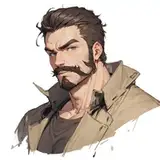
The actual validity seems about as shallow as most other myths. True minotaurs appear as bipedal hooved animals, primarily cows/bulls. Some evolutionary variants include moose, bison or yaks, but these make up a fraction of their population. Their bodies are almost completely covered in fur, lacking only in their fingertips and hooved feet. Their thick and oily fur protects them from heat and cold while removing dirt more easily. They are among the largest and heaviest species of monster, with males and females standing around 7 feet tall without including their horns. Overall, they are considered the second strongest modern species, falling short of ogres. While less flexible and fast as orcs, minotaurs are much more even-tempered beyond a tendency towards a healthy competitiveness that comes from their classic tribal sports and activities.
Minotaurs as a species have little interest in their horns. While solid and firmly rooted in their skulls, they grow consistently like human hair or fingernails. They appear to be outdated evolutionary traits, once used for status battles before minotaur hands were properly evolved. Their use is considered outdated and impractical by their kind, and it is very common to keep them short or even stylized. Letting one’s horns grow long as is considered rough and dangerous, comparable to a human growing a mohawk. Even lacking their horns, minotaurs are well known to use their brute strength and dense skulls when forced to fight.
Minotaurs had a relatively simple discovery. Humanity had been on the lookout for new races, and between their emergence and modern magic techniques, new sentient species were appearing rapidly. A total of 6 new species were introduced in the same year, including cyclopses and centaurs as species that were known allies of the minotaurs.
Politically, minotaurs could not have entered society more smoothly. They remained one of the less human-looking species, receiving some mild social stigma. In particular, there was a major response from the furry community. Given humanity’s history with the other races, even bodies covered in hair couldn’t keep others from sexualizing creatures who were literally bearing udders or hung like a bull.
This lead to a surprising discovery: without proper precautions, minotaurs are a very fertile race. While not as rapid fire as a goblin, they are easily impregnated and show signs of pregnancy early. This likely goes hand in hand with their obvious sexuality and large testicles and breasts. Old minotaur traditions highly value a pregnant woman, with their whole clan venerating and pampering her while she is with child. Some superstitions even claimed that they had magical powers and could bestow curses on those that displeased her; modern magic once again disproved this.
It was also quickly noted that despite their different appearance, minotaurs are the most easily interbred species to date. Even with the superficial differences in elves and humans, crossbreeds are notoriously difficult to create due to the compatibility of the races sperm and eggs. Minotaurs have shown the ability to mate with any race so far, consistently creating a more conventionally humanoid creature known as holstaurs.
Holstaurs appear as more tame depictions of minotaurs. They can pass as tall humans with their lack of fur, but they have the tails, ears, horns and hooves of a cow. They tend to share the enlarged sex characteristics (tits, ass and dick), and while they have strength close to a minotaur their mismatched legs and hooves can lead to some lack of balance. Holstaurs are by far the most common crossbreed on earth, taking minor traits from the non-minotaur parent but largely resembling one another.
Minotaur culture merged nicely with the established world of humanity. Many barbers now include services such as fur trimming and horn-shearing, and the trend of having horns surgically removed has become a trendy convenience in certain circles. Inventions known as hoofcups became wildly popular; form-fitting semicircles of hard rubber meant to be worn on the hooves as a combination of sneakers and horseshoes. Minotaurs have become a common race in physically imposing, especially as athletes or security guards. While perfectly intelligent, minotaurs take pride in their efforts in manual labor. Most of them personally prefer hard work over confining office jobs, so a large concentration of the minotaur population tend to live in Texas or other open areas involving farm work, mining or other manual labor.
Despite their tendencies towards ranching and farming, minotaurs apparently state they feel little connection to actual cows. While they have no problems with it themselves, they understand the implied irony of their comfortably eating beef, milk and steak. While minotaur meat has never been legally sold, minotaur or holstaur milk does have a niche market that can be sold in some supermarkets. Not all are comfortable with drinking a sentient stranger’s milk (even if given willingly), but fans of it describe it as sweet and invigorating. It would seem that their pregnancy and sexuality remains a major part of their culture, but in truth, this can be said of most species today.