Many centuries ago, a barn owl thajir named Saoban ruled the land between the rivers while Khunsu, a rhaajim with emerald scales, was queen of the desert. The civil war that they had inherited from their predecessors, between the City and the Nomads, would finally come to an end once love blossomed between the two goddesses incarnate. When they became one in marriage, so did their domains, and the Empire of old was born anew.
The gods seemed to signal their approval by breathing their essence into each ruler. Khunsu is the living embodiment of Hayat, the god of war, life, and love, wrapped in shadow and comforting darkness. Saoban, meanwhile, mirrors Wufat, deity of peace and death, clothed in wisps of light and pale like the moon.
But of course, not even a pair of demi-gods can rule a vast empire all on their own. Hundreds of officials populate the Palatial District, which serves as the social, political, and administrative nave of the whole nation. Most prominent of all is the Senate, composed of both aristocrats that can trace their lineage back to the Eating Wars and progressive innovators that seek to change outdated traditions. A board of generals command the Imperial Army, while specialised martial Orders like the palatial Shadow Guards and the Sun Knights are spearheaded by their respective Commanders. The Sentinels function as a police force and Inquisitors hunt down criminal mages, though they leave dangerous monsters to the Dead Men of Khalafa. Religious Orders, such as the latter, answer to the High Priests and Priestesses that preside over the major temples to the gods. The leaders that run other towns and villages, be they near or remote, are generally locally chosen and great effort is put towards maintaining good relations with the self-governing nomadic Clans and the Khans that rule them.
But most influential of all is the Imperial Triad, who answer only to the Empresses and the gods. Even those who live in tiny settlements in the middle of nowhere, far off in the most remote corners of the desert, have heard of them.
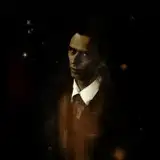
The first is known as the Sword of Khunsu, right hand to the Empress of life and war. The holder of this office serves as Supreme Commander of the Imperial Army and is ultimately the highest authority in all military matters. The Sword of Khunsu must be a strategic mastermind with years of experience in battle, having proven their worth as a tactician who can lead from the front -- it is not a cushy desk job. They walk in the footsteps of Hayat, believing that life is worth fighting for, but Khalafa -- the guardian god of duty -- is likewise important to the military. The current Sword of Khunsu is named Imran, and he comes to lead the Army through the biggest war that has fallen upon the Empire since the reunion.
The second member of the Imperial Triad is the Eye of Saoban, advisor to the Empress of peace and death. They are a spiritual leader and serve as court mage, but their specific area of expertise may vary depending on the innate talents of the holder. The current Eye of Saoban -- Kayin -- specialises in divination and dream interpretation, his eyes as pale as Daiva’s moon yet capable of seeing the truth of the present, the secrets of the past, and the dreams of the future.
Kayin and Imran are both living, breathing entities with offices in the Palace. You can seek them out for an audience, watch them attend meetings and rituals, or perhaps even bump into one or the other at a banquet.
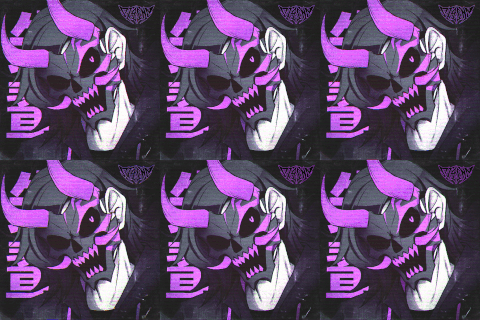
The third member of the imperial triad, on the other hand, is so elusive that some maintain they’re little more than a myth. The so-called Shadow of the Throne serves the Empire itself rather than either of the two empresses, and there’s only ever been one holder of this office -- an entity known as Sekai Zuri.
The Shadow of the Throne commands the imperial Secret Service. It has been suggested that both this agency and its leader are non-existent bogeymen, designed to intimidate any enemy of the Empire, be they outside or within its borders. But only the truly naive or innocent would doubt the Secret Service’s existence, and only a little realism or cynicism is required to guess at its areas of responsibility.
Gathering and examining intelligence is naturally among its concerns, whether through investigations, research, agreements best kept away from the public eye, infiltration, and good ol’ espionage. Where there’s a public display of diplomacy there’s negotiations behind closed doors, and where there’s negotiations behind closed doors there’s usually at least one Secret Service agent -- though you may not necessarily know it. Agents aren’t supposed to desire fame or recognition, so their involvement in major events is usually extremely covert. Some of them pose as servants, craftsmen, merchants, farmers, or other unassuming people who few would look twice at. Others lead a double life as politicians, diplomats, aristocrats, or military officers, making the most out of their access to arenas of power. And some devote every second of their existence to serving the empire, with all the lonely and paranoid secrecy that such devotion entails.
The Secret Service concerns itself with the safety and security of the Empire, but it’s said that its members (unlike the generals of the Army and the politicians of the Senate) are not limited by mortal law. Sekai Zuri and their subordinates operate from the assumption that some problems are best solved quietly, swiftly, and -- if need be -- ruthlessly. Rumour has it that assassinations, blackmail, and similar dirty work is occasionally carried out by Secret Service agents, but of course there’s no official record of any such thing. Agents are certainly trained in overt and covert methods alike, sworn to great secrecy, and entrusted with grim responsibility. Sound judgement during a critical moment might prevent an international crisis, while one single mistake could cause a war.
Sekai Zuri has existed ever since the rebirth of the Empire -- perhaps longer. They have inhabited the shadows of the palace since the wedding and coronation of the Empresses, but there’s no paper trail of who they are, what they are, where they’re from, or when they’re from. Unlike Imran and Kayin, they don’t have an apartment in the palatial district; the Secret Service has no publicly known office, archive, or administrative building; and there’s no official way to seek an audience with either them or their agents. You don’t find Sekai Zuri -- if they have business to discuss they will find you, whether you welcome it or not.
Not that meeting them sheds any more light on their true nature, because the entity in question goes by many faces, voices, bodies, gender expressions, and names. Therein lies the root of the mystery. Few can claim to have met them in person, and those who have can not agree on a consistent description. Many assume that they have to be either a master of traditional disguise or a shapeshifter capable of transforming both their body and speech.
Most would guess at the latter, because the accounts are too diverse for ordinary trickery. A skilled actor could certainly shift the tone of their voice or slouch to appear a little shorter, but could they convincingly cover their tail in feathers instead of silky hair, or fashion a few extra fingers on each hand? Could they manifest new joints, grow a whole foot taller, or talk every language known to the Empire? When one person claims they had blond hair and another says grey, the witness might simply have been mistaken, or perhaps the light was dim. But someone counting two arms while another says four can’t be so easily explained, nor can one testimony of exoskeletal plates compared to that of soft fur covering their skin. Their presence has been described as both unassuming and imposing; reassuring and intimidating; forgettable and magnetic. The only thing that everyone can agree on is that Sekai Zuri wears a carved, wooden, painted mask that sometimes seems to subtly change its expression in the corner of your eye.
With such contrary descriptions, magic probably plays a part -- at least if we suppose that most or all accounts of meeting Sekai Zuri are true. It’s possible that some self-proclaimed Sekai Zuris are frauds; that some who assume they have met them are mistaken; or even that certain politicians and aristocrats lie about an encounter, to inflate their own importance.
Be that as it may, Sekai Zuri seems to be everywhere and nowhere, all at once. You cannot find them unless they wish to be found, but they seem capable of travelling great distances even faster than a dragon or falcon can fly. It’s as if they dissolve in the wind to disappear from one place and appear at another, slipping through shadows like a snake through water.
Both of these conundrums have led some to wonder whether Sekai Zuri is a single person, or several entities working as one. In case of the latter, theories abound. Perhaps all agents can use the name “Sekai Zuri” when appropriate, or take turns posing as a leader that doesn’t truly exist. Such a scheme would acquire an extensive and precise network of communication, to make sure everyone is privy to the same information. It might sound difficult to accomplish, but the Secret Service is rumoured to research and develop both technology and magic, so who knows what manners of communication they might have invented?
Another idea is that Sekai Zuri is the collective name of a single consciousness spread across multiple bodies, each of them different but controlled by the same mind. Some say that the “true” Sekai Zuri is hidden somewhere deep below or high above, masterminding their many selves (clones? puppets?) through unknowable magic. Others think that neither body would be more or less them than the others, with an even spread of their existence. If one is killed, perhaps another could be made to take its place, potentially through a similar technique as the one used to make the clayborn. Alternatively, Sekai Zuri may have a finite number of bodies, and once the last of them has been terminated they would finally cease to exist.
A similar but slightly different hypothesis posits that Sekai Zuri is a hive-minded community of drones that serve a ruler, more concerned with the collective welfare than their individual selves. And then there’s the idea that Sekai Zuri spreads their consciousness through a mysterious disease or parasite that attaches to different hosts, gradually infecting their minds until their bodies are little more than mindless tools in their proverbial hands.
On a less chilling note, some believe that Sekai Zuri is the living and breathing personification of the Capital. They say that once the Empire was rebuilt and peace finally followed upon decades of war, the very soul of the City took the shape of a person. For decades it had heard the clamour of armies outside its fortifications, seen the people fearfully huddling together in their homes, felt its streets run red with blood and fire. Even once the war had ended, crying and wailing long echoed between the walls, because the lost lives of beloved spouses, children, parents, and friends are not so easily forgotten. Love for its people, pity for the dead, and anger over the destruction led the City to swear that it would not allow anything like it to happen again. Proponents of this idea believe that ever since it has worked from the shadows, unbound by mortal law and untroubled by a mortal consciousness. All it cares about is protecting itself and its people, at any cost and through any means necessary.
Inevitably, certain people have come to believe that Sekai Zuri is a god secretly walking among them. Many folk tales and myths tell of such visits by deities (with some of them even spending more time disguised as a mortal than in the divine realm) and also of spirits so great they’re practically demi-gods.
At first glance, Hel’wusah seems to be the obvious patron deity of Secret Service agents. This god of trickery and deception is worshipped by those who use wit and cunning for either good or bad, including thieves, politicians, con artists, gamblers -- and spies. Hel’wusah is famously unpredictable and fickle, ever playing by his own rules or by no rules at all, and often treat life itself like it’s all one big game. He’s associated with jackals, foxes, and coyotes, and it should be noted that Sekai Zuri’s mask often bears the likeness of such canines.
However, one might also connect the Secret Service to the Gatekeeper. Despite their role as the antagonist of a war and despite being the very reason the sun god once sacrificed his sanity, the Gatekeeper is worshipped and respected like all other deities, not least as a symbol of the order and structure needed to run a successful empire. With the Gatekeeper being an insectoid god, it should come as no surprise that their idea of a perfect society is exemplified in beehives and anthills. Many officials and bureaucrats strive to be as efficient as these hardworking animals, while diplomats and politicians admire spiders for their intricate webs. The Gatekeeper is like a gardener, creating the impression of a freely flourishing landscape even if every single blade of grass has been meticulously planted according to their minute designs. A less organic metaphor that reflects a Gatekeeper philosophy is that of a machine, where each individual cog is part of a smoothly running whole.
Secret service agents know that some missions are best accomplished with the promise of honey while others require a ruthless sting. They need to know how to lay their webs and which strings to pull; when to wait, and when to act. Some plants need water, and some weeds need to be pulled up by the roots. Sometimes a rusty cog needs grease, and other times it needs to be replaced. In the end, some would say, the good of the hive, the hill, the garden, and the machine matters more than an individual bee, ant, plant, or cog. Those who live according to this outlook on life might not even assign moral value to doing what they think needs to be done, any more than the craftsman repairing a broken machine.
If you combine the theory of Sekai Zuri being a hivemind or several bodies sharing one soul, a possible association with the Gatekeeper would make a lot of sense. But they also seem to embody many values of Khalafa, the selfless god of duty, protection, and guardianship. Their whole existence seems to center on their work, leaving no room for family, friends, hobbies, or recreation. Love, fun, and excitement are a natural part of life for most people, who seek fulfillment in a variety of ways, but Sekai Zuri doesn't appear to be interested in such distractions. Could a regular mortal manage such a singular focus on their duties?
Problem is that Sekai Zuri’s soul doesn’t feel like either a spirit, mortal, ghost, or divinity, even to those whose senses are attuned to telling the one from the other. Their presence is simultaneously ancient and young, tired and tireless, caring and cold-hearted. Perhaps they’re expertly masking their true nature, or perhaps it defies any of the traditional categories known to inhabitants of the Empire.
Yet another theory holds that “Sekai Zuri” is a title rather than a name, passed down from one holder to the next. One offshoot of this idea, in turn, is that Sekai Zuri is the accumulated souls of everyone who has previously held this title, because such a mixture of spirits would certainly make their aura harder to decipher. Or were they created by the Empresses themselves, to guard the safety of their newly reunited domain? After all, they’re goddesses incarnate, with the power to bring the guardian statues of the throne room to life in dire emergencies. If children can be made from clay, and spirits from stone or whatever other material a god may have at hand, why couldn’t Sekai Zuri have been made from the earth upon which the City was built, destined to protect it for as long as it stands?
Or perhaps a vhul’a mother sent them, to make sure the Empire of today doesn’t meet the same fate as that of the ancient shadow people. Maybe Sekai Suri is the last survivor of its kind, unique and uniquely alone, with nothing left beyond the purpose they have created for themselves. Could it be that they’re the ghost of someone who’s trying to accomplish what they failed in life, unable to rest as long as any threat to their people remain? Or perhaps ...
… as you can tell, there’s no end to the hypotheses. Every self-proclaimed philosopher in the palace, every storyteller who can’t resist the opportunity to spin a yarn, and every politician who claims to know everything about everyone each have their own theory about who and what Sekai Zuri truly is. In the end, it’s all just hearsay and rumour.
----------
Now, allow me to get a little meta.
If you were hoping I could tell you which of these many theories is correct, you’re going to be disappointed. I have deliberately chosen to never decide the truth about this character. All the options outlined above are possible in the lore of this world (though some of them seem more or less likely than others) and I enjoy the mystery of keeping it unknown.
For this reason, Sekai Zuri is more an NPC or secondary character than a protagonist or playable character. It would be hard to maintain the enigma if I got too much into their head, and they would be too powerful as a PC. They’re best viewed from the perspective of proper protagonists, and appear as a support character in other people’s adventures rather than having a main storyline completely their own.
If this was a video game, Sekai Zuri would be a mysterious NPC that you “accidentally” run into every now and then, giving the player tasks and tidbits of info (i might compare them to the Strange Man in the Red Dead Redemption games). There would be enough hints and bits of lore to spark a lot of speculation and attempts at piecing together the puzzle, but nobody would be able to know for sure. It’s a little frustrating but at the same time, way more engaging and thrilling than if you could easily just google your way to a certain answer.
----------
all this said, feel free to ask questions below and i’ll answer to the best of my ability! this was as much a lore post as a character portrait -- and a fair amount of people have previously expressed an interest in lore posts, so i hope you enjoyed it! :>
oh, and here’s some continued reading: hel’wusah’s story contains info about both the sun god and the gatekeeper war. nehaneru is a gatekeeper spirit, so the spotlight about him also contains lore about this god. and for more info about khalafa, see the sagra spotlight!
// art + character © me.