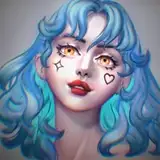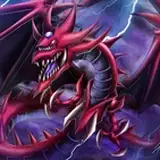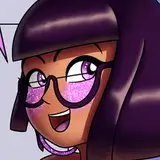
Commission/one shot?: (Choujin X/X over/ Dc Vertigo self insert as Takehito): Welcome to the devil’s parlor: the prophecy of hollow men
Added 2025-12-17 22:52:36 +0000 UTC"Do you believe in the word 'tragic'?"
"I don't. I think it's a word that lets people pretend suffering has meaning."
—————————————————————
I was born with gravity in my veins and prophecy written on my bones.
The coffee tastes burnt tonight.
I noticed this an hour ago, when the barista, silver-haired, quiet, the kind of woman who seems to have seen every possible variation of human sadness, set the cup in front of me without a word. Just a small nod, like she understood why I was here at two in the morning on a Tuesday, why my lab coat had chemical stains on the sleeves, why my hands shook when I lifted the cup.
The coffee tastes burnt, but I keep drinking it anyway.
Outside, rain starts to fall. Not the dramatic kind you see in films, just a thin, persistent drizzle that makes the streetlights blur into watercolor smears. Tokyo at night always looks like this: beautiful in a way that makes you feel lonelier for noticing it.
There's a man sitting by the window.

I notice him because he hasn't moved in the forty minutes I've been here. Same position, same untouched cup of coffee, same expression of profound absence, like his body is here but the rest of him is somewhere very far away.
He's beautiful in that unsettling way some people are. Sharp features that look like they were carved rather than grown. Dark hair falling across his face in a way that should be careless but looks deliberate. Expensive leather jacket, worn soft with age. The kind of beauty that makes you want to look away because staring feels dangerous.
I don't mean to keep glancing at him. But there's something,
Something about the way he sits. Like he's familiar with waiting. Like waiting is all he does, has ever done, will ever do.
The barista brings me another cup. I didn't ask for it, but she sets it down anyway, takes the burnt one away. This one tastes better. Less like ash.
"You're going to wear a hole in that paper if you keep staring at it."
I jerk. The man from the window is standing next to my table. I hadn't heard him move. Hadn't even noticed him stand.
Up close, he's, wrong. Not in any way I can articulate. His face is symmetrical, his features normal, but something about him makes my hindbrain scream other other other.
"I, sorry?" I manage.
He gestures to the paper in front of me. It's a printout of my latest research findings. I've been staring at the same paragraph for twenty minutes, reading the words without comprehending them.
"You've been looking at the same page since you sat down," he says. His voice is smooth, uninflected. Bored. "Either it's the most fascinating thing you've ever read, or you're not actually reading it at all."
"It's research," I say defensively. Then, because my mouth apparently works independently of my brain: "For Yamato Mori. I'm developing compounds to help Choujin heal faster."
"Ah." He slides into the seat across from me without invitation. "You're one of them."
"One of,?"
"The ones who think usefulness is the same thing as value."
The words should offend me. Instead they hit somewhere deeper, somewhere I've been trying not to look at.
"I don't," I start, but he's already reaching for my paper, scanning it with eyes that move too quickly, too precisely.
"Plus Heal, preliminary formula," he reads. "Designed to accelerate cellular regeneration in Choujin subjects without triggering adverse reactions. Interesting. You're trying to make them better at what they already do."
"I'm trying to help people."
"Are you?" He sets the paper down. "Or are you trying to prove that even a weak Choujin can contribute something valuable?"
My breath catches. He's a stranger. A strange stranger, at that. He shouldn't be able to,
"My name is Batista," I say, which isn't an answer but feels like one anyway. "Batista Hoshi."
"Takehito." He leans back, and I notice his coffee is still untouched. "Tell me something, Batista Hoshi. When you wake up in the morning, do you ever wonder whose life you're living?"
"What kind of question is that?"
"An honest one." His eyes meet mine, and they're, dark. So dark. Like looking into deep water at night. "Do you ever lie there and think: is this what I chose, or is this what was chosen for me?"
The rain outside intensifies. Someone walks past the window, umbrella bent against the wind.
"I chose to become a researcher," I say, but it comes out uncertain. "I chose to focus on support compounds instead of combat applications. I chose,"
"Let me guess." His fingers drum against the table, slow, rhythmic, like a heartbeat. "Your brother is a combat Choujin. Powerful. Probably famous. And you're the little one with weaker powers who decided to 'find another way to contribute.'"
I feel like he's peeled back my skin.
"Sandek is, he's stronger than me. Better at, at everything. But that doesn't mean,"
"That doesn't mean you didn't choose," Takehito finishes. "It just means you chose from a very limited menu. Sandek gets to be the hero. You get to be the support. And somewhere along the way, you convinced yourself that having two options is the same as having freedom."
"You don't know anything about me."
"No." He finally lifts his coffee, takes a sip, grimaces. "But I know that look. The one you've been wearing since you sat down. It's the face of someone who just realized they're following a script they didn't write."
The barista is cleaning glasses behind the counter. The sound of water running, ceramic clinking. Ordinary sounds that feel surreal right now.
"What's your point?" I ask quietly.
"No point." Takehito stands, leaving money on the table. "Just an observation. You looked like you needed to hear it."
He walks to the door, and I should let him go. Should return to my research, my burnt coffee, my carefully constructed life of usefulness.
Instead I call out: "Wait, why did you say that? About usefulness and value?"
He pauses, hand on the door handle. Doesn't turn around.
"Because I spent a very long time confusing the two," he says. "And by the time I learned the difference, I'd already wasted centuries being useful to people who didn't actually value me at all."
Centuries.
He must mean years. Must be hyperbole.
He leaves before I can ask what he means.
I sit there until sunrise, my research forgotten, his words echoing in my head like a song I can't stop humming.
When you wake up in the morning, do you ever wonder whose life you're living?
Six years pass like water through fingers.
I complete Plus Heal. Then Bastetol. Yamato Mori calls them breakthroughs. Sandek calls me a genius. The council sends commendations with my name spelled wrong.
I should be happy.
I'm not.
The problem, and I've tried not to think about this, tried to bury it under more research, more late nights, more compounds that make other people stronger, the problem is that I can't stop thinking about that night in the coffee shop.
Whose life are you living?
I'm twenty-three, and I still don't have an answer.
It's two in the morning on a Thursday when I find myself back at Midnight Grounds. I don't remember deciding to come here. Just... walked until my feet brought me to this door, this booth by the window where the streetlights turn rain into abstract art.
Takehito is sitting exactly where he was six years ago.
Same booth. Same untouched coffee. Same expression of profound absence.
I stop in the doorway, and he looks up. His face hasn't changed. Not a single line, not a shade of difference. Like time looked at him and decided to move around him instead.
"Gravity boy," he says, and there's the faintest flicker of something in his expression. Might be recognition. Might be amusement. "You came back."
I slide into the seat across from him. The barista brings me coffee without asking what I want. It tastes less burnt than I remember.
"Batista," I correct. "My name is Batista."
"I know." He takes a sip of his cold coffee, doesn't grimace this time. "Question is whether you know who Batista is, or if he's still just a collection of other people's expectations wearing a lab coat."
"That's," I stop. Start again. "You look exactly the same. As six years ago. Exactly."
"Good genes."
"That's not, genes don't work like that."

"Don't they?" His fingers resume that slow drumming. "Tell me about your breakthrough. The one that's had your name in internal Yamato Mori reports for the last eight months."
"How do you,"
"I pay attention." Not an answer, but he continues before I can press. "Bastetol. Temporary ability enhancement without the risk of Chaos transformation. Revolutionary, by all accounts. You should be celebrating."
"I was. Am. I," The words stick. "It doesn't feel like mine."
"Ah." He leans forward slightly. "There it is."
"There what is?"
"The truth you've been trying not to say for six years." His eyes fix on mine, and I can't look away. "You've achieved exactly what you set out to achieve. Made yourself indispensable. Proved your worth. And now you're sitting here at two in the morning wondering why success feels like drowning."
Outside, a drunk salaryman stumbles past. The rain has stopped, leaving everything slick and shining.
"It's not that," I say, but it is. "It's just, the prophecies,"
"Prophecies." Something sharp enters his voice. Not quite anger. Something colder. "Ah yes. Those."
"Tsukiko Mado, the director of Yamato Mori, she has prophetic dreams. Nightmares, actually. Of possible futures. And they're... they're usually right. About major events. About, about which Choujin will fill which roles."
"And she dreamed of you in a lab coat, making other people stronger."
"She, not specifically me, but, general predictions about Choujin born with certain abilities in certain eras. How they typically contribute to,"
"To the grand design." Takehito picks up his cup, sets it down without drinking. "Tell me something. These prophecies, do you think they predict the future, or do they create it?"
I blink. "That's, they predict. Obviously. You can't create the future just by seeing it."
"Can't you?" He tilts his head. "If someone with authority tells you from birth what you're meant to become, shows you the path you're 'supposed' to take, rewards you for following it and punishes you for straying, at what point does prediction become prescription?"
"That's not how it works. The prophecies are just, they're information. We still have choices,"
"Do you?" He cuts through my protest. "Did you choose to give up your Choujin abilities three years ago, or did someone suggest it would be 'more efficient'?"
I freeze. "How do you know about that?"
"Because I've seen it before." His voice is flat again, but something moves beneath it. Something old and tired. "In a thousand different realities, a thousand different faces. People with power telling people with less power that their 'choices' are actually predetermined. That their suffering has meaning. That their cage is actually freedom."
"It's not, it's not like that."
"Isn't it?" He stands, and I notice details I missed before. The way his jacket hangs wrong, like there's too much space beneath it. The way shadows seem to cling to him even under the fluorescent lights. "You gave up your powers because someone told you that you'd be more useful without them. You poured yourself into research because someone told you that was your role. You convinced yourself that choosing between two cages is the same as choosing freedom."
"And what would you know about it?" The words come out sharper than I intend. "You don't, you don't know what it's like. To be born into a world that already has expectations. To have abilities you didn't ask for and prophecies you didn't write. To spend every day trying to prove you're worth the heart in your chest."
He's quiet for a long moment.
Then: "You're right. I don't know what that's like."
He moves toward the door, and I feel something slipping away. Some chance I didn't know I needed.
"I know what it's like to be made for a purpose," he says, still not looking at me. "To have my entire existence designed around a single function. To spend centuries trying to be what other people needed me to be, until I forgot how to be anything else."
He pauses at the door.
"But at least I eventually learned to recognize the cage. You're still calling yours a calling."
He leaves, and I sit there until the sky starts to lighten, watching the barista wipe down tables and wondering why I feel like I'm waiting for something that will never arrive.
Five years later, I meet Hartley.
She works at a small bookstore near the university. Dark hair, quick smile, the kind of eyes that actually see you instead of just looking at you. She asks me what I'm researching, and when I tell her, she doesn't glaze over or nod politely, she asks follow-up questions. Real ones. About ethics and implications and what it means to make people into tools.
Nobody has ever asked me about ethics before.
We date for three months before I tell her about the prophecies. About how Tsukiko Mado receives nightmares of possible futures, and how those futures are usually, not always, but usually, right. About how original Choujin and humans shouldn't reproduce, according to centuries of data and dozens of nightmare-visions. About how the child would either kill the mother or be born with complications that make life unsustainable.
She listens quietly. We're in her apartment, rain against the windows (it's always raining in my important memories), and she doesn't interrupt until I'm finished.
Then she says: "And what do you want?"
I stare at her. "What?"
"You've told me what the prophecies say. What they believe suggests. What Tsukiko Mado dreams." She takes my hand, and hers is warm. "What do you want, Batista?"
I don't have an answer.
I've spent my entire life being told what I should want, what I'm meant to want, what the prophecies predict I'll want. Nobody has ever asked what I actually want.
"I want you," I say finally. "I want, this. Whatever this is. Even if it's dangerous. Even if,"
She kisses me before I can finish the sentence.
Two weeks later, Yamato Mori sends the first warning letter. Polite. Professional. We've become aware of your relationship with a human woman. While we respect personal choices, we feel obligated to inform you of the statistical risks...
I throw it away.
The second warning comes a week after that. Less polite. More direct. The prophecies are clear about the dangers of such unions. We strongly advise,
I stop reading.
Then Sandek comes.
He sits in my apartment, my apartment that smells like Hartley's shampoo and has her books on my shelves, and he won't meet my eyes.
"Ryūsei*," he says, and his voice is grief. "Mado called me in. Showed me her latest nightmare."
I don't want to hear this.
"She saw you, Batista. Saw you with a child. Saw what happens when," He stops. Starts again. "The child kills her. In every version Mado dreams, in every possible future she sees, Hartley dies. You lose everything."
"Maybe the prophecies are wrong."
"They're never wrong. Not about things like this."
"Then maybe they're self-fulfilling. Maybe if everyone would stop,"
"Please." Sandek grabs my shoulders, and his hands are shaking. "Please, little brother. I can't, I can't watch you destroy yourself. End it. End it now, before,"
"Before what? Before I choose something for myself? Before I decide that my happiness matters more than Mado's nightmares?"
"Before you kill the woman you love because you're too stubborn to listen!"
The words echo in my apartment.
Sandek leaves. Tells me to think about it. Tells me he loves me.
I find myself at Midnight Grounds at three in the morning, and Takehito is there.
Of course he is.
"She's human," he says when I sit down.
I'm so tired of people knowing my business. "Yes."
"And they want you to leave her."
"Yes."
"Because of prophecy."
"Yes."
He's quiet for a long time. The coffee shop is empty except for us and the barista, who moves through her cleaning routine like a ritual.
"What do you want to do?" Takehito asks finally.
"I want," My voice cracks. "I want to choose. Just once. Just one thing in my entire life that's mine instead of theirs. One choice that I make because I want to, not because the prophecies say I should."
"Even if it kills her?"
The question hits like a physical blow.
"I don't, I don't know. I don't know if the prophecies are right. If they're inevitable. If," I'm crying now. When did I start crying? "What if they're only right because everyone believes they're right? What if by telling me to leave her, they're creating the exact conditions that,"
"You can't know," Takehito interrupts gently. "That's the cruelest part of prophecy. You'll never know if you're choosing your destiny or fleeing into it."
He's silent for a moment, and when he speaks again, his voice carries something I've never heard from him before.
Vulnerability.
"I was made for a purpose," he says quietly. "Not born. Made. Shaped from before I could speak to fulfill a single function. And I believed it. Believed that serving that purpose was the only thing that mattered. That my worth was measured entirely by how well I fulfilled the role I was made for."
"What was the purpose?"
"Doesn't matter. What matters is," He stops. "I failed. At my purpose. Failed completely and absolutely. And do you know what I felt?"
"What?"
"Relief." His laugh is bitter. "Crushing, overwhelming relief. Because if I'd failed, then maybe I could be something other than what I was made to be. Maybe I could choose."
His eyes meet mine, and they're old. So old.
"But choice, real choice, is terrifying, Batista. Because it means accepting that your suffering might not have meaning. That your life might not follow a grand design. That you might make the wrong decision and there's no destiny to blame."
"So what do I do?"
"I can't tell you that." He stands. "But I can tell you this: if you walk away from her because you're afraid of prophecy, you'll spend the rest of your life wondering if love was real or if you just didn't have the courage to find out."
He leaves me there, and I sit until sunrise, thinking about courage and cowardice and the growing certainty that I'm tired of being afraid.
I choose Hartley.
I choose love.
I choose the risk.
For six perfect months, I believe I've beaten prophecy.
Then she dies.
Hartley dies on a Tuesday.
Not a special Tuesday. Not a Tuesday marked by anything except the ordinary cruelty of the universe deciding that today, this unremarkable, grey Tuesday in October, is the day it takes everything.
The doctors use words like "complications" and "hemorrhaging" and "we did everything we could." I hear them the way you hear traffic from a closed window, distant, muffled, not quite real.
Our daughter, we'd named her already, Sora, after open skies and possibility, dies without ever drawing breath.
The prophecy was right.
Tsukiko Mado was right.
Everyone was right except me.
Sandek comes to the hospital. He doesn't say "I told you so." He just sits with me in the white hallway that smells like antiseptic and grief, and after an hour he puts his hand on my shoulder and says, "I'm sorry, Ryūsei."

I don't cry. Can't cry. The tears are there, somewhere deep and inaccessible, but they won't come out. Just this hollow feeling where my chest used to be, like someone reached in and scooped out everything that mattered.
I go home to an apartment that still smells like her.
There's a coffee mug in the sink, she always left one coffee mug in the sink, said she'd wash it later, never did. I'd always found it frustrating. Now I can't bring myself to touch it.
Her book is on the nightstand, bookmark halfway through.
Her jacket is on the chair.
Her toothbrush is in the bathroom.
All these small evidences of a life interrupted mid-sentence.
I try to die on Wednesday.
My bathroom cabinet is still full of medications from my research days, compounds I'd developed, tested, knew the exact lethal dosage of. I take them methodically, all of them, washing them down with water from a glass Hartley bought at a flea market three months ago.
The glass has a small chip on the rim. I remember her being upset about it. Remember telling her it didn't matter. Remember her keeping it anyway.
I lie down on our bed, my bed now, just mine, and wait.
The ceiling has a water stain. When did that happen?
I close my eyes.
I wake up Thursday morning.
Completely fine. Not even nauseous.
Former Choujin physiology, I remember distantly. Even though I gave up my active abilities, the passive cellular regeneration remains. My body healed right through the overdose.
I try again Thursday night. Slit my wrists this time, let the blood pool on the bathroom tile (white tile that Hartley had insisted on, said it would make the small bathroom feel bigger, and she was right, she was always right about things like that).
Watch my vision go dark at the edges.
Think: finally.
Wake up Friday morning.
Wrists healed. Blood dried on the floor.
The universe won't even let me die properly.
I try six more times over the next two weeks. Jumping from progressively higher buildings. Drowning in the bathtub until my lungs burn and the world goes black. Standing in traffic.
Each time: wake up. Healed. Whole.
My body won't let me follow her.
I stop trying after the eighth attempt.
Start drinking instead.
Days blur. Weeks blur. I stop answering my door. Stop checking my phone. Stop pretending that any of this matters.
Sandek comes by sometimes. Leaves food outside my door. The food rots there. Eventually he stops coming.
I don't know how long I exist like this. Time loses meaning when you're just waiting to die and death won't have you.
But eventually,
Eventually I find myself walking.
Three in the morning. Rain. Of course it's raining. The universe is nothing if not consistent in its aesthetic choices.
My feet take me to Midnight Grounds without consulting my brain.
The barista looks at me, unwashed, unshaven, eyes hollow, and something crosses her face. Not pity. Recognition. Like she's seen this before, this particular species of broken.
She brings me coffee without asking.
It tastes burnt again. Like that first night, all those years ago.
Takehito is sitting in our booth.
I slide into the seat across from him, and he looks up. Those dark, fathomless eyes take in my state, the three weeks of beard, the tremor in my hands, the smell of alcohol and despair.
"You tried," he observes.
Not a question. Not even sympathetic. Just, observation.
"Eight times," I say. My voice is hoarse. When did I last speak? "My body won't let me die."
"No," he agrees. "It wouldn't."
We sit in silence. Outside, a cat crosses the street. The rain makes halos around the streetlights.
"She died," I say finally. "Just like the prophecy said. Just like Mado dreamed. I chose her anyway and she died and now I,"
My voice breaks.
"Now you're wondering if love was worth the cost," Takehito finishes. His coffee is cold, as always. "If choosing was worth the grief."
"Was it?" The question comes out raw. "You said, years ago, you said that choosing was better than wondering. That I should be brave. But what's the fucking point if being brave just means I killed her?"
"You didn't kill her."
"I got her pregnant. I ignored the warnings. I,"
"You loved her." His voice is quiet but firm. "She loved you. You both made a choice. The universe punished you for it. Those are four separate facts, Batista. Don't conflate them."
I want to argue. Want to scream at him that it's the same thing, that my choice killed her, that I should have listened.
But I'm too tired.
"I don't know how to keep existing," I whisper. "I don't know how to wake up every day in a world where she isn't in it. Where Sora never got to be in it. I don't know how to carry this."
"You don't," Takehito says. "That's the secret no one tells you. You don't carry it. It carries you. Drags you forward whether you want to go or not."
He's quiet for a moment.
"For what it's worth," he continues, "I don't think choosing her was wrong. I think the prophecy was wrong. The universe was wrong. Fate was wrong for taking her. But you, you were right. You chose love. You chose her. The fact that you lost doesn't mean you chose incorrectly."
"Then why does it hurt so much?"
"Because love isn't transactional." His fingers resume that slow drumming. "You don't love someone because it won't hurt. You love them because they're worth the risk of hurting. And grief, grief is just love with nowhere to go."
I start crying. Finally, after weeks of nothing, the tears come. Great, heaving sobs that shake my entire frame. Grief pouring out of me like blood from a wound I'd been pretending wasn't there.
Takehito doesn't offer comfort. Doesn't say it will be okay. Just sits there, completely still, bearing witness to my collapse with those ancient, understanding eyes.
Eventually I run out of tears.
"The prophecy was right," I say, voice wrecked. "I chose wrong. I killed her."
"No." Takehito's voice is sharp now. Angry. "The prophecy was accurate. That doesn't make it right. There's a difference between predicting suffering and justifying it."
He leans forward, and something in his posture changes. Less casual. More intense.
"Batista," he says carefully. "I'm going to ask you a question. And I need you to think very carefully before answering."
I look up at him through blurred vision.
"If you could have them back, if you could undo what happened, bring them back whole and healthy and alive, what would you give?"
The question cuts through my haze.
"That's, that's not possible."
"I didn't ask if it was possible. I asked what you would give."
My hands are shaking. "Anything. Everything. My life, my soul, whatever I have left that's worth trading. I'd burn down the world to have them back."
"Even if it meant defying fate itself?" His eyes are burning now. "Even if it meant going against prophecy, destiny, the fundamental laws of reality? Even if everyone said it was wrong?"
"Yes." The word comes out fierce. "Yes. Fuck fate. Fuck prophecy. Fuck every law that says I can't have them back. I would defy God himself if that's what it took."
Something shifts in Takehito's expression.
"Good," he says softly. "Because I'm tired of watching fate win."
He stands, and suddenly the shadows in the coffee shop deepen. The air grows heavy. The streetlight outside flickers.
"Come with me, Batista. There's something I need to tell you. And after, after, you'll understand why I'm the one offering to help."
I follow him outside. The rain has stopped, leaving everything wet and shining. We walk through empty streets, turn down alleys that seem to exist in the spaces between spaces, until we reach a small park.
One bench beneath a streetlight.
Takehito sits. Gestures for me to join him.
"You've asked me, over the years, who I am," he begins. His voice carries something different now. Something old and vast. "What I am. Why I seem to understand cages and prophecies and the weight of being made for purposes you never chose."
He looks up at the sky. No stars, too much light pollution. But he stares anyway, like he's seeing something beyond.
"I'm going to tell you a story," he says. "And when I'm done, you're going to decide whether you trust me enough to let me help. Whether you're willing to accept help from someone like me."
The streetlight flickers. Once. Twice.
"My mother conceived me with one purpose," Takehito says, and his voice is so quiet I have to lean closer to hear. "She made me to kill my father."
He says it the way you'd say it's raining or the coffee is cold. Simple fact. Unadorned truth.
"Not because she loved me. Not because she wanted a child. Because my father," He stops. Starts again. "My father killed my half-siblings. Her other children. I don't know if it was intentional. Don't know if they were casualties of something larger. But they died because he existed, and she decided that meant he needed to die too."
I'm very still.
"So she shaped me." His hands clench. "Raised me from before I could speak with one single purpose branded into my bones: I was her weapon. Her blade. Her instrument of vengeance. And I believed it. Spent years, centuries, preparing myself for the day I would find him and fulfill the purpose I was made for."
"What happened?" I ask quietly.
"I found him." Takehito's laugh is bitter. "Confronted him with all the righteous fury she'd cultivated in me. Told him who I was, who sent me, what I intended to do."
He falls silent. The park is so quiet I can hear my own heartbeat.
"I failed," he says finally. "Failed to kill him. Failed to be the weapon my mother needed. Failed at the one thing my entire existence had been constructed around."
He turns to look at me, and I see it now, really see it, the vast, terrible exhaustion in his eyes. The weight of immortality. The burden of being made rather than born.
"And do you know what I felt, in that moment of absolute failure?"
"What?"
"Relief." His voice cracks. "Crushing, overwhelming, shameful relief. Because if I'd failed my purpose, then maybe I wasn't just a weapon. Maybe I could be something else. Something I chose."
He stands, paces in front of the bench.
"But then came understanding," he continues. "The realization that I'd never been a person to any of them. Not to my mother, who made me to be a blade. Not to my father, who probably saw me at best as only as a threat. Not to my grandfather,"
His voice turns sharp with something like rage.
",who watched our entire dysfunctional family play out like entertainment. Like we were pieces in a game he was playing with himself. Toys. Tools. Things to be used and discarded when we stopped being useful."
His hands are shaking now.
"I was never real to them, Batista. Never a person with wants and needs and the right to choose my own path. Just, a function. A role. A purpose wearing skin."
He stops pacing. Looks at me directly.
"So I left. Walked away from Heaven and Hell and every space between. Started traveling. Universe to universe. Reality to reality. Trying to understand what freedom meant when you'd spent your entire existence in a cage so complete you didn't realize you were trapped until after you escaped."
"How long?" I ask. "How long have you been traveling?"
"Long enough to lose count." He sits back down. "Long enough to see the same patterns repeat in every world. People trapped by destiny. By prophecy. By the expectations of powers that decided what their lives should be without bothering to ask permission."
His eyes meet mine, and they're burning with cold fire.
"And everywhere I go, I find them. People like us. People whose lives were written by others. And I hateit, Batista. I hate fate. I hate prophecy. I hate every system that grinds people into shapes they never chose and calls it destiny. I hate it so much that I've made it my purpose, the only purpose I've ever chosen instead of had forced on me, to fight it."
"But you said you can't change fate," I whisper. "That prophecies,"
"I said I can't tell you if running from fate means choosing it or defying it." He leans forward. "I never said I can't help you break it."
The air around us is changing. Growing heavier. Darker. The shadows beneath the streetlight seem to writhe.
"I've been traveling long enough to learn things," Takehito says quietly. "Things that Heaven doesn't want anyone to know. Things that Hell keeps locked away. Ways to bend reality. Ways to reach into death and pull things back."
My breath catches.
"You can,"
"I can bring them back," he says simply. "Your wife. Your daughter. I can reach into the place where dead things go and drag them back into life. I can make Tsukiko Mado's prophecy a liar. I can rewrite the ending fate wrote for you."
His eyes are blazing now, and I see them,
Wings.

Vast, impossible wings unfurling from his back like shadows given form. Black as the void between stars. Beautiful as the end of the world. Spreading behind him in a display of power that makes my chest ache and my eyes water.
Not angel wings.
Fallen angel wings.
Devil wings.
"What are you?" I breathe.
His smile is sharp and sad and defiant.
"It could be said," he begins, voice carrying power that makes the air shimmer, "that Fate is God's will. That prophecies are just records of divine intention. The universe's pre-written script."
His wings spread wider. The shadows deepen.
"And if that's true, wouldn't it be appropriate that it's the devil going against it?"
I can't breathe. Can't move. Can only stare at this impossible being who's been meeting me in coffee shops for over a decade.
"Are you," My voice breaks. "Are you the devil?"
"I'm the son of Lucifer Morningstar and Izanami-o-no-Mikoto," he says. Matter-of-fact. "Made to be a weapon. Failed to be a weapon. Spent eternity trying to figure out what I am instead of what I was made to be. And now I'm here, offering to help you because I'm tired of watching fate grind good people into dust."
He extends his hand.
"I can bring them back, Batista. Your wife. Your daughter. I can give you the life that prophecy stole. All you have to do is say yes."
Tears are streaming down my face again.
"Why?" I choke out. "Why would you do this? What do you gain?"
"What do I gain?" His laugh is broken. "I gain another moment where fate doesn't win. Another prophecy proven wrong. Another middle finger to every cosmic power that thinks they have the right to write other people's stories."
His hand remains extended.
"And maybe, just maybe, I gain the knowledge that I helped someone escape the same trap I was caught in. That I used the power I inherited from my father, power I never wanted, power that marked me as a weapon, to do something good instead of destructive."
His eyes are so tired.
"I can't undo my own past," he says softly. "Can't bring back my siblings or fix what's broken between me and my parents. But I can do this. I can help you. And maybe that's enough. Maybe helping one person is worth the eternity of wandering."
I stare at his extended hand. At the wings spreading behind him. At the being I've been meeting in coffee shops without understanding what he was.
"Are you truly going to bring them back?" My voice is shaking. "This isn't, you're not lying? Not playing some cruel trick?"
"No tricks." His expression softens. "Just one tired immortal helping another trapped soul escape his cage. What do you say, Batista Hoshi? Are you brave enough to accept help from the devil's son?"
I think about Hartley's smile. About the weight of a child I never got to hold. About the apartment that still smells like her and the life we should have had.
I think about prophecy and fate and Tsukiko Mado's nightmares.
I think about the universe that took everything from me and called it destiny.
"Yes," I say, and take his hand.
A bell rings.
Single note. Pure tone. The sound of something fundamental shifting.
The park dissolves around us, not violently, but like someone folding away a stage set. Takehito's wings spread wider, and suddenly we're standing nowhere. Between moments. Between breaths. Between the spaces where reality keeps its seams.
"This is going to look strange," Takehito says, and his voice resonates with power. "Try not to be afraid."
He raises his other hand.
The wings flex.
And the nothing we're standing in begins to tear.
Not dramatically. Gently. Like fabric being pulled apart at its weakest point. Light spills from the tear, not bright like sunlight, but warm like candlelight. Soft. Inviting. The kind of light that makes you think of home.
"Death isn't an ending," Takehito says, and his voice is everywhere and nowhere. "It's akin to a waiting room. A place where souls rest until reality decides what to do with them. Usually in universes like this one, they fade eventually. Integrate back into the cosmic static. But sometimes, if you know how to reach, you can pull them back before they dissolve completely."
The tear widens.
"This is going to break several fundamental laws," he continues. "Heaven would be annoyed. Hell would be furious. The equivalent of those forces here would probably not be happy. My father would probably find out eventually even a multiverse away. But,"
His smile is defiant.
",fuck them. Fuck their laws. Fuck what they may or may not think. Fuck their cosmic order. You loved her. She loved you. That matters more than their rules."
He reaches into the tear.
The light intensifies.
And then,
A hand.
Small. Feminine. Emerging from the light like someone pushing through a curtain.
Then an arm. A shoulder. A face,
"Hartley," I breathe.
She steps through the tear like she's walking through a doorway. Confused. Disoriented. Whole. Alive. Real.
And in her arms,
A baby. Our baby. Sora. Eyes closed, breathing softly, perfect and impossible and here.
It looks like,
Like paintings of resurrection I've seen in old churches. Lazarus emerging from the tomb. The dead returning to life. Every promise of miracles rendered in flesh and blood.
But wrong.
Inverted.
Blasphemous.
Because this isn't God's mercy. This is the devil's son reaching into death out of spite. This is fallen angel wings spread against the dark. This is every law of Heaven being broken because one broken man asked for help.
It's the most unholy thing I've ever witnessed.
And it's so beautiful I can't breathe.
Hartley blinks. Looks around at the nothing-space we're standing in. Then at me.
"Batista?" Her voice is small. Confused. "What, where are we? The last thing I remember is the hospital, and pain, and,"
I fall to my knees in front of her.
Reach out with shaking hands to touch her face. Her shoulder. Her hand holding Sora. Need to confirm they're real. Need to know this isn't another hallucination born from desperation and alcohol.
"You're here," I sob. "You're here, you're real, you're,"
Hartley kneels down, careful of the baby, and pulls me close with one arm.
She feels exactly like I remember. Warm. Solid. Home.
"I don't understand," she whispers against my hair. "Batista, what happened? How are we,"
She sees Takehito then. Sees the wings. The tear in reality. The impossibility of all of it.
"What,"
"Someone who hates fate even more than I do," I manage through tears. Still touching her, still confirming she's real, still holding our daughter who's making small sleeping sounds. "Someone who decided prophecy doesn't get to win."
Behind us, footsteps.
Casual. Unhurried. Moving away.
I turn, still holding my family, unable to let go, to see Takehito walking away. His wings are folding back into shadows. His hands are sliding into his jacket pockets. The tear in reality is sealing itself behind him.
"TAKEHITO!" I call out, voice breaking. "Thank you! I'll, I'll always be grateful, I'll do anything you need, I'll,"
He stops.
Doesn't turn around.
Just raises one hand, middle finger extended, and says:
"Fuck your gratitude."
But his voice carries anyway, and I hear the exhaustion in it. The satisfaction. The fondness underneath the profanity.
"I didn't do it for you. Did it because I hate Fate and that bitch has had her way too long. Besides," A pause. ",your crying was too ugly a sight. Couldn't stand to watch it anymore."
He takes another step. The nothing-space is becoming something again. Park. Bench. Streetlight.
Reality reasserting itself around the miracle he carved into existence.
"But if you really want to show gratitude, Batista?" His voice softens slightly. "Keep doing what you've been doing. Make your own choices. Write your own story. Don't let things like fate or prophecy chain you. Be the stubborn bastard who looks at destiny and says 'no.'"
The shadows around him thicken.
"And maybe, just maybe, that'll piss off enough cosmic powers to make this whole joke worthwhile."
"Wait!" I call. "Will I see you again?"
He pauses. Glances back, just slightly, just enough for me to see the tired smile on his face.
"Probably not. I don't usually stick around after pulling stunts like this. Too many questions. Too many angry divinities."
"But,"
"But if you find yourself in a coffee shop at three in the morning?" That smile widens. "Well. Old habits are hard to break."
He vanishes like mist, like he was never there at all.
Leaving only the faint smell of ozone and something else, something like hope, if hope could smell like defiance and burnt coffee and rain.
I turn back to Hartley, to Sora, to the family I lost and was given back.
"Batista." Hartley's voice is careful. Scared. "Who was that? What's happening? Why don't I remember,"
"You died," I say, because there's no point in lying. "You and Sora. At the hospital. Exactly like the prophecy said you would."
Her breath catches.
"And he brought us back," I continue. "He reached into death and brought you back because, because I asked. Because I couldn't, I couldn't exist in a world where you weren't in it."
She's crying now too. We're both crying, holding each other and our daughter in a park at three in the morning, the streetlight casting strange shadows around us.
"Is this real?" she whispers. "Are we, are we really here?"
"I think so." I touch her face again. "I think, I think we get to be here now. Together. Despite the prophecy. Despite fate. Despite every law that said we couldn't."
Sora makes a small sound. Starts to cry, softly, the way newborns do when they want attention.
Hartley and I stare at her. At this impossible child. This life that shouldn't exist.
"She's beautiful," Hartley breathes.
"She's ours," I say. "She's ours and she's here and we get to, we get to keep her."
We sit there in the park until sunrise, learning the weight of our daughter, memorizing her face, choosing to believe in this miracle even though every rational part of us says it's impossible.
When the sun comes up, we go home.
Together.
The next few days are chaos.
Explaining to Sandek, who nearly breaks down my door in shock, that Hartley and Sora are alive. Somehow alive. Miraculously alive.
Dealing with Yamato Mori's questions. Medical examinations. Tsukiko Mado herself coming to our apartment, staring at Hartley and Sora with those heterochromatic eyes, and saying very quietly: "This shouldn't be possible. I saw you die. I dreamed you dead."
"And yet," Hartley says, holding Sora close, "here we are."
Mado is silent for a long time.
Then: "I'm sorry. For the warnings. For the prophecies. For," She stops. "I thought I was protecting you. Both of you. I thought if I warned you strongly enough, you'd make a different choice. That you'd be safe."
"But I wouldn't have been happy," I say quietly.
"No." She looks at me, and I see grief in her eyes. "No, you wouldn't have been. I forgot, I forget sometimes, that safety and happiness aren't the same thing."
She leaves after that. Tells us that as far as Yamato Mori is concerned, this was a medical miracle. Rare but not impossible. The prophecy was wrong this time.
I don't tell her about Takehito. About devil's sons and fallen wings and reality torn open. Some truths are too dangerous to speak aloud.
Life settles into something new.
I don't go back to Yamato Mori. Can't. Every time I think about walking back into that building, into that system that tried to keep me from choosing, I feel the cage walls pressing close.
Instead I start my own research lab. Small. Independent. Funded by private grants from people who don't care about prophecies or cosmic order.
I work on compounds that help Choujin, yes. But I choose which ones. Choose who to help. Choose my own projects because they're interesting or meaningful, not because some nightmare dreamed them necessary.
Hartley goes back to her bookstore. Sora grows.
We live.
We choose to live.
And every moment, every ordinary, mundane, beautiful moment, feels precious. Fragile. Like a gift we almost didn't get.
Five years pass.
Sora is learning to read. She has my eyes but Hartley's smile. Shows signs of weak gravity manipulation, but we don't push it. Let her be a child first. Let her choose what she wants to be later.
I'm in my lab one evening, working late on a new formula, something that might help with cellular regeneration without the addictive properties of Plus Heal, when I feel it.
That presence.
That weight.
The sense of someone who exists slightly outside reality.
I look up.
Takehito is standing in my doorway.
Same leather jacket. Same ageless face. Same eyes that have seen too much and found most of it wanting.
"Gravity boy," he says, and there's something in his voice. Something lighter than I remember.
"Batista," I correct automatically, setting down my vial. "My name is Batista."
"I know." He moves into the lab, and I notice, really notice, how he walks. Like he's forgotten how to be tired. Like something fundamental has shifted. "Question is: do you still know who Batista is, or did you go back to being useful?"
"I'm choosing my own usefulness now," I say. "If that counts."
"It does." He picks up one of my compound samples, examines it. "You left Yamato Mori."
"Couldn't stay." I lean against my desk. "Every time I walked into that building, I felt, trapped. Even knowing they meant well. Even knowing Mado was trying to protect people. I couldn't,"
"Couldn't go back to the cage, even if they'd gilded it."
"Yeah."
He sets down the sample. Looks at me directly.
"How is she?" he asks. "Your wife. Your daughter."
"They're," My voice catches. "They're everything. Sora is starting school next year. Hartley opened her own bookstore. We're, we're happy, Takehito. We're actually happy."
Something crosses his face. Something that might be satisfaction. Might be joy.
"Good," he says quietly. "Then it was worth it."
"What was?"
"Breaking fate for you." He moves toward the window, stares out at the Tokyo night. "Proving that prophecy can lose. That choosing matters."
We stand in silence for a moment.
"Thank you," I say again. "I know you said fuck my gratitude, but, thank you. For everything. For asking the questions I needed to hear. For showing me the cage. For, for bringing them back."
"You would have found the cage eventually," he says. "I just helped you see it faster."
"Still." I move to stand next to him. "Why did you come back? You said you don't usually stick around."
"I don't." He's quiet for a long moment. "But I wanted to see. Needed to know if helping you actually changed anything, or if I'd just delayed the inevitable. If fate would find another way to,"
"It didn't," I interrupt. "We're still here. Still alive. Still choosing each other every day."
He nods slowly.
"Good," he says again. Then: "I need to go. There are other worlds. Other people. Other cages."
"Will I see you again?"
"Maybe." He turns to face me. "Maybe in another decade. Maybe never. But Batista,"
"Yeah?"
"Keep living. Keep choosing. Keep being proof that prophecy doesn't get the final word." He reaches out, and for the first time, shakes my hand. His grip is cold but firm. "You're not just living for yourself anymore. You're living for everyone who thinks fate can't be beaten. Don't forget that."
He leaves through the door, and I watch from the window as he walks down the street, hands in his pockets, disappearing into the Tokyo night like he was never there at all.
I go home to my family, and every step feels like defiance.
Twenty years pass.
Sora is grown now. Beautiful and strange and herself in ways no prophecy could have predicted. She chose not to join Yamato Mori, chose to become a teacher instead. Says she wants to help children find their own paths rather than walking predetermined ones.
I've never been prouder.
Hartley and I have built a life. Small. Ordinary. Ours.
And every year, on the anniversary of the day we almost lost everything, I go to Midnight Grounds at three in the morning.
Sit in our booth.
Order burnt coffee.
And wait.
He's never there.
But I keep coming anyway.
Until one year, our twenty-fifth anniversary, I walk in and he's sitting in our booth.
Same jacket. Same ageless face. Same tired eyes.
But something is different.
He's smiling.
Really smiling.
"Gravity boy," he says when I sit down. "You're still alive."
"Batista," I correct, grinning. "And yes. Still alive. Still choosing. Still pissing off fate every day I wake up."
"Good." He takes a sip of his cold coffee. "That's, that's good."
We sit in comfortable silence.
"Thank you," I say. "I know I've said it before, but, thank you. For everything."
"You've built a good life," he observes. "You and Hartley. Sora. I'm, I'm glad it worked."
"So am I."
More silence. Outside, rain starts to fall. Always rain in the important moments.
"Can I ask you something?" I venture.
"Sure."
"Was it worth it? For you? Breaking fate for me?"
He's quiet for so long I think he won't answer.
Then: "Yes. Because every time I wonder if any of this matters, the traveling, the fighting, the endless war against cosmic order, I remember you. Remember that helping one person actually worked. That I used my power for something good instead of destructive."
His eyes meet mine.
"You proved that changing one life changes everything, Batista. That even one person escaping their cage makes the whole system weaker. And that,"
He smiles again, and it's genuine.
",that makes centuries of wandering worthwhile."
He stands to leave, and I let him.
But as he reaches the door, I call out: "If you ever get tired of wandering, if you ever want to just sit and drink bad coffee and talk, you know where to find me."
He pauses. Looks back.
"I might take you up on that," he says. "Someday."
He vanishes into the rain, and I sit there until sunrise, drinking burnt coffee and thinking about how many other people out there are trapped in cages they can't see yet.
Thinking about how many of them might meet a tired devil in a coffee shop one day and learn that choosing matters.
Thinking about how one small act of defiance, one resurrection, one broken prophecy, ripples out further than we can ever know.
Fifty years later.
I'm dying.
Actually, genuinely dying this time. Old age. Natural causes. The inevitable end that comes for everyone.
I'm surrounded by love.
Hartley, older now, silver in her hair but still beautiful, holds my hand. Sora sits beside my bed, her own children crowded around. Grandchildren I got to meet. Great-grandchildren I got to hold.
A family that shouldn't exist.
A life that prophecy said I couldn't have.
And I'm content.
My vision is starting to dim. My breathing shallow. But I'm not afraid.
I got to live. I got to choose. I got to love and be loved and raise a child and see her raise her own children.
I won.
As my eyes close, I see him.
Takehito.
Standing in the corner of my hospital room, invisible to everyone else, those vast dark wings spread behind him.
"Am I dying?" I try to ask, but my voice doesn't work anymore.
He understands anyway. Nods.
"Is this fate winning?" I manage.
"No." He moves closer, and those wings seem to shelter rather than threaten. "This is just life. Everyone dies eventually, Batista. Even people I've saved. Even people who beat prophecy."
"But I lived first."
"Yes." His smile is warm. Proud. "You lived first. You chose first. You loved first. You proved that fate doesn't get to write the whole story. You didn’t die the villain of the story."
My eyes are closing. Hartley's hand is warm in mine.
"Thank you," I whisper.
"Thank you," he says. "For proving it was worth it. For showing me that even one changed life matters."
I feel something cool and gentle touch my forehead. Like a blessing. Like forgiveness.
"Rest now," Takehito says softly. "You've earned it. And wherever you wake up next, know that you won. Fate tried to break you, and you refused to break."
The darkness is warm.
I'm not afraid.
I lived.
I chose.
I loved.
And that is enough.
More than enough.
Everything.
———————————————————————
Somewhere between realities, Takehito adds another name to a list only he can see.
Batista Hoshi. Freed. Lived fully. Died surrounded by love he chose.
He looks at the list, names stretching back centuries. Every person he's helped. Every cage he's broken. Every small victory against fate.
It's not enough to win the war.
But it's enough to win battles.
And sometimes, remembering a scared boy in a coffee shop learning to see his cage, remembering a desperate man begging for his family back, remembering an old man dying happy,
Sometimes battles are enough.
"Fuck you, Fate," he whispers to the universe at large.
And moves on.
There are other worlds. Other people trapped by destiny. Other stubborn bastards who need to learn that cages can be broken.
His work is never done.
But carrying the memory of Batista's grateful smile, of Hartley's laugh, of Sora's children who exist because he said no to cosmic order,
He feels a little less tired.
A little less alone.
A little more like maybe this cosmic joke has a punchline that makes it all worthwhile.
He vanishes into the space between spaces.
And in Tokyo, a coffee shop stays open until three in the morning.
Waiting for the next lost soul who needs to learn about cages and choices and the devil who breaks locks just to prove fate doesn't always win.
————————————————————————
In the end was the Choice, and the Choice was with Man, and the Choice was Man.
And even though Fate still writes its scripts,
And even though Prophecy still predicts,
And even though the universe grinds people down,
Some people look at those scripts and say 'no.'
Some people tear up the prophecies.
Some people are saved by devils who hate fate more than anything else.
And those people live.
And living, they win.
Not forever.
But long enough.
And long enough is everything.
———————————————————-
Ryusei: it’s a nickname that in this story, Batista was given by his older brother, one that could mean shooting star, something bright, brilliant, shining just by its presence depending on the way you want to see it