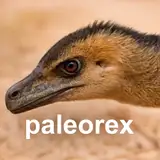
The illustration was made entirely by me, using a mix of photo manipulation, digital painting, texture overlaying and 3D modelling.
AI was used only to animate it. I used a model that runs entirely on my local system-removing environmental concerns by avoiding cloud computing, and I've used my own work, reducing ethical concerns, so it’s aligned with my creative vision!
While we may never see dinosaurs in real life, art and technology can bring us one step closer to experienci...
2025-06-15 15:54:55 +0000 UTC
View Post
The fourth episode of Tales of Prehistory is almost complete and will be published in the next few days! I'm currently making a few final tweaks to the audio and editing to ensure it reaches true documentary quality—so stay tuned!
This time, the spotlight is on Baryonyx, as it attempts a dramatic hunt for fish in its prehistoric habitat
Available to Premium Access members only
2025-06-15 11:16:25 +0000 UTC
View Post
Dsungaripterus was a remarkable pterosaur that lived around 120 million years ago during the Early Cretaceous period in what is now China. With a wingspan of up to 3 meters, this flying reptile is best known for its distinctive appearance: a long, upturned beak with toothless tips and robust, flat teeth at the back of the jaws—perfect for crushing the shells of mollusks and crustaceans. Its skull also featured a bony crest, likely used for display or species recognition.
2025-06-14 23:01:20 +0000 UTC
View Post
Plesiosaurs were among the most striking marine reptiles to ever patrol Earth’s prehistoric oceans, creatures of mythic proportions with broad, paddle-like limbs and, in many species, astonishingly long necks that gave them an almost otherworldly elegance. Though often mistaken for dinosaurs, these marine reptiles followed a different evolutionary path, mastering life in the seas with sleek bodies built for power and precision.
In my upcoming paleoart book, plesiosaurs will glide onc...
2025-06-14 16:34:33 +0000 UTC
View Post
This latest illustrated scene captures a dramatic moment: a group of Diplodocus making their steady journey across a vast salt plain, their massive forms silhouetted against a pale horizon. But peace doesn’t last long, as suddenly, a pair of Allosaurus emerge, targeting one of the younger sauropods in a calculated attempt to bring it down.
This collection of illustrations is directly inspired by one of my all-time favorite documentaries, The Ballad of Big Al...
2025-06-14 00:29:11 +0000 UTC
View Post
It's truly a shame that we'll never get to witness a living, breathing dinosaur. Imagine standing before creatures that defy the wildest imagination, from the smallest feathered marvels to titans the size of buildings. The sheer wonder of experiencing them in the flesh is, tragically, beyond our reach.
This shared longing, this void, is precisely what I aim to fill with my art. My passion is to craft paleoart so breathtakingly realistic, so uniquely lifelike, that it creates an illusion...
2025-06-13 09:42:19 +0000 UTC
View Post
You may have noticed a new style emerging in my recent work—one that captures dinosaurs as if seen through the lens of a trail camera, observing them in their natural habitats, going about their daily lives, or caught in thrilling action scenes. This experimental aesthetic has gained a lot of attention, and I’ve been creating more and more illustrations in this format!
I’m thrilled to announce that I’m planning two new books:
Gorgosaurus was a fearsome tyrannosaurid dinosaur that stalked the floodplains of Late Cretaceous North America around 76 million years ago, closely related to its more famous cousin, Tyrannosaurus rex. Measuring up to 9 meters (30 feet) in length, it was a swift, powerfully built predator with bone-crushing jaws lined with serrated teeth—perfect for tearing through the flesh of hadrosaurs and ceratopsians.
Unlike T. rex, Gorgosaurus had a lighter frame and longer l...
2025-06-10 19:45:33 +0000 UTC
View Post
This latest trail camera shot captures a a herd of Diplodocus slowly making their way across a vast salt flat.
The scene is a direct homage to a classic moment from The Ballad of Big Al, where Allosaurus prowls the edge of a herd of Diplodocus in a salt flat, seeking an opportunity.
This shot is part of an ongoing series celebrating the majestic creatures of the Jurassic period through cinematic trail camera visuals. Each image is crafted to f...
2025-06-09 22:25:04 +0000 UTC
View Post
Near a shrinking waterhole in the heart of the dry season, a small ornithopod clan cautiously approaches the muddy edge to drink, while an Anurognathus flutters overhead, scanning for insects. With water scarce, every sip is a risk—watch the treeline closely and you’ll spot the glaring eyes of a stalking predator in the background. The tension is building...
This image is part of an series of trail camera-style shots capturing life in the Jurassic, one frame at a time. Each...
2025-06-08 19:51:32 +0000 UTC
View Post
1. Utahraptor
Among the largest dromaeosaurs, Utahraptor was a fearsome, feathered predator armed with massive sickle claws.
2. Tyrannosaurus rex
Possibly the most iconic dinosaur, T. rex was a massive apex predator with bone-crushing jaws and surprisingly keen senses.
3. Edmontosaurus
A gentle giant of the Late Cretaceous, it lived in herds and cared for its young, much like modern grazing animals.
4. Magyarosaurus (and its baby)
A dwarf sauropod fro...
2025-06-07 19:04:52 +0000 UTC
View Post
We’ll never be able to see real dinosaurs with our own eyes—but what we can do is bring them to life through art. My goal with my upcoming book is to create illustrations so lifelike, so believable, that it feels as if you're looking at actual prehistoric creatures captured in the wild. I want each image to transport you back in time—to make you feel like you're standing face-to-face with these ancient animals.
This first volume will focus entirely on the dinosaurs of the...
2025-06-07 14:09:16 +0000 UTC
View Post
Here’s my take on Augustynolophus, a hadrosaur (duck-billed dinosaur) native to what is now California during the Late Cretaceous. This beautiful herbivore lived in coastal environments around 66 million years ago and stood out with its large, flattened snout and likely vibrant display features—possibly a crest or colorful skin patterns used for communication and mating displays.
This was a commission I really enjoyed creating—it’s always a pleasure bri...
2025-06-06 14:00:12 +0000 UTC
View Post
Follow a young Brachiosaurus as it roams an ancient North American forest, feeding on towering vegetation while reshaping the ground with each powerful step. Its massive footprints press deep into the earth, revealing hidden life beneath—tiny insects, worms and other organisms—that soon attract the attention of nearby creatures, including a curious Dryosaurus!
2025-06-05 23:14:47 +0000 UTC
View Post
I've just uploaded a complete set of skin texture overlays that I personally use in Photoshop to bring realistic surface detail to my creature illustrations. These are powerful, time-saving tools that let you achieve lifelike skin—wrinkles, pores, bumps and all—without having to draw every detail by hand.
To get the most natural results, I recommend applying the textures using blending modes like "Soft Light", "Overlay" or "...
2025-06-04 22:11:39 +0000 UTC
View Post
Mosasaurus was a colossal marine reptile that ruled the oceans during the Late Cretaceous period, around 70 to 65 million years ago. Measuring up to 17 meters in length, it was a top predator with a streamlined, hydrodynamic body, powerful paddle-like limbs, and a long, muscular tail adapted for propulsion—features that made it a fast and agile swimmer. Unlike dinosaurs, Mosasaurus belonged to a group of aquatic lizards called mosasaurs, closely related to modern monitor l...
2025-06-04 21:58:52 +0000 UTC
View Post
I often talk about the tools I use in my creative process, and as many of you know, Photoshop is my go-to for polishing illustrations, painting details and layering effects—especially when working over 3D renders or combining them with hand-drawn elements.
However, it’s important to acknowledge that Photoshop is very expensive—particularly for those who are just beginning or exploring digital art casually.
The good news is that you d...
2025-06-04 00:48:46 +0000 UTC
View Post
Dromaeosaurus was a small to medium-sized theropod dinosaur from the Late Cretaceous period (approximately 76-74 million years ago), belonging to the family Dromaeosauridae, a group often referred to as "raptors." Measuring about 2 meters in length and weighing around 15–20 kg, Dromaeosaurus was a robust predator characterized by a short, deep skull with powerful jaws, sharp serrated teeth and forward-facing eyes that suggest good binocular vision. Unlike its more gracile ...
2025-06-04 00:41:40 +0000 UTC
View Post
Next Friday, a brand new episode of Tales of Prehistory goes live—and this time, we’re heading deep into the Jurassic!
You’ll follow a young Brachiosaurus as it roams through ancient forests, feeding on tall vegetation and unknowingly shaping the landscape with each heavy step. Its massive footprints carve deep impressions in the ground, exposing hidden life below—tiny insects, worms and other organisms—drawing the attention of nearby creatures, inclu...
2025-06-01 22:56:14 +0000 UTC
View Post
My upcoming book is shaping up to be something truly special—a visual journey through one of the most iconic periods in Earth’s history: the Cretaceous. From towering dinosaurs to swift marine reptiles, and even some of the lesser-known mammals that quietly thrived beneath their shadows, this project will showcase a wide range of prehistoric life. Some creatures will be instantly familiar, others obscure, but each one will be brought to life with an unprecedented level of realism.
T...
2025-05-31 23:19:10 +0000 UTC
View Post
Inspired by the graceful ichthyosaur featured in Walking with Dinosaurs, Ophthalmosaurus is a true marvel of prehistoric oceans. The documentary series had a huge impact on me growing up; its cinematic storytelling and lifelike reconstructions brought extinct animals to life in a way no book or fossil display ever could. The episode “Cruel Sea,” where Ophthalmosaurus glides silently through the water, surrounded by danger, remains one of my favorite moments in ...
2025-05-31 20:40:30 +0000 UTC
View Post
Allosaurus, meaning “different lizard,” was the apex predator of the Late Jurassic period, roaming the floodplains and conifer forests of North America around 155 to 145 million years ago. With a body length averaging 8 to 10 meters (26 to 33 feet), and some individuals possibly exceeding 12 meters, it was a formidable theropod—sleek, muscular, and highly adapted for the hunt.
Dubbed the Lion of the Jurassic, Allosaurus occupied a similar ecologi...
2025-05-30 16:41:21 +0000 UTC
View Post
Beneath the silver glow of the moon, a silent and calculating Stenonychosaurus moves like a phantom in a Cretaceous forest. Its eyes lock onto a small mammal, unaware that it's being watched...
2025-05-30 02:05:44 +0000 UTC
View Post
Edmontosaurus was a large, herbivorous dinosaur from the Late Cretaceous period, around 73 to 66 million years ago, and one of the last non-avian dinosaurs to roam North America. Belonging to the hadrosaurid or "duck-billed" group, it measured up to 12 meters in length and weighed several tons. Its broad, toothless beak and battery of hundreds of tightly packed cheek teeth allowed it to efficiently grind tough plant material. With strong hindlimbs and a muscular tail, Edmontosaur...
2025-05-28 23:45:39 +0000 UTC
View Post
As promised, I’ve attached the scale maps that I sometimes use in my own creative process. These should be especially helpful for those of you working with 3D software such as Blender and ZBrush.
While I primarily work in Photoshop, I occasionally dive into Blender for certain projects—and I know many of you use it more extensively. Although I'm not a 3D design expert, I truly hope these maps can support and streamline your creative...
2025-05-28 23:38:37 +0000 UTC
View Post
Several of you have asked me if my Photoshop brushes work on Procreate—so I did a bit of digging, and it turns out: yes, they do!
While not every single advanced Photoshop feature transfers over perfectly, the majority of brushes import just fine and work beautifully in Procreate’s engine. So if you’ve been wanting to try them out, here’s how you can get started:
✅ How to Use Photoshop Brushes (.ABR) in Procreate:
...
2025-05-28 23:29:49 +0000 UTC
View Post
🪶 Many dinosaurs were covered in feathers—a detail that's crucial for anyone aiming to create accurate and lifelike paleoart. To help bring your illustrations to the next level, I’m sharing 10 of my go-to feather brushes (attached below) that I personally use in my own work to add depth, texture and realism.
🖌️ These high-resolution brushes are exclusively for Photoshop and are easy to import and fully customizable to match your unique style...
2025-05-28 13:25:26 +0000 UTC
View Post
I've been receiving some wonderful messages from artists who are already using my texture overlays and sharing their results—it's truly inspiring to see! I'm thrilled to know that these tools are helping you take your art to the next level.
As I’ve mentioned in previous posts, I’ll also be sharing the Photoshop brushes I personally use in my work. That said, I know many of you prefer Procreate, and a few of you have reached out asking if I could share brushes compatible with it as...
2025-05-28 00:01:05 +0000 UTC
View Post
This artwork depicts Baryonyx walkeri, a striking fish-eating theropod from the Early Cretaceous period, brought to life as part of a commissioned piece. Known for its long, crocodile-like snout and large, hook-shaped claw on its first finger, Baryonyx was a skilled semi-aquatic predator that likely hunted along riverbanks and shallow waters.
The illustration emphasizes Baryonyx’s streamlined skull, perfectly adapted for grasping slippery prey such as fish. Depicted i...
2025-05-27 17:32:08 +0000 UTC
View Post
Parasaurolophus is a genus of herbivorous hadrosaurid dinosaur that lived during the Late Cretaceous period, around 76 to 66 million years ago. It is best known for its distinctive long, backward-curving cranial crest, which likely functioned in vocalization and species recognition. Measuring up to 10 meters in length, Parasaurolophus had a duck-billed snout and was a facultative biped, capable of walking on both two and four legs. Fossils have primarily been found in what is now North Americ...
2025-05-27 01:47:04 +0000 UTC
View Post